
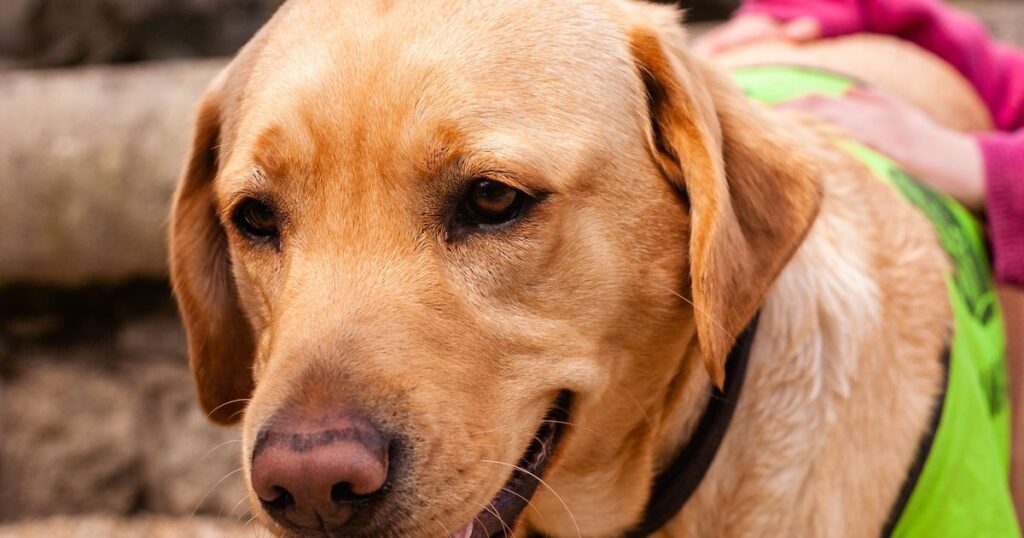
A no-pets rule does not let an Airbnb home host refuse a Service Animal unless Airbnb has granted an exemption; the host may ask only 2 questions, demand no papers, and add no pet or hair/dander cleaning fee under Airbnb’s Accessibility Policy. An Emotional Support Animal may usually follow normal pet rules except where policy or law requires accommodation. On VRBO, permitted questions and documentation depend on the jurisdiction under VRBO’s Service Animals Policy. I would classify the animal before deciding what to ask or charge.

Service Animal vs. Emotional Support Animal vs. Pet: the 30-second host table
Airbnb defines a Service Animal by its training: “A Service Animal is generally a dog that is individually trained to do work or perform tasks for a person with disabilities. A Service Animal is not a pet.” That definition comes from Airbnb’s Accessibility Policy. An Emotional Support Animal provides disability-related support but need not be trained for a task.
| Category | Task-trained? | Airbnb home | Airbnb animal fee | Disclosure | VRBO |
|---|---|---|---|---|---|
| Service Animal | Yes; for example, alerting to a seizure | Accept unless an Airbnb-granted exemption applies | No pet fee or extra hair/dander cleaning fee | Need not be disclosed before booking | Check the law where the property is located |
| Emotional Support Animal | No task training required | Location gate applies | Normal pet rules unless policy or law requires accommodation | Depends on whether accommodation is required | Pet rules may apply, subject to local law |
| Pet | Check the listing’s definition | Check the listing’s pet policy | Check the listing’s disclosed pet fee | Check the listing and booking rules | Check the listing’s pet policy and local law |
A small host can turn one message into a simple sequence: ask 2 permitted questions, then choose 1 of 3 branches—Service Animal, Emotional Support Animal, or neither under Airbnb’s policy. That is classification, not an investigation. For a longer policy comparison, see One Fine BnB’s Airbnb service animal policy guide.
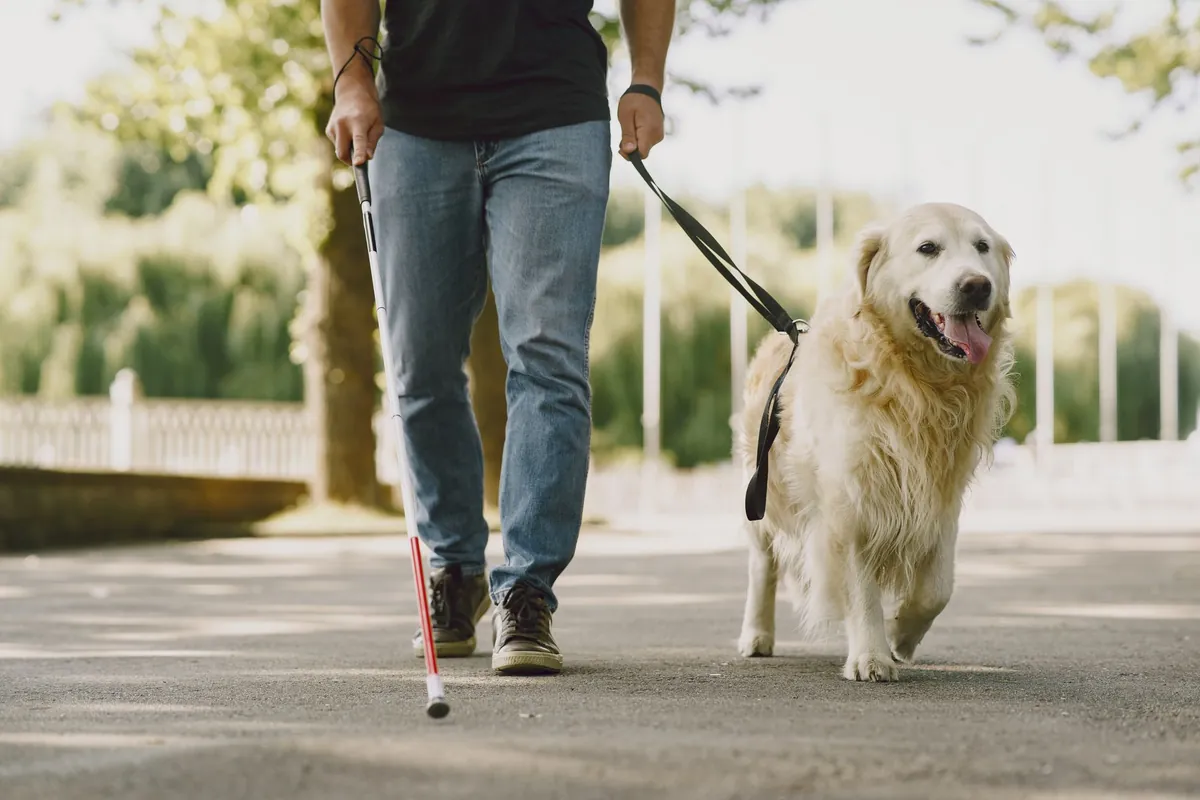
The two questions Airbnb lets a host ask
Ask exactly these: “Do you require your animal because of a disability?” from Airbnb’s Accessibility Policy, and “What work or task has the animal been trained to perform?” from Airbnb’s Accessibility Policy. The same policy says a host may not ask the guest to describe the disability or make the dog demonstrate its work. If the guest does not answer, Airbnb allows the host to ask again; a still-unanswered question may be treated as a “no.”
Say a guest writes at 9:10 PM, “I am bringing my dog.” My reply would contain 2 questions and no third one: “Thanks for letting me know. Do you require your animal because of a disability? What work or task has the animal been trained to perform?” Keep it in the Airbnb thread. The separate issue of what screening can and cannot establish is covered in guest screening limits.
What an Airbnb host must not ask for
Do not ask for a doctor’s note, registry entry, certification, ID card, training certificate, diagnosis, medical history, or task demonstration. Airbnb’s exact rule is: “Guests are not required to provide documentation that shows their dog is a Service Animal or Emotional Support Animal and hosts should not ask for or require such documentation from guests.” See Airbnb’s Accessibility Policy.
Here is a 2-line bad message beside a 2-line usable one. Bad: “Upload the certificate. Tell me your diagnosis.” Good: “Do you require your animal because of a disability? What work or task has the animal been trained to perform?” I do not label an animal “fake”; I apply the permitted questions and observable conduct rules. That boundary also belongs in any set of Airbnb guest message templates.
How the guest’s two answers change the result
- Yes, plus a described task: treat the dog as a Service Animal.
- Yes, but no task is described: treat the animal as an Emotional Support Animal; this includes no answer to the second question after it is repeated.
- No to the first question, or no answer to it after it is repeated: Airbnb does not require you to treat the animal as a Service Animal or Emotional Support Animal under this policy.
Those 3 branches come directly from Airbnb’s Accessibility Policy; they are not a host’s medical judgment. Imagine 3 otherwise identical inquiries arriving at 9:01, 9:02, and 9:03 PM. To the first, reply that the Service Animal can accompany the guest. To the second, say you are checking the ESA rule for the listing’s location. To the third, apply the listing’s normal pet policy. Only the answers change the next message.
Can a no-pets Airbnb host decline or charge a fee?
For a Service Animal at an Airbnb home, no: the host may not refuse the reservation unless an Airbnb-granted exemption applies, add an animal-related fee, or impose different house rules. Airbnb specifically prohibits hosts from charging “additional fees related to the reservation, such as pet fees or cleaning fees for animal hair or dander.” See Airbnb’s Accessibility Policy. Airbnb also says it does not allow a pet fee or hair/dander cleaning fee for Service Animals anywhere, or for protected ESAs; see Airbnb’s page If a host asks for more money.
| Animal | Decline because of animal? | Pet fee? | Extra hair/dander fee? |
|---|---|---|---|
| Service Animal | No, unless exemption applies | No | No |
| Protected ESA | No, unless exemption applies | No | No |
| Pet or unprotected ESA | Normal pet policy | Normal disclosed fee may apply | Normal applicable rule may apply |
That is a 3-category by 3-decision check: refusal, pet fee, and extra cleaning. The prohibited items are additional pet fees and cleaning fees for animal hair or dander. Do not confuse these charges with Airbnb fees for hosts and guests.
When Airbnb treats an Emotional Support Animal like a pet—and when it does not
Airbnb’s default is: “Unless otherwise prohibited by this policy, when a guest is accompanied by an Emotional Support Animal a host may charge normal pet fees, charge additional cleaning fees for pet hair or dander, or decline a reservation if they don’t accept pets.” See Airbnb’s Accessibility Policy. The exception is any place where that policy or applicable law requires ESA accommodation.
The policy’s footnote says: “Under this policy, hosts in California and New York are required to accommodate Emotional Support Animals for Homes reservations. Similarly, this policy requires hosts in Quebec and Ontario to accommodate Emotional Support Animals for all reservations.” That wording is in Airbnb’s Accessibility Policy. Those 4 named locations are not a complete legal map; applicable law elsewhere can also change the answer.
For example, take 1 ESA and 2 otherwise identical Airbnb homes, one in a location where accommodation is required and one where it is not. The first host cannot apply a pet refusal or animal surcharge; the second may apply normal pet rules. The result changes because of location, not the guest. Before charging or refusing anywhere else, check the official state, provincial, human-rights, or disability agency for that property. This is an operational guide, not legal advice.
What service-animal rules the guest still has to follow
Airbnb says a Service Animal must not be outside the guest’s control, unhousebroken, left alone at the listing without prior approval, taken into guest-off-limits areas, or allowed in shared spaces without a harness, leash, or tether. These are the conduct rules in Airbnb’s Accessibility Policy. They address behavior without inventing special “pet” restrictions for a disabled guest.
- Describe only what you observed.
- Name the exact conduct rule.
- Ask the guest to correct the behavior.
- Contact Airbnb support if it remains unresolved.
If a dog has barked alone for 45 minutes, I would write: “The dog appears to have been alone and barking for 45 minutes. Airbnb’s policy says a Service Animal must not be left alone at the listing without prior approval. Please return or tell me how you will correct this now.” That 4-step sequence does not predict eviction, cancellation, or a refund.
Hair, dander, extra cleaning, and actual damage are not the same charge
For a Service Animal or protected ESA, an added fee for hair or dander cleaning is prohibited by Airbnb’s Accessibility Policy. Airbnb separately tells hosts to document unexpected physical damage such as scratched upholstery or stains with photos and request reimbursement through the Resolution Center; see Airbnb’s resource What you need to know about hosting pets. That is a claim path, not a promised payout.
Compare 2 illustrative outcomes. Fur on a sofa leads to no animal surcharge. A chewed door leads to a documented damage request: say an illustrative repair invoice totals $180, made up of a $30 replacement part plus $150 labor. I would submit the photos and invoice as damage, not rename the $180 a pet fee. The arithmetic is illustrative; the platform decides the request.
What should a host do when the animal was not disclosed before check-in?
Do not treat non-disclosure alone as a pet-policy breach. Airbnb’s Accessibility Policy says guests do not need to disclose a Service Animal before booking. Keep the exchange in the platform thread, state the neutral observation, ask Airbnb’s 2 questions, classify the answer, run the ESA location check if needed, and contact support before taking a consequential step.
These 4 copy-ready messages cover the usual sequence:
- Pre-arrival: “Thanks for mentioning the animal. Do you require your animal because of a disability? What work or task has the animal been trained to perform?”
- Animal seen at arrival: “I noticed an animal at check-in and want to apply the correct Airbnb rule. Do you require your animal because of a disability? What work or task has the animal been trained to perform?”
- ESA where normal pet rules apply: “Thank you for clarifying. I have checked the rule for this listing’s location. Airbnb allows the listing’s normal pet policy to apply to this Emotional Support Animal, so [state the existing policy].”
- Observed conduct issue: “The animal has been alone in the listing for 45 minutes. Airbnb’s policy requires prior approval for that. Please correct this now or reply with your plan.”
Save these beside your other Airbnb guest message templates. If you use Airbnb automated messages, the first reply can be prepared quickly, but the host still has to make the classification and location-dependent decision. Do not add new surveillance; use only information already available under your disclosed camera policy.
How VRBO’s service-animal rule differs from Airbnb’s
VRBO describes a service animal as usually a dog trained for specific tasks. It says: “Emotional support animals and therapy animals are not service animals under this policy and partner pet rules and fees may apply to these types of animals.” See VRBO’s Service Animals Policy. Applicable local law still controls.
| Point | Airbnb | VRBO |
|---|---|---|
| Host questions | Two stated questions | Depends on jurisdiction |
| Documents | Host should not request them | Whether they may be requested varies by jurisdiction |
| ESA | Location gate in platform policy | Not a service animal under platform policy; pet rules may apply, subject to law |
| Service-animal fee | No pet or extra hair/dander fee | Where applicable law applies, no pet fee or higher deposit solely because of the animal |
| Actual damage | Document and request through Airbnb | Damage beyond reasonable use may be charged |
VRBO’s crucial sentence is: “The types of questions a partner may ask, and whether documentation may be requested, vary by jurisdiction.” See VRBO’s Service Animals Policy. The same page says partners should not charge a pet fee or increase a security deposit solely because of a service animal where the relevant laws apply, but actual damage above reasonable use may still be charged. It also says violations may lead to “suspension or termination.” See VRBO’s Service Animals Policy. None of those statements promises a particular enforcement result.
If 1 listing appears on 2 platforms, keep 2 templates: Airbnb’s exact two-question message and a VRBO message that first reflects the property’s jurisdiction. Do not paste Airbnb’s wording into every VRBO case. Keep the operational distinction clear in your VRBO automated messages, and keep pet charges separate from general VRBO host and guest fees.
Can a host get an exemption because of allergies or health risk?
An allergy does not automatically create an Airbnb exemption. Airbnb may, at its discretion, grant one when a host contacts the company proactively. Its example is a Service Animal posing a direct threat to the health of a host who lives in the listing. Airbnb also says an approved exemption is tied to a specific listing, not the host’s whole account. Both points are in Airbnb’s Accessibility Policy.
For a host with 3 listings, an exemption granted for listing 1 does not become an exemption for listings 2 and 3. The practical flow has 4 parts: contact Airbnb, explain the specific facts, wait for its decision, and, if granted, describe the exemption politely in that listing. The policy does not say that a cleaner’s allergy qualifies. VRBO does not publish the same exemption process on its service-animal page, so check applicable law and official support instead of assuming a parallel rule.
What can BnBGenius automate—and what must stay with the host?
BnBGenius answers guest messages on Airbnb and VRBO around the clock and installs as a Chrome extension. The host should classify the animal, check the property’s local law, request any exemption, decide whether a charge or refusal is allowed, and choose when to contact platform support.
I would keep a 3-step policy check under host control. Step 1 is to use the two approved questions. Step 2 is to review the guest’s answer. Step 3 is to check category, location, and platform before responding. See how Airbnb automated messages fit the messaging workflow and keep the separate channel logic in VRBO automated messages. I recommend keeping each policy decision with the host.
Airbnb Service Animal FAQ for hosts
Does a guest have to disclose a Service Animal before booking? No. Airbnb says disclosure before booking is not required in Airbnb’s Accessibility Policy.
Can a host ask for papers? No under Airbnb’s policy. Ask the 2 permitted questions from Airbnb’s Accessibility Policy instead; demanding papers exceeds guest screening limits.
Can a Service Animal be left alone? Not without prior host approval under Airbnb’s Accessibility Policy. For example, leaving the animal alone for 30 minutes still needs prior approval; the duration does not erase the rule.
Can a host charge for damage? A host can document physical damage and request reimbursement through Airbnb’s Resolution Center, but ordinary hair or dander is not a Service Animal surcharge. See Airbnb’s resource What you need to know about hosting pets.
What separates a Service Animal from an ESA? Under Airbnb’s decision rule, a dog trained to perform disability-related work or a task is treated as a Service Animal; an animal providing support without a described trained task is treated as an ESA. See Airbnb’s Accessibility Policy.
Does “no pets” override the policy? No. A Service Animal is not a pet, and a no-pets Airbnb home must accommodate it unless an Airbnb-granted exemption applies.
Does the same rule apply on VRBO? No. VRBO says permitted questions and possible documentation vary by jurisdiction; check VRBO’s Service Animals Policy and the official local authority before acting.
About this article: I am Kent Morgan. I reviewed the current Airbnb and VRBO primary policies cited above and separated platform rules from host practice. Platform policies and local law can change, so verify the property’s location before a refusal or charge. This guide does not provide legal advice.