
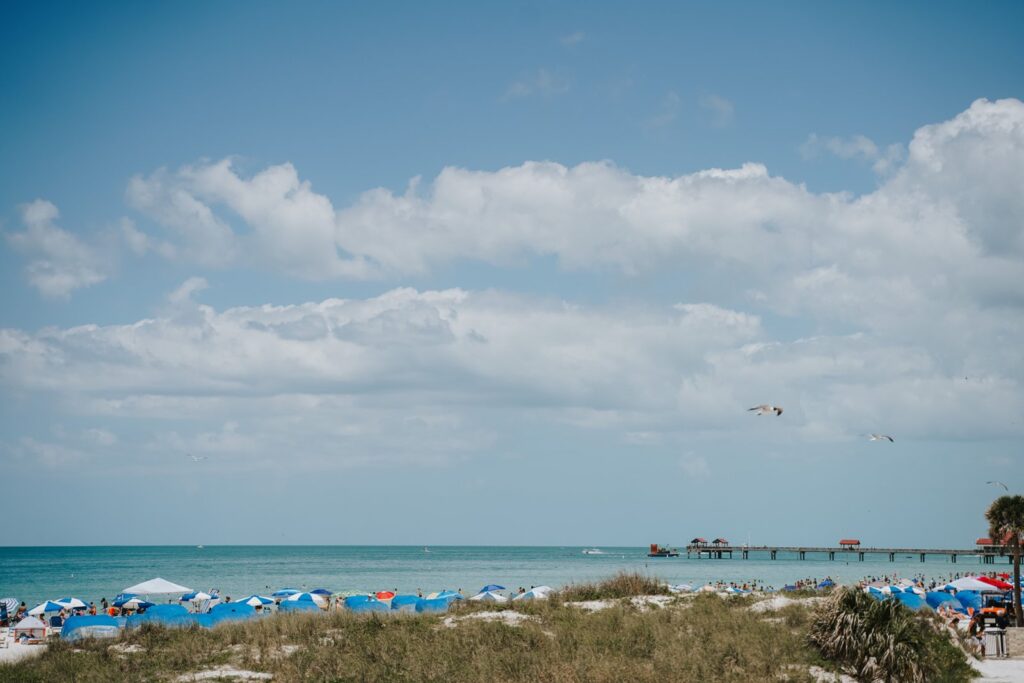
Clearwater does not ban short-term rentals everywhere, but it limits them by zoning district. Before you list on Airbnb or Vrbo, you need to know which district your property sits in and what the city allows there.
The work splits three ways. You check your address with the city and handle the business and tax paperwork yourself. Your chosen cleaner or repair person does the physical work at the property. If the city confirms your address qualifies, BnBGenius answers guest messages on Airbnb and Vrbo 24/7 and creates cleaning and repair tasks after checkout.
What Is Banned or Limited
The restriction starts with how the city defines residential use.
“Residential use means a permanent place of residence for a family. A residential use located on residentially zoned property shall not include rentals for periods of less than 31 days or one calendar month, whichever is less, or which is advertised or held out to the public as a place rented for periods of less than 31 days or one calendar month, whichever is less.”
What this means for you: In a residential zone, the city limits the residential use itself. Short means less than 31 days or one calendar month, whichever is less. Advertising such stays counts too, even without a booking.
The dwelling-unit rule backs that up.
“A dwelling unit located on residentially zoned property shall be used only for a residential use, unless otherwise specified, and shall not be used or occupied in interval ownership, in fractional ownership, or as a timesharing unit.”
What this means for you: A home in a residential zone must be used as a residence, unless the code says otherwise. Do not assume a longer stay is automatically legal. Ask the city about your property.
Where Short-Term Rentals Are Allowed
The city does define a short-stay use category. It is called overnight accommodations.
“Overnight accommodations means a facility containing one or more overnight accommodation units, the occupancy of which occurs, or is offered or advertised as being available, for a term of less than 31 days or one calendar month, whichever is less.”
What this means for you: This is the use category a short-term rental falls under. It uses the same shorter-of-two test: less than 31 days or one calendar month, whichever is less.
The Tourist district lists this use as permitted.
“The following uses are Level One permitted uses in the T District subject to the standards and criteria set out in this section and other applicable provisions of Article 3.”
What this means for you: In the T District, overnight accommodations is a Level One permitted use. But it is conditional. It must meet that section’s standards and Article 3’s provisions.
The standards sit in a development table.
“Table 2-802. “T” District Flexible Standard Development Standards”
Source: Clearwater Community Development Code Table 2-802
“Overnight Accommodations 20,000 100—150 10—15 0—10 10—20 35—50 1.2/unit”
What this means for you: The numbers are development standards for the T District. Do not read them as occupancy limits or fees. Ask the city which standards and approvals apply to your property.
One more warning comes from the permitted-uses chart.
“Chart 2-100 Permitted Uses. The following chart is a summary of the uses permitted in each zoning district. The “X” only indicates whether the use is permitted; it does not indicate the nature of the approval required. No use is permitted unless it complies with the provisions of the zoning district in which it is located and the applicable development standards in Article 3 of this Development Code.”
What this means for you: An “X” only shows a use is permitted, not the approval it needs. No use is allowed unless it complies with the district rules and Article 3.
How to Check Your Address
The city publishes its own zoning lookup.
“Find Your Property’s Zoning District and Future Land Use Category”
What this means for you: The city’s planning page links to a zoning lookup tool. You can open the official zoning map in your browser. The city’s FAQ gives three steps for using it.
“Enter the address in the search box and click on the magnifying glass”
Source: City of Clearwater Zoning and Planning FAQ
“Click on the “Layer List” icon and ensure that the boxes next to Zoning or Future Land Use are checked”
Source: City of Clearwater Zoning and Planning FAQ
“Click on the blue outlined dot next to the address, then click on the right arrow at the top of the text box to scroll through and see the designations.”
What this means for you: Follow those steps to find your property’s zoning and land-use designations. Read the designations carefully. If the map will not load, looks unclear, or shows a code you cannot interpret, contact the city.
The city also tells you to confirm your use before going further.
“Check to ensure your business type is permitted within the chosen location or call Zoning at (727) 562-4604.”
What this means for you: The city says to check that your business type is permitted at your location. You can also call Zoning at (727) 562-4604. Before calling, collect your street address, the zoning code shown, and your planned stay length.
Ask the city whether your proposed overnight-accommodations use needs approval under Section 2-802, and if so, what kind.

What the City Requires Where Rentals Are Allowed
If your address qualifies, the city’s business rules apply.
“Business Tax Receipt: Required for all businesses located within the city limits of Clearwater prior to opening a business or practicing a profession.”
What this means for you: Every business inside the city needs this receipt before it opens. Ask the city which receipt type fits your planned overnight use.
Residential rentals have an extra step.
“Residential Rental: Requires additional information as part of the Business Tax Receipt application.”
What this means for you: The rental form needs more details from you. Ask the city what it needs for your property. Gather the items before you apply.
What you submit depends on your business and location.
“The city of Clearwater requires different supporting documentation, approvals and fees depending on the type of business and location where it is operating.”
What this means for you: What you submit depends on your business type and where it is. Documents, approvals and fees can differ for each case. Ask the city what fee applies to your property.
The tax year runs on a fixed calendar.
“The business tax year is from Oct. 1 to Sept. 30 and renews annually regardless of when the BTR is obtained.”
What this means for you: The tax year runs from Oct. 1 to Sept. 30. It renews every year no matter when you got the receipt.
Approval comes before the receipt is valid.
“Some business classifications may require both internal and external department approvals prior to issuing the BTR. BTR is not valid until approved and final payment is collected. Processing times may vary.”
What this means for you: Some classifications need department approvals first. The receipt is not valid until approved and fully paid. Paying for a receipt does not legalize a use the code excludes.
Fines and Enforcement
The code spells out how the city can prove a violation.
“Prima facie evidence of certain uses located in any residential zoning district, consisting of rentals for periods of less than 31 days or one calendar month, whichever is less, and advertising or holding out to the public as a place rented for periods of less than 31 days or one calendar month, whichever is less, shall include but not be limited to one or more of the following:”
What this means for you: This section lists evidence the city can use in any residential zoning district. The scope is the same shorter-of-two test. The list is not limited to the items quoted below.
Two items from that evidence list follow.
“Advertising or holding out a dwelling unit for tourist housing or vacation rental use;”
Source: Clearwater Community Development Code Section 3-919
“Reservations, booking arrangements or more than one signed lease, sublease, assignment or any other occupancy agreement for compensation, trade, or other legal consideration addressing or overlapping any period of less than 31 days or one calendar month, whichever is less; or”
What this means for you: The first covers ads that offer a home for tourist or vacation use. The second covers bookings or overlapping agreements for short periods. Your listing and booking records can count as evidence. The list is not exclusive.
Enforcement roles are set out in Article 7.
“The terms and provisions of this Development Code shall be enforced in accordance with the provisions of this article. The municipal code enforcement board and/or a special master established in article 5 of this Development Code, the code inspector(s), code enforcement officers, the city attorney, and other appropriate staff of the city shall be responsible for enforcement.”
What this means for you: The code names the boards, inspectors, officers and staff responsible for enforcement. They are not a special short-term-rental fine schedule.
Notice comes first, then time to fix.
“Upon determining that a violation exists, the code inspector or other enforcement officer shall notify the violator of the violation of this development code or violation of the terms and conditions of any development approval and prescribe a reasonable time to correct the violation.”
What this means for you: An inspector notifies the violator and prescribes a reasonable time to correct. The quote says reasonable time, not a fixed number of days.
Each violation and each day count separately.
“Each violation of the City Code shall be a separate civil infraction. Each day such violation shall continue shall be deemed to constitute a separate civil infraction.”
What this means for you: Each violation is its own infraction. Each day it continues counts as another one. Fix issues as soon as you learn about them.
The civil-citation penalty has a ceiling.
“A violation of the City Code enforced by the provisions of this section is a civil infraction punishable by a maximum civil penalty not to exceed $500.00 or such amount as may hereafter be prescribed by law.”
What this means for you: This citation path has a maximum civil penalty set by the quote. That is a maximum, not a prediction for your case.
The business-receipt side has its own enforcement.
“If you are operating without a Business Tax Receipt, you can be cited by a city inspector, given a Notice to Appear before the County Court, or a Notice of Violation can be given resulting in an appearance before the city’s Municipal Code Enforcement Board. Failure to comply can result in fines or liens.”
What this means for you: Operating without the receipt can bring a citation, a court notice, or a code board notice. Failure to comply can result in fines or liens. This path is separate from the code-enforcement path above.
Taxes
Florida taxes short stays at the state level.
“Florida’s 6% state sales tax, plus any applicable discretionary sales surtax, applies to rental charges or room rates paid for the right to use or occupy living quarters or sleeping or housekeeping accommodations for rental periods of six months or less, often called “transient accommodations” or “transient rentals.””
Source: Florida Department of Revenue
What this means for you: Florida charges 6% state sales tax plus any applicable surtax on transient rentals. These are stays of six months or less. Your short-term rental falls in this category.
Pinellas County adds its own taxes. The state’s forms list the county rates.
“Pinellas 6% County”
Source: Florida Department of Revenue
“Pinellas 1% Feb 1, 1990 Dec 31, 2029”
Source: Florida Department of Revenue
What this means for you: The state forms list a 6% Pinellas county tourist tax and a 1% Pinellas discretionary sales surtax. The tourist tax goes to the county. The surtax runs through the state sales-tax system.
Where the money gets sent matters.
“For all other counties, the local option transient rental taxes are reported and remitted directly to the county; however, sales tax and discretionary sales surtax on transient rentals are always reported and remitted to the Department.”
Source: Florida Department of Revenue
What this means for you: For Pinellas, local option transient rental taxes go directly to the county. Sales tax and surtax always go to the Department of Revenue. What you file depends on what your platform remits.
The platforms say different things about what they collect.
| Platform | What its Florida and Pinellas help page lists | Owner responsibility |
|---|---|---|
| Airbnb | “Florida Transient Rental Tax: 6% of the listing price including any cleaning fee for reservations 182 nights and shorter.” (Source: Airbnb Help) “Florida Discretionary Sales Surtax: 0.5%-1.5% of the listing price including any cleaning fee for reservations 182 nights and shorter.” (Source: Airbnb Help) “Pinellas County Tourist Development Tax: 6% of the listing price including any cleaning fee for reservations 182 nights and shorter.” (Source: Airbnb Help) | “Hosts may need to manually collect and remit other applicable taxes on their stay or experience price.” (Source: Airbnb Help) |
| Vrbo | “Florida State Transient Rentals Tax, Discretionary County Surtax Note: Discretionary County Surtax is state tax surcharges required by various counties that Vrbo will also be collecting and remitting. These rates vary between 0.5-2%. The state of Florida under 184 nights December 1, 2018” (Source: Vrbo Help) “Pinellas County County Tourist Development Tax Pinellas County under 184 nights October 1, 2018” (Source: Vrbo Help) | “You’re also responsible for collecting and remitting lodging taxes when we’re not liable to do so.” (Source: Vrbo Help) |
What this means for you: The stay limits differ, so do not treat them as the same. Vrbo’s row gives no Pinellas rate. The platform ranges are platform wording; the state’s Pinellas rows are the county-specific reference.
The county tax collector has a caution for owners.
“Please verify whether or not the rental platform you use collects and pays the required TD tax for you. If not, the rental property owner is responsible for paying the TD tax.”
Source: Pinellas County Tax Collector
What this means for you: Pinellas County asks you to verify whether your platform collects and pays the tourist tax for you. If it does not, you pay it. BnBGenius is not an accounting tool, so track the tax side yourself or with accounting help.

If Your Address Qualifies: What BnBGenius Does
Everything below applies only if the city confirms your address and use qualify under the quoted rules. BnBGenius does not check zoning, does not know local rules, is not the city’s responsible party, and does not grant any approval.
Answers Guest Messages on Airbnb and Vrbo 24/7
BnBGenius answers guest messages on Airbnb and Vrbo 24/7. Software does not decide the legal use of your property.
Requests a Review from the Guest and Publishes the Host’s Review
BnBGenius requests a review from the guest and publishes the host’s review. Kent Morgan, BnBGenius co-founder, shared this experience:
“We went from reviewing 40% of stays to 100% overnight. The AI even thanked guests for things we fixed mid-stay. Our review-to-review rate jumped immediately.”
Kent Morgan, BnBGenius co-founder, on bnbgenius.ai/reviews
Creates Cleaning and Repair Tasks After Checkout
BnBGenius creates cleaning and repair tasks after checkout. The physical cleaning and repair work is done by your person. If you coordinate a cleaner without group texts, this cleaning-team approach may help. Kent Morgan, BnBGenius co-founder, shared this experience:
“We used to find out about issues in post-stay reviews. Now BnBGenius flags them mid-stay, creates the task, and our cleaners respond in under 15 minutes.”
Kent Morgan, BnBGenius co-founder, on bnbgenius.ai/tasks
Answers Guest Calls with a Voice AI Agent
Voice Concierge, an add-on, answers guest calls with a voice AI agent. It is not a city emergency contact. Kent Morgan, BnBGenius co-founder, shared this experience:
“The concierge answered 84% of our after-hours calls last month without waking anyone up. Guests thought it was our in-house team the whole time.”
Kent Morgan, BnBGenius co-founder, on bnbgenius.ai/voice
Sells Gap Nights, Early Check-In and Late Checkout
BnBGenius sells gap nights, early check-in and late checkout. Before you sell any night, check the proposed stay against the quoted permitted use and the approval the city confirmed. Kent Morgan, BnBGenius co-founder, shared this experience:
“BnBGenius filled nine gap nights in the first month. $2.3k we would have lost. Guests got a friendly Airbnb message and we didn’t lift a finger.”
Kent Morgan, BnBGenius co-founder, on bnbgenius.ai/upsells
Is Run from Telegram
BnBGenius is run from Telegram. BnBGenius is not a PMS, a channel manager, a calendar sync, a direct-booking, pricing or accounting tool. If you are weighing that question, see whether you need an Airbnb PMS.
Airbnb and Vrbo
Both platforms handle guest communication differently. Here is what their own help pages say.
| Guest work | Airbnb | Vrbo |
|---|---|---|
| Messages | “Every reservation automatically creates a group thread where all bookers, co-travelers, hosts and co-hosts can connect.” (Source: Airbnb Help) | “You can send a message to a host through our secure messaging platform.” (Source: Vrbo Help) |
| Reviews | “On the day of checkout, both the guest and their host will be prompted to leave a review. Both parties will have 14 days after checkout to submit their review.” (Source: Airbnb Help) | “You and your guests have 180 days to provide your review. Once one party submits their review, the other party has 14 days to complete their review.” (Source: Vrbo Help) |
| Check-in details | “Guests will see your check-in method (such as smart lock, keypad, or lock box) but they won’t see the detailed check-in instructions until 48 hours before check-in.” (Source: Airbnb Help) | “The welcome guide includes: Host or property manager contact information. Directions to the property. Parking instructions. Access instructions. Check-in and check-out instructions.” (Source: Vrbo Help) “The welcome guide information is emailed to your guests in the language you wrote it in, three days before check-in.” (Source: Vrbo Help) |
What this means for you: The review windows differ, so read each platform’s own rules. Read both sets of guest instructions and keep your contact and access information current. Platform features are separate from local use approval. Listing on Airbnb or Vrbo does not change what the city allows.
How to Start
First, confirm your address with the city using the lookup and the Zoning phone line above. Then decide how you want to run the property.
More City Guides
- Airbnb rules in Dunedin, FL
- Airbnb rules in Tarpon Springs, FL
- Airbnb rules in Gulfport, FL
- Airbnb rules in Holmes Beach, FL
- Florida short-term rental laws by city
Rules and rates last checked on 3 October 2026.