
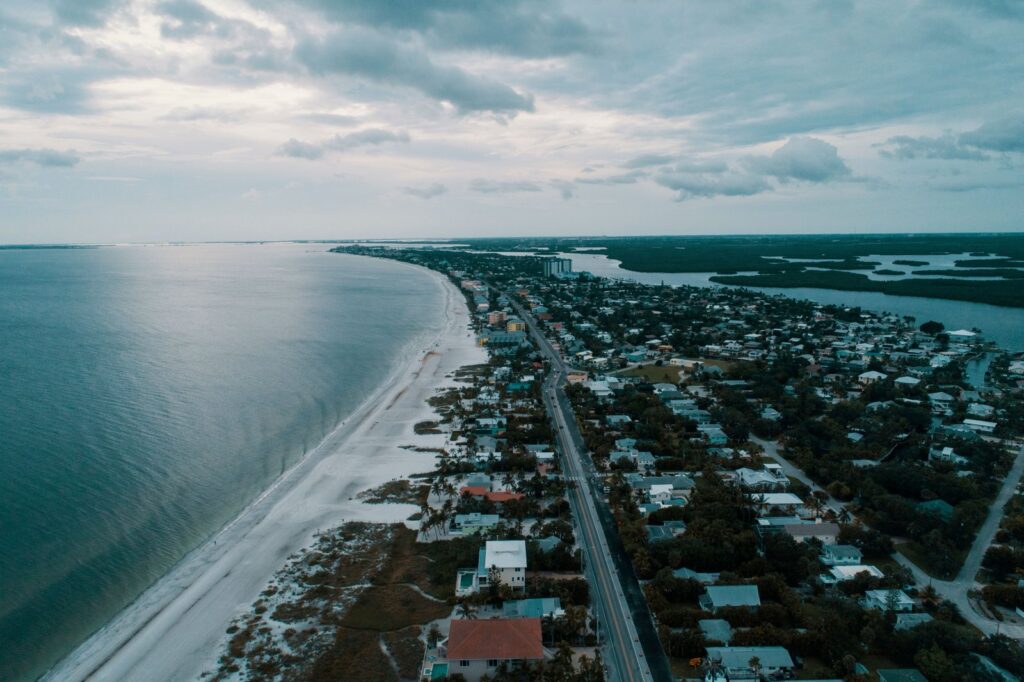
This page covers the City of Gulfport in Pinellas County, Florida. It does not cover unincorporated Pinellas County or Gulfport, Mississippi. Gulfport does not allow short-term rentals citywide. Permission depends on the zoning and approval routes quoted below, so check your address before listing on Airbnb or Vrbo. You handle the address check, approvals and taxes. People you arrange do the site visits, cleaning and repairs. If your address and proposed use qualify under the quoted rules, BnBGenius answers guest messages on Airbnb and Vrbo 24/7 and creates cleaning and repair tasks after checkout.
What Is Banned or Limited
Gulfport’s zoning code lists or describes the uses allowed in each district, and anything not listed or described as permitted is off the table.
“Only those uses specifically listed or described as being permitted within a zoning district shall be permitted in said zoning district, and only in accordance with any stipulated provisions. Unless otherwise stated herein, it is the intent of this chapter that any use not specifically listed or described as permitted shall be expressly prohibited. (Ord. No. 93-14, § 4, 10-5-93)”
Source: City of Gulfport
What this means for you: Your property can only be used for something the code lists or describes as permitted in its district. Permitted uses must also follow any stated provisions. If a use is not listed or described as permitted, it is prohibited there.
The city also defines what counts as temporary or tourist lodging, and the definition is broad.
“Temporary/tourist lodging use. A facility containing one (1) or more temporary lodging units, the occupancy of which occurs, or is offered or advertised as being available, for a term of less than one (1) month, more than three (3) times in any consecutive twelve-month period.”
Source: City of Gulfport
What this means for you: A rental counts as this lodging if occupancy happens, or is offered or advertised as available, for less than one month. This must be true more than 3 times in any consecutive twelve-month period. That period moves forward as time passes. No completed stay is needed. An offer or an ad alone can count.
How you own or pay for the unit does not change the classification.
“In determining whether a property is used as a temporary lodging use, such determination shall be made without regard to the form of ownership of the property or unit, or whether the occupant has a direct or indirect ownership interest in the property or unit; and without regard to whether the right of occupancy arises from a rental agreement, other agreement, or the payment of consideration. (Ord. No. 2010-09, 9-7-2010)”
Source: City of Gulfport
What this means for you: The city decides without looking at ownership form or ownership interest. Agreement type and payment do not matter either. Focus on how the unit is used, offered and advertised.
Your personal situation does not create an exemption either.
“Short-term rental rules are based on zoning, not personal circumstances. Being an owner-occupant, renting only occasionally, or using an online platform does not exempt a property from City regulations. When in doubt, check first. City staff are available to help.”
Source: City of Gulfport
What this means for you: Living in the unit yourself does not exempt it. Renting only occasionally does not either. Using Airbnb or Vrbo does not. The rules follow the property’s zoning, not your circumstances. Ask City staff before you list.
Where Short-Term Rentals Are Allowed
Gulfport’s own FAQ explains the starting point for where rentals are legal.
“Short-term rentals are not allowed citywide by default. Gulfport’s zoning code works on a “listed uses only” basis: Only uses specifically listed as allowed in a zoning district are permitted. If a use is not listed, it is prohibited. As a result, short-term rentals are permitted only in certain zoning districts and, in some cases, only with additional approvals.”
Source: City of Gulfport
What this means for you: Short-term rentals are not allowed everywhere in Gulfport by default. Only certain zoning districts permit them. Some cases need extra approvals. Find your district and read what it lists.
The code also defines transient accommodations as a land-use class.
“Transient accommodations. A use offering transient lodging accommodations such as hotels, motels, bed and breakfasts, and boarding houses.”
Source: City of Gulfport code
What this means for you: This lodging is a zoning category, not a blanket permission. A district listing it allows that class of use. It does not authorize every house as a rental. Check whether your proposed use fits.
| Area | What code lists | What owner checks |
|---|---|---|
| CL-1 | “(b) Permitted principal uses and structures. The following uses and structures are permitted. There shall be no outdoor sales or displays, as provided herein, unless a special permit for the same has been approved. (1) Personal services; (2) Financial institution, including drive-through facilities; (3) Funeral home; (4) Transient accommodations;” (Source: City of Gulfport code) | Whether the property sits in the Commercial Limited 1 district and meets its provisions |
| WRD Commercial limited (CL) | “(1) Commercial limited (CL) area. a. Permitted uses. 1. Retail sales; 2. Financial institution, including drive-in facilities; 3. Transient accommodations;” (Source: City of Gulfport code) | Whether the parcel is in the CL area of the Waterfront Redevelopment District |
| WRD Mixed use (MU) | “(3) Mixed use (MU) area. a. Permitted uses. 1. Retail sales; 2. Transient accommodations;” (Source: City of Gulfport code) | Whether the parcel is in the MU area of the Waterfront Redevelopment District |
| WRD Resort facilities (RF) | “(4) Resort facilities (RF) area. a. Permitted uses. 1. Single-family and duplex dwelling; 2. Townhouse dwelling; 3. Multiple-family dwelling; 4. Transient accommodations;” (Source: City of Gulfport code) | Whether the parcel is in the RF area of the Waterfront Redevelopment District |
| CL-2 | “(c) Conditional uses. The following uses shall be permitted only upon review and approval of the city council: (1) Automotive service station; (2) Christmas tree sales (outside, seasonal); (3) Clinic; (4) Day care center; (5) Drive-through facilities accessory to permitted use; (6) Transient accommodations;” (Source: City of Gulfport code) | That transient accommodations here need review and approval by City Council first |
What this means for you: CL-1 lists this lodging as a permitted principal use. The WRD CL, MU and RF areas also list it as permitted. CL-2 is different. It requires City Council review and approval first. That approval is required, not optional. Confirm your actual unit and use with City staff, not just a zone label.
How to Check Your Address
The city publishes a map and points owners to staff for the final word.
“The map displays the City of Gulfport street by street with the city limits marked with a red dotted line. Need help with this map? Contact the city at (727) 893-1000. The City’s map shows areas where short-term rentals may be allowed, but final determinations are made by City staff.”
Source: City of Gulfport
What this means for you: The map shows city limits street by street with a red dotted line. Call (727) 893-1000 for map help. Staff, not the map, make the final call. Ask them whether your exact address is inside the city.
The city also answers directly whether the map is the last authority.
“No. The zoning map is a visual reference only and is not the official zoning map. Official determinations are based on the adopted zoning code and City records.”
Source: City of Gulfport
What this means for you: The online map is a visual reference only. It is not the official zoning map. Official decisions come from the adopted code and city records. Start with the interactive map, then confirm with staff. Bring your exact address and unit, proposed use, and stay pattern.

What the City Requires Where Rentals Are Allowed
Where your address qualifies, the city’s checklist requires state registrations before you operate.
“I understand that I must complete all applicable State registrations prior to operation, including registration with the Florida Department of Business and Professional Regulation (DBPR) and the Florida Department of Revenue for Sales and Transient Rental Tax purposes, as applicable.”
Source: City of Gulfport
What this means for you: Complete all applicable state registrations before operation. Two state agencies are named. One is the Florida DBPR. The other handles sales and transient rental taxes, as applicable. This is state registration, not zoning permission.
The city code also says when a local license is required.
“It shall be unlawful and a violation of this chapter for any person to engage in, conduct, manage, practice, carry on or otherwise do business, within the city, any business, trade, occupation, profession or other calling, for which a license is required under this chapter, unless such person, prior to the time he first engages in, conducts, manages, practices or otherwise carries on, within the city [such business, trade, occupation, profession or other calling], and, thereafter, on the first day of October of every year, obtains from the city such license and pays in advance therefor the fee required for such license.”
Source: City of Gulfport code
What this means for you: A city license is required only for activities where Chapter 13 requires one. The fee is paid in advance. Do not assume every rental needs one. Ask City staff whether yours does.
The code defines a rental unit broadly for that chapter.
“(9.1) Rental unit: A rental unit, for the purpose of this chapter, shall be construed to mean and include rooms, apartments, hotels, motels, motor courts, cottages, cabins and/or other buildings rented as living quarters by the day, week, month or year, and located on one lot, plot, or parcel of ground.”
Source: City of Gulfport code
What this means for you: A rental unit means living quarters rented by the day, week, month or year. Ask City staff which category your property falls under.
The city also sets a term and late penalties for its business tax receipt.
“A business license or tax receipt is good from October 1 of the current year through September 30 of the following year. If the license is not renewed by October 1, a 10 percent penalty will be applied for the month of October, and 5 percent for each month thereafter until it is paid.”
Source: City of Gulfport
“In addition to the criminal penalties provided for violation of this chapter, any license not renewed by October 1 shall be considered delinquent and subject to a delinquency penalty of ten percent (10%) for the month of October, plus an additional five percent (5%) penalty for each month of delinquency thereafter until paid; provided, however, that the total delinquency penalty shall not exceed twenty-five percent (25%) of the occupational license fee. Payment of any penalty shall be in addition to the regular fee required for the license. Any person engaging in or managing any business, occupation or profession without first obtaining a local occupational license, if required hereunder, shall be subject to a penalty of twenty-five percent (25%) of the license determined to be due, in addition to any other penalty provided by law or ordinance.”
Source: City of Gulfport code
What this means for you: The receipt runs from October 1 through September 30 of the next year. If not renewed by October 1, a 10 percent penalty applies for October. Then 5 percent applies for each later unpaid month, until paid. The total late penalty is capped at 25 percent of the fee. Separately, running a required activity without the license adds a penalty of 25 percent of the license due. Other penalties may apply on top of that one. Ask City staff whether this receipt applies to your use.
Ask City staff about fees, occupancy, parking, noise, contact requirements and advertising rules for your approved use. BnBGenius is not an accounting tool, and it does not handle city approvals; see the tax resource for those duties.
Fines and Enforcement
The city states plainly what happens if you operate where it is not allowed.
“Operating a short-term rental in a prohibited zoning district may result in enforcement action under the City Code.”
Source: City of Gulfport
What this means for you: Running a rental in a prohibited district can trigger enforcement under the City Code. Confirm the district before your first booking.
The code section behind enforcement is Section 22-14.01, and it sets the violation class.
“Violation of the provisions of this zoning chapter or failure to comply with any of the requirements, including violation of conditions and safeguards established in connection with grants of variations or special exceptions, shall constitute a misdemeanor. Any person who violates this zoning chapter or fails to comply with any of the requirements, shall, upon conviction thereof, be punished as required by law. Each day such violation continues shall be considered a separate offense.”
Source: City of Gulfport code
What this means for you: Breaking the zoning chapter is a crime. You face punishment only if a court finds you guilty. Each day it goes on counts as a new crime.
Where the code gives no specific penalty, a general clause applies.
“Whenever in this Code or in any ordinance of the city any act is prohibited or is made or declared to be unlawful or an offense, or whenever the doing of any act is required or the failure to do any act is declared to be unlawful, where no specific penalty is provided therefor, the violation of any such provision of this Code or any ordinance shall be punished by a fine not exceeding five hundred dollars ($500.00) or imprisonment for a term not exceeding sixty (60) days, or both such fine and imprisonment. Each day any violation of any provision of this Code or of any ordinance shall continue shall constitute a separate offense.”
Source: City of Gulfport code
What this means for you: This clause applies only where no specific penalty is provided. It allows a fine, jail time, or both, up to the quoted maximums. Each continuing day is a separate offense. Ask the City what applies to your case. If you get a notice, read it fully and write down every date.
Taxes
Florida’s Department of Revenue sets the state tax on transient rentals.
“Florida’s 6% state sales tax, plus any applicable discretionary sales surtax, applies to rental charges or room rates paid for the right to use or occupy living quarters or sleeping or housekeeping accommodations for rental periods of six months or less, often called “transient accommodations” or “transient rentals.””
Source: Florida Department of Revenue
What this means for you: Florida charges 6 percent state sales tax plus any applicable surtax. This applies to stays of six months or less. The state measures in months, not nights.
| Tax | Official rate | Notes |
|---|---|---|
| Pinellas tourist development tax | “Pinellas 6% County” (Source: Florida Department of Revenue) | Quoted from the Florida DOR DR-15TDT |
| Pinellas discretionary sales surtax | “Pinellas 1% Feb 1, 1990 Dec 31, 2029” (Source: Florida Department of Revenue) | Expiry date shown in the official DOR row |
What this means for you: Pinellas County has a 6 percent tourist development tax. It also has a 1 percent surtax, running through December 31, 2029. These are official state-published figures.
| Platform | What its help page lists | What owner checks |
|---|---|---|
| Airbnb | “Florida Transient Rental Tax: 6% of the listing price including any cleaning fee for reservations 182 nights and shorter.” (Source: Airbnb Help) “Florida Discretionary Sales Surtax: 0.5%-1.5% of the listing price including any cleaning fee for reservations 182 nights and shorter.” (Source: Airbnb Help) “Pinellas County Tourist Development Tax: 6% of the listing price including any cleaning fee for reservations 182 nights and shorter.” (Source: Airbnb Help) | Which taxes Airbnb collects for reservations 182 nights and shorter |
| Vrbo | “Florida State Transient Rentals Tax, Discretionary County Surtax Note: Discretionary County Surtax is state tax surcharges required by various counties that Vrbo will also be collecting and remitting. These rates vary between 0.5-2%. The state of Florida under 184 nights December 1, 2018” (Source: Vrbo Help) “Pinellas County County Tourist Development Tax Pinellas County under 184 nights October 1, 2018” (Source: Vrbo Help) | Which taxes Vrbo collects for stays under 184 nights |
What this means for you: Airbnb lists the state tax, a surtax range, and the Pinellas county tax, each for reservations 182 nights and shorter. Vrbo lists the state tax with surtax and the Pinellas county tax, for stays under 184 nights. These night scopes differ from the state’s six-month scope. The surtax ranges are general, not the exact Pinellas rate.
“Hosts may need to manually collect and remit other applicable taxes on their stay or experience price.”
Source: Airbnb Help
“You’re also responsible for collecting and remitting lodging taxes when we’re not liable to do so.”
Source: Vrbo Help
What this means for you: Airbnb says hosts may need to manually collect and remit other taxes. Vrbo says you handle lodging taxes when Vrbo is not liable. Check what each platform collected on each booking. Handle the rest yourself. See pricing and the Florida rules page for context.

If Your Address Qualifies: What BnBGenius Does
This section is only for owners whose address and proposed use qualify under the quoted rules above.
Guest messages
BnBGenius answers guest messages on Airbnb and Vrbo 24/7. See also Vrbo automated messages. It does not know or check city rules; you keep the approvals.
Reviews
It requests a review from the guest and publishes the host’s review. Kent Morgan, BnBGenius co-founder, described his own experience with reviews.
“We went from reviewing 40% of stays to 100% overnight. The AI even thanked guests for things we fixed mid-stay. Our review-to-review rate jumped immediately.”
Kent Morgan, BnBGenius co-founder, on bnbgenius.ai/reviews
Cleaning and repair tasks
BnBGenius creates cleaning and repair tasks after checkout. The people you arrange do the physical cleaning and repairs. Kent Morgan shared how tasks worked for him.
“We used to find out about issues in post-stay reviews. Now BnBGenius flags them mid-stay, creates the task, and our cleaners respond in under 15 minutes.”
Kent Morgan, BnBGenius co-founder, on bnbgenius.ai/tasks
Guest calls
It answers guest calls with a voice AI agent (Voice Concierge, an add-on). Kent Morgan described his after-hours call results.
“The concierge answered 84% of our after-hours calls last month without waking anyone up. Guests thought it was our in-house team the whole time.”
Kent Morgan, BnBGenius co-founder, on bnbgenius.ai/voice
Gap nights, early check-in and late checkout
It sells gap nights, early check-in and late checkout. You decide which offers fit your approved use.
Running it day to day
BnBGenius is run from Telegram. It is not a PMS, channel manager or calendar sync; see whether you need an Airbnb PMS.
Airbnb and Vrbo
| Topic | Airbnb | Vrbo |
|---|---|---|
| Messages | “Every reservation automatically creates a group thread where all bookers, co-travelers, hosts and co-hosts can connect.” (Source: Airbnb Help) | “You can send a message to a host through our secure messaging platform.” (Source: Vrbo Help) |
| Reviews | “Both parties will have 14 days after checkout to submit their review.” (Source: Airbnb Help) | “You and your guests have 180 days to provide your review. Once one party submits their review, the other party has 14 days to complete their review.” (Source: Vrbo Help) |
What this means for you: Airbnb gives both parties 14 days after checkout to submit a review. Vrbo gives you and your guests 180 days. Once one party submits there, the other has 14 days. The deadlines differ, so watch each platform separately. Keep your guest information accurate on both platforms; BnBGenius does not sync listings.
How to Start
Only move ahead if your address and proposed use qualify under the quoted rules. BnBGenius installs as a Chrome extension in about 5 minutes, without API keys, without password sharing, no PMS required. The first 500 messages are free, with all features and no card. See pricing.
BnBGenius is not a PMS, channel manager, direct-booking, pricing or accounting tool, and it does not check zoning or know city rules.
More City Guides
- Airbnb rules in Clearwater, FL
- Airbnb rules in Holmes Beach, FL
- Airbnb rules in Dunedin, FL
- Self-managing an Airbnb in Bradenton, FL
- Florida short-term rental laws by city
Rules and rates last checked on 3 October 2026.