
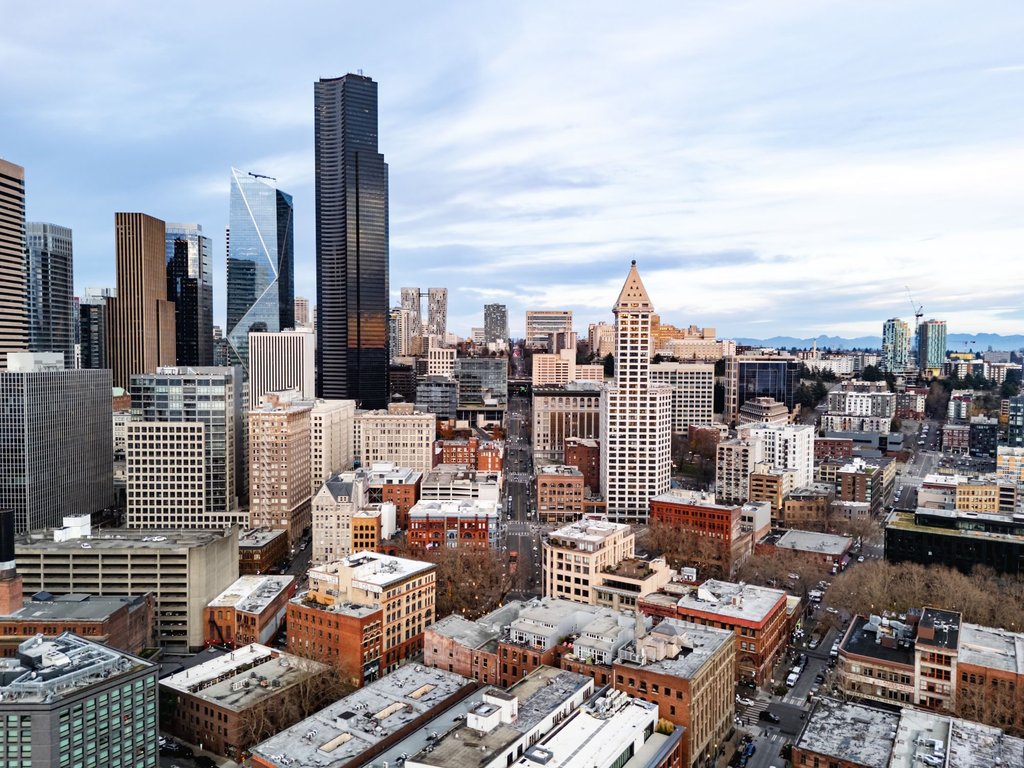
Airbnb management in Seattle is something you can self-manage. You handle the legal work, while your person on site handles physical work. BnBGenius answers guest messages on Airbnb and Vrbo 24/7. You keep control of your address choices, calendar, rates, permits, and tax filings. Your first 500 messages are free, with all features and no card; after that it is $10 a month per unit (each listing you connect).
Airbnb Management in Seattle: How You Self-Manage with BnBGenius
You can manage your own Airbnb while arranging for someone local to clean, check the home, and handle repairs. The City calls its required STR authorization a short-term rental operator license. Operators also need a business license tax certificate. An STR, or short-term rental, is a home or part of a home rented for a fee for fewer than 30 consecutive nights. (Seattle STR license page)
| The work | Who does it |
|---|---|
| Guest messages on Airbnb and Vrbo | BnBGenius answers guest messages on Airbnb and Vrbo 24/7 |
| Cleaning and repairs after checkout | BnBGenius creates cleaning and repair tasks after checkout; your person on site does the work |
| Guest reviews | BnBGenius requests a review from the guest and publishes the host's review |
| Guest calls | Voice Concierge, an add-on, answers guest calls with a voice AI agent |
| Extra nights and flexible times | BnBGenius sells gap nights, early check-in and late checkout |
| Prices and calendar | You: BnBGenius is not a pricing tool or a channel manager |
| Seattle permit, renewal, taxes and local contact | You: BnBGenius does not issue permits; permit and city duties remain yours |
BnBGenius installs as a Chrome extension in about 5 minutes, with no API keys and no passwords shared. BnBGenius is run from Telegram. For a general reference, see this overview.
The operator license is separate from the business license tax certificate; Seattle requires both for an STR. A local contact must live in King County and be available to respond to inquiries at the STR during the whole stay, and all guests must receive the contact details. The STR license costs $75 per dwelling each year, is paid with the application, and expires one year from issue; the business license certificate has a separate annual renewal clock. (Seattle STR license page)(Seattle Code §6.600.070.A.6)(Seattle Code §6.600.090.B)(Seattle Code §6.600.050.D)(Seattle business license page)
A Week of Self-Managing Your Airbnb in Seattle
1. Before selecting an address. Check land-use rules before you buy, furnish, or list a place. Airbnb management in Seattle starts with an address that qualifies for STR use. Use must be in a structure established as a dwelling. The exceptions include a dwelling established as caretaker’s quarters and use that is over water or otherwise barred by shoreline rules. Seattle also bars rentals of non-dwelling spaces such as tents, garages, boats, and RVs. It bars live-work units, caretaker quarters in commercial or industrial buildings, floating on-water residences such as houseboats, waterfront residences, and other lodging barred by the Shoreline Code. Review Seattle’s STR rules; do not assume every address qualifies. (Seattle STR license page)(Seattle Code §23.42.060.A)
2. Before choosing how many units to offer. For vacation rental management in Seattle, first check how many units you may offer. The general limit is one dwelling unit, or two if one is your primary residence. A primary residence is your usual place of return for housing, and a person may have only one. Limited provisions apply to some units legally operated before September 30, 2017; the City requires evidence of STR use in the 12 months before that date. Buying such a unit does not transfer its license. A new owner must apply for a new license to continue operating it. At application or renewal, the Director will require two documents verifying the primary-residence address. (Seattle Code §6.600.040.B)(Seattle Code §6.600.030)(Seattle STR license page)(Seattle Director Rule STR-3)(Seattle Director Rule STR-1)
3. Before applying. Get both city licenses and plan for the $75 annual STR license fee per dwelling, paid when you submit the application. A dedicated unit—one that is not your primary home or part of it—must register with and comply with the Rental Registration and Inspection Ordinance (RRIO). That includes a dedicated accessory dwelling unit (ADU) on the same parcel. A primary home still must meet basic habitability rules, but it does not need RRIO registration or inspection. (Seattle STR license page)(Seattle Code §6.600.090.B)(Seattle STR license page)
4. Before arrival. Check that every bedroom and all habitable floors have working smoke and carbon monoxide alarms. Keep a properly maintained and charged fire extinguisher in the dwelling. Post the required notice in a conspicuous place inside each unit. It must include emergency contacts for police, fire, or medical help; the street address; a floor plan with fire exits and escape routes; information on how guests can contact the City’s Customer Service Bureau to report concerns or complaints; maximum occupancy limits; and contact details for the operator or designated local contact. (Seattle Code §6.600.070.A.8)(Seattle Code §6.600.070.A.9)
5. During a stay. Give every guest the local contact information. The contact must reside in King County and be available to respond to inquiries at the STR during the stay. Meet the parking, noise, housing, building maintenance, and other code requirements that apply to the property. (Seattle Code §6.600.070.A.6)(Seattle SDCI STR page)
6. After checkout. Arrange for your on-site person to clean and handle needed repairs. As an optional habit, you can check that the guest notice is still posted and that the home is in the condition you expect.
7. Plan for taxes and renewal dates. Seattle business and occupation (B&O) tax is a gross-income tax. For 2026, the threshold is $2 million, but businesses must still report annual gross revenue even if no tax is due or there was no business activity. Annual Seattle B&O filers have an April 30, 2027 due date for the 2026 return. Separately, the STR license runs one year from issue, while the business license certificate expires December 31. (Seattle business taxes page)(Seattle Shield tax changes page)(Seattle Code §6.600.050.D)(Seattle business license page)

Seattle Short-Term Rental Permit and Rules: Your Checklist
For Seattle short-term rental permit requirements, the City calls its authorization a short-term rental (STR) operator license and requires both a business license tax certificate and a regulatory license for STRs. Put the Seattle short-term rental license number on every listing advertising or offering the dwelling unit, or portion of it, for STR use. Use this checklist to sort out address, unit, safety, contact, and renewal questions before hosting. (Seattle STR license page)(Seattle Code §6.600.070.A.4)
- Address and permitted use: STR use must be in a structure established as a dwelling. It cannot be in a dwelling established as caretaker’s quarters, over water, or otherwise barred by shoreline rules. Seattle also bars non-dwelling spaces, live-work units, and other listed types. Check the address and unit rules before you commit. (Seattle STR license page)(Seattle Code §23.42.060.A)
- Unit count: The usual limit is one dwelling unit. It can be two only if one is your primary residence. A person may have only one primary residence, the person's usual place to return for housing. A limited exception may apply to units lawfully used as STRs before September 30, 2017. The City requires proof of STR use in the 12 months before that date. (Seattle Code §6.600.040.B)(Seattle Code §6.600.030)(Seattle STR license page)
- Licenses, fee, and renewal: You need both city licenses: the business license tax certificate and the STR operator license. The STR fee is $75 per dwelling each year. Pay it with the application. The STR license expires one year from issue. The business license tax certificate expires December 31 and must be renewed each year. (Seattle STR license page)(Seattle Code §6.600.090.B)(Seattle Code §6.600.050.D)(Seattle business license page)
- RRIO and primary-home proof: A dedicated unit is one that is not your primary home or part of it. It must register with RRIO and follow its rules. This includes an ADU in the same structure or on the same property as your primary home. Your primary home must be fit to live in, but it does not need RRIO registration or an inspection. When you apply or renew, the Director will require two documents to verify your primary home's address. (Seattle STR license page)(Seattle Director Rule STR-1)
- Listing number: Put the City-issued STR operator license number on every listing. Use this format: STR-OPLI-##-######. Do not use an example number as your own license number. (Seattle Code §6.600.070.A.4)(Seattle STR license page)
- Safety and guest notice: Smoke and carbon monoxide alarms must work. Put them in every bedroom and on every habitable floor. Keep a fire extinguisher in good repair and charged. Post the notice where guests can clearly see it inside each unit. See week step 4 for all six items it must list. (Seattle Code §6.600.070.A.8)(Seattle Code §6.600.070.A.9)
- Local contact: Give all guests the local contact details. The contact must reside in King County and be available to respond to inquiries at the STR throughout the stay. (Seattle Code §6.600.070.A.6)
- Insurance: Choose one path. Path one: Keep liability insurance appropriate for STR use, with at least $1,000,000 in aggregate coverage. Path two: Conduct each STR transaction through a platform that provides equal or greater insurance coverage. The rule allows either path. (Seattle Code §6.600.070.A.10)
- Property rules and penalties: Meet the parking, noise, housing, building upkeep, and other codes that apply to your property. For a covered STR rule, a person found in violation for the first time is subject to a $500 penalty. A second or later covered violation within five years is subject to $1,000 for each later violation. Each day may count as a separate violation for a civil citation. See the FAQ for the warning rule. (Seattle SDCI STR page)(Seattle Code §6.600.120.B.5.a)(Seattle Code §6.600.120.B.5.b)(Seattle Code §6.600.120.B.5.d)
- Renewal payment: Reminders start at least 60 calendar days before expiry. After you get a reminder, you may renew through 10 calendar days after expiry without a penalty. If you do not renew by the last day of that grace period, a one-time $10 late penalty applies. The City will renew only when all penalties are paid in full. All past and current business, regulatory, and STR license fees must also be paid in full. (Seattle Director Rule STR-3)
"Short-term rental uses are permitted in any structure established as a dwelling unit unless (1) the proposed use is in a dwelling unit established as a caretaker's quarters, or (2) the proposed use is over water or otherwise prohibited by the shoreline regulations contained in Chapter 23.60A."
Source: Seattle Code §23.42.060.A What this means for you: A place that looks like a home may still fail the land-use test. Check that the structure is established as a dwelling. Also check for the caretaker and shoreline exclusions, including over-water use, before planning to host.
"Maintain liability insurance appropriate to cover the short-term rental use in the aggregate of not less than $1,000,000 or conduct each short-term rental transaction through a platform that provides equal or greater insurance coverage."
Source: Seattle Code §6.600.070.A.10 What this means for you: Choose based on how each booking is made. If you use the insurance path, your liability cover must fit STR use and total at least $1,000,000 in the aggregate. If you use the platform path, each STR transaction must go through a platform that provides equal or greater insurance coverage.
Seattle Airbnb Taxes
Seattle's separate STR tax under Ordinance 125442 was repealed in June 2018. That does not mean no tax applies. Seattle B&O is separate from Washington State taxes, and you must file Seattle taxes separately from state taxes. (Seattle STR license page)(Seattle business taxes page)
For 2026, Seattle's B&O threshold is $2 million in annual taxable revenue. Below that threshold, a business may owe no B&O tax for the year, but it must still file and report annual gross revenue, even with no tax due or no business activity. Annual filers' 2026 return is due April 30, 2027; that date is for annual filers, not every filing schedule. (Seattle business taxes page)(Seattle Shield tax changes page)
Washington lodging sales tax and state B&O are separate state obligations. Washington treats lodging for less than one month or fewer than 30 days in a row, when the rental does not start on the month's first day, as transient lodging. Keep the Seattle filing question distinct from the state lodging tax and state B&O questions. (Washington DOR lodging guide)
What Airbnb Management in Seattle Costs When You Self-Manage
Start with the City charges, but keep their bases and dates separate. The STR operator license fee is $75 per dwelling per year, paid when you submit the application. That license expires one year from its issue date. The business license tax certificate has a separate annual renewal: it expires December 31, and its main renewal fee is based on taxable revenue reported for the most recent complete calendar year. If filings for that period are incomplete or there is no tax history, the minimum fee will be charged. The City will bill for additional license fees later in the year if necessary. (Seattle Code §6.600.090.B)(Seattle Code §6.600.050.D)(Seattle business license page)
The $10 STR late penalty is one-time and applies if you miss the last day of the 10-day grace period. It is not a substitute for the renewal fee. The City also will not renew until all penalties and past and current business, regulatory, and STR license fees are paid in full. The $2 million 2026 B&O threshold is a tax threshold, not a guest-per-night tax or a license exemption. (Seattle Director Rule STR-3)(Seattle business taxes page)
Insurance is a separate choice. The rule allows liability insurance appropriate for STR use with at least $1,000,000 in aggregate coverage, or each STR transaction through a platform that provides equal or greater insurance coverage. Set your own budget for on-site cleaning and repairs. If you ask a management company to take on work, request its quote and compare its scope with the duties you will still retain. (Seattle Code §6.600.070.A.10)
BnBGenius is run from Telegram; Voice Concierge is $30/month. It includes 20 resolved calls each month, then $0.35 per resolved call. Your first 500 messages are free, with all features and no card; after that it is $10 a month per unit (each listing you connect). For more reading on the subject, see Airbnb accounting and tax software.
Seattle Airbnb FAQ for Self-Managing Owners
Who holds the Seattle STR operator license if I hire help?
Seattle defines the property owner as the operator. You may hire a management company to list and manage the STR, but the operator license must be in the owner's name. Hiring help does not move the license into the company's name. (Seattle STR license page)
What does Seattle count as a short-term rental?
It is a home, or part of a home, rented for a fee for fewer than 30 consecutive nights. A stay of 30 nights or more does not fit that definition. Other state tax rules may use their own lodging definitions, so keep the tax questions separate. (Seattle STR license page)(Washington DOR lodging guide)
Can I offer two units, or use a legacy unit?
The usual limit is one unit, or two if one is your primary residence. The City recognizes limited provisions for some units legally operated before September 30, 2017, with evidence of use in the 12 months before that date. A purchase does not transfer the former owner's license. (Seattle Code §6.600.040.B)(Seattle STR license page)(Seattle Director Rule STR-3)
Which homes or spaces are barred?
Seattle bars STR use in spaces that are not dwelling units, including garages, tents, boats, and RVs. Live-work units, caretaker quarters in certain commercial or industrial buildings, floating on-water residences such as houseboats, waterfront residences, and other lodging barred by shoreline rules are also excluded. (Seattle STR license page)(Seattle Code §23.42.060.A)
Does an ADU count as my primary home for RRIO?
A dedicated ADU on the same property as your primary home must register with and comply with RRIO. Your primary home must meet basic habitability requirements, but it does not need RRIO registration or inspection. At application or renewal, the Director will require two documents to verify the primary-residence address. (Seattle STR license page)(Seattle Director Rule STR-1)
When do the licenses renew, and what fees apply?
The STR fee is $75 per dwelling each year, paid with the application; the STR license expires one year from issue. The business license certificate expires December 31 and renews annually based on reported taxable revenue, subject to the City's fee rules. The clocks and fee bases differ, so track them separately. (Seattle Code §6.600.090.B)(Seattle Code §6.600.050.D)(Seattle business license page)
What safety items and guest information must be in the home?
Seattle requires working smoke and carbon monoxide alarms in every bedroom and on all habitable floors, plus a properly maintained and charged extinguisher. The conspicuous notice must give emergency contacts, the street address, a floor plan with fire exits and escape routes, how to contact the City’s Customer Service Bureau to report concerns or complaints, maximum occupancy limits, and contact details for the operator or designated local contact. (Seattle Code §6.600.070.A.8)(Seattle Code §6.600.070.A.9)
Where must my local contact live, and what must they do?
The contact must reside in King County, Washington, and be available to respond to inquiries at the STR during the length of the stay. Give the contact information to all guests during their stay. (Seattle Code §6.600.070.A.6)
What insurance options does Seattle allow?
You can meet the rule through either of two paths: keep liability insurance appropriate for STR use with at least $1,000,000 in aggregate coverage, or conduct each STR transaction through a platform that provides equal or greater insurance coverage. The platform path applies to each transaction. (Seattle Code §6.600.070.A.10)
What can happen after a rule violation, and what must I file for 2026?
A person found in violation of a covered STR rule the first time is subject to a $500 penalty. The Director may issue a warning only if the person has not been previously warned or cited for violating Chapter 6.600. A second or later violation within five years is subject to $1,000 for each later violation, and each day may count as a separate violation for a civil citation. For 2026, annual Seattle B&O filers must file by April 30, 2027, and report revenue even if no tax is due or there was no business activity. (Seattle Code §6.600.120.B.5.a)(Seattle Code §6.600.120.B.5.b)(Seattle Code §6.600.120.B.5.d)(Seattle business taxes page)(Seattle Shield tax changes page)
Airbnb Property Management in Seattle: Self-Manage or Hire a Company
Airbnb property management in Seattle can mean keeping the owner duties with you or asking a management company to take on the work. The choice does not remove the City license and tax questions; compare each option against the time and on-site help your home needs.
Rules and rates last checked on 15 November 2026.