
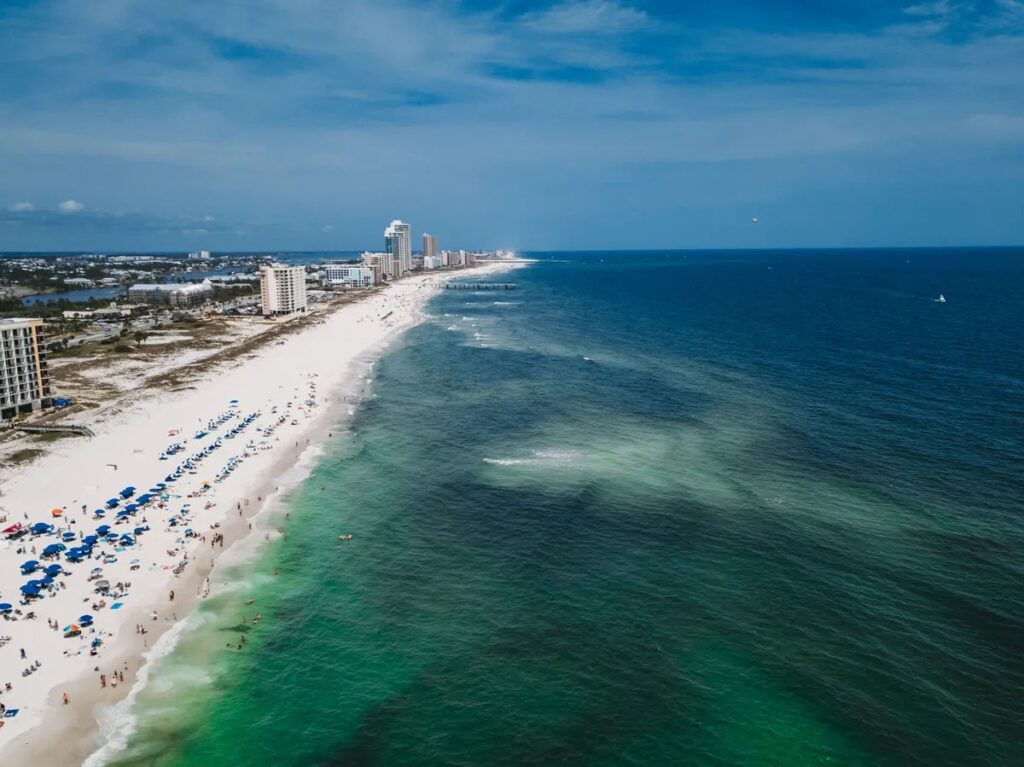
You rent out one or more properties in Gulf Shores on Airbnb and Vrbo, and you run them yourself. This page covers what the city requires (starting with the business license), the taxes, and which guest work software can handle.
Here is who does what. Your local emergency contact does the visits and anything that needs hands on site. BnBGenius answers guest messages on Airbnb and Vrbo 24/7 and creates cleaning and repair tasks after checkout. You handle the city license and the taxes.
The city requires a business license from every owner who rents out property inside its corporate limits or police jurisdiction.
“All property owners that engage in the rental of their property in the city’s corporate limits or police jurisdiction are required to complete and submit a business license application.”
What this means for you: This is a business license, and you apply for it yourself. It covers rentals inside the city limits and in the police jurisdiction. If your property is in either area, the rule applies to you.
The city’s rental license page also lists a local emergency contact among its additional requirements.
“Designation and maintenance of local emergency contact by Licensee”
What this means for you: As the licensee, you must name a local emergency contact. You must also keep that contact up to date with the city.

What BnBGenius Does for a Host in Gulf Shores
Answers guest messages on Airbnb and Vrbo 24/7
Guests on Airbnb and Vrbo may ask about noise, trash and check-out time. The city code names conduct that disturbs neighbors as a reason an owner or the owner’s authorized agent may remove a guest — that quote is under “What the City Requires” below. The answers to these questions belong in your house rules and check-in instructions. BnBGenius answers guest messages on Airbnb and Vrbo 24/7, but it does not know local rules by itself. It is also not the city’s local emergency contact.
Requests a review from the guest and publishes the host’s review
BnBGenius requests a review from the guest and publishes the host’s review. A review does not replace house rules.
Kent Morgan, BnBGenius co-founder:
“We went from reviewing 40% of stays to 100% overnight. The AI even thanked guests for things we fixed mid-stay. Our review-to-review rate jumped immediately.”
Kent Morgan, BnBGenius co-founder, on bnbgenius.ai/reviews
Creates cleaning and repair tasks after checkout
One local item belongs on your turnover checklist. The city code makes it an offense for the owner or rental agent to allow litter to accumulate and remain on the property or on the adjacent public beach project area, when it becomes a public nuisance. The full quote is under “What the City Requires” below. BnBGenius creates cleaning and repair tasks after checkout, but the cleaning, trash and repairs themselves are done by your person on site. Agree turnover times with them so the work fits between bookings.
Kent Morgan, BnBGenius co-founder:
“We used to find out about issues in post-stay reviews. Now BnBGenius flags them mid-stay, creates the task, and our cleaners respond in under 15 minutes.”
Kent Morgan, BnBGenius co-founder, on bnbgenius.ai/tasks
Answers guest calls with a voice AI agent
Voice Concierge, an add-on, answers guest calls with a voice AI agent. It does not make BnBGenius the local emergency contact. It also does not replace a person who can come to the rental when something needs hands on site.
Kent Morgan, BnBGenius co-founder:
“The concierge answered 84% of our after-hours calls last month without waking anyone up. Guests thought it was our in-house team the whole time.”
Kent Morgan, BnBGenius co-founder, on bnbgenius.ai/voice
Sells gap nights, early check-in and late checkout
BnBGenius sells gap nights, early check-in and late checkout. Agree early check-in and late checkout times with your local person, so cleaning still fits between guests. For checkout time itself, the code points to the time agreed in writing with the guest — that quote is under “What the City Requires” below.
Is run from Telegram
BnBGenius is run from Telegram. The split of responsibilities does not change: your local person does the visits, and you handle the license and the taxes.
Your Local Person
A cleaner or a handyman can do the visits. The litter rule in the city code tells a beach enforcement officer to try the local emergency contact on file before the city cleans up a litter nuisance.
“shall attempt to contact any local emergency contact for the property identified in the records of the city revenue department”
What this means for you: The city keeps the emergency contact in its revenue records. Tell the city when the contact changes.
The rental license page quoted on this page does not state a response time for the emergency contact, so ask the city what it expects.
If a management company is used, the city’s lodging tax page speaks to who collects the tax; the full tax section is below.
“Please be aware that if a management company is obtained, you need to be sure that they are collecting and remitting tax on your behalf. If you leave a management company’s rental program, then you become responsible for collecting and remitting lodging taxes back to State, County, and City.”
What this means for you: If you hire a management company, check that it collects and remits the tax for you. If you leave its rental program, the tax job comes back to you. You would then collect and remit to the State, the County and the City.
You organize cleaning and repairs yourself, through your local person or a cleaning company you choose. BnBGenius creates cleaning and repair tasks after checkout, but it does not do the physical work. Keep the same house rules and check-in instructions on Airbnb and Vrbo, so guests get the same answers on both.
BnBGenius is not the city’s local emergency contact; that role is held by the person you name.
What the City Requires
License and renewal.
“Be aware that business licenses expire December 31st. Renewals are due January 1st and are delinquent after January 31st.”
What this means for you: Your license runs on the calendar year. It expires on December 31. Renewals are due on January 1. After January 31, a renewal is late. Set a reminder before the end of the year.
Fee.
“Fees Based on Gross Receipts, Fee Schedule A Rental Fee – $45 (Short-term rentals only)”
What this means for you: The quote shows the rental fee for short-term rentals. The same quote says the fees are based on gross receipts under Fee Schedule A. Check the schedule or ask the city for your total.
Safety inspection.
“Safety Inspections are required every 3 years. Contact the Building Department at (251) 968-1142 for questions or to schedule a safety inspection.”
Source: City of Gulf Shores Rental Property License Checklist
What this means for you: Inspections are required every 3 years. The checklist gives a Building Department phone number for questions and for scheduling. Call it to schedule.
Lodging tax comes with the license.
“In addition to the business license, please be aware that there is lodging tax associated with short term vacation rentals”
What this means for you: The lodging tax is separate from the license. The details are under “Taxes”.
Removing a guest. Section 11-100 of the city code defines vacation rental occupancy first.
“Vacation rental occupancy means occupancy under any lease, sublease, rental, or other licensing of the use of a vacation rental unit for any period of fewer than one hundred eighty (180) consecutive days.”
The section then lists reasons for which an owner may remove a guest.
“The owner of any vacation rental unit or the owner’s authorized agent may remove or cause to be removed from the premises of such unit, in the manner hereinafter provided, any guest, together with any other person present on the premises of the unit as the invitee or permittee of the guest, if the guest or any other person, while on the premises of the unit:”
Three of the reasons it lists:
“Indulges in any language or conduct which disturbs the peace and comfort of the occupants of neighboring accommodation units”
Source: City of Gulf Shores Code Sec. 11-100(b)(4)
“Allows occupancy of the unit by a number of persons exceeding the maximum permitted occupancy number, if any, specified in the written vacation rental agreement”
Source: City of Gulf Shores Code Sec. 11-100(b)(6)
“Fails to check out by the time agreed upon in writing by the guest at check-in”
What this means for you: The code lets you or your authorized agent act on the three quoted points. So put the occupancy number and the check-out time in the written agreement and in the house rules. Read the full Section 11-100 or ask the city before relying on it. The quotes show only the reasons, not the procedure.
Litter and the beach.
“It shall be an offense punishable as provided in section 6-16 of this Code for the owner or rental agent of a property, either or both, to allow any litter to accumulate and remain on such property or adjacent public beach project area so as to constitute a public nuisance condition.”
Source: City of Gulf Shores Code Sec. 6-15(a)
“Each day or portion of a day on which the public nuisance condition exists shall constitute and be punishable as a separate offense.”
What this means for you: The code names the owner or the rental agent. Every day the nuisance lasts counts as its own offense. Put trash and cleanup in the turnover checklist.
Taxes
Alabama taxes lodging, and so do Baldwin County and the City of Gulf Shores.
“The lodgings tax is a privilege tax on persons, firms, and corporations engaged in renting or furnishing rooms, lodgings, or other accommodations to transients for periods of less than 180 days of continuous occupation and applies to all charges for providing such accommodations.”
Source: Alabama Department of Revenue Lodgings Tax FAQ
“In all other Alabama counties, the state lodgings tax rate is 4 percent of the charges for accommodations.”
The state revenue department says local lodging taxes differ by place.
“Local lodgings tax is levied in the same manner as the state lodgings tax; these rates vary.”
What this means for you: The state tax is 4 percent of the charges for accommodations. It applies to stays shorter than 180 days. Local rates differ by place, so read the city rate too.
The City of Gulf Shores sets its own tax.
“Lodging tax is due on any hotel/motel room or short-term condo, house, and duplex rental as well as tourist camp/cabin in the city’s corporate limits as well as the police jurisdiction.”
The city’s lodging tax page lists the total and each part.
“Lodging Tax total is 16% Corporate Limits, 11% Police Jurisdiction 4% – State of Alabama 2% – Baldwin County 10% – City – Corporate Limits/5% – City – Police Jurisdiction”
The city code sets the city rate at 10 percent for transactions entered into on or after September 1, 2023.
“For transactions entered into on or after September 1, 2023, the tax rate is increased to ten (10) percent of the gross proceeds.”
The police jurisdiction pays half the city rate.
“at one-half (½) the rate specified in section 8-201 of this article”
The tax base includes cleaning fees.
“Monthly gross revenue including rental, parking, and cleaning fees”
Source: City of Gulf Shores Rental Property License Checklist
What this means for you: The city page lists a 16 percent total in the corporate limits (4 + 2 + 10). In the police jurisdiction the total is 11 percent (4 + 2 + 5). The code sets the city part at 10 percent, half of that in the police jurisdiction. The tax base includes cleaning fees. Ask the city which area your address is in.
How and when to file:
“All taxes are due on or postmarked by the 20th for the month prior. A tax return is required to be filed even if there were no taxes collected or receipts earned.”
Source: City of Gulf Shores Lodging Tax page
“Filing Options Electronically through My Alabama Taxes”
Source: City of Gulf Shores Lodging Tax page
“A failure to timely file and pay a penalty plus interest will be assessed on any tax not filed and/or paid by the 20th of the month in which the tax is due.”
What this means for you: File every month by the 20th, even with no rentals. You can file electronically through My Alabama Taxes. A late or missing filing brings a penalty plus interest.
If a management company is used, make sure it is collecting and remitting — that quote is under “Your Local Person” above.
| Platform | What the platform lists | What the owner checks |
|---|---|---|
| Airbnb | “Effective September 15th, 2026, Airbnb will collect and remit the following taxes:” (Source: Airbnb Help 2293) “Alabama State Lodging Tax: 4-5% of the listing price including any cleaning fee and guest fee for reservations 179 nights and shorter.” (Source: Airbnb Help 2293) “County Lodging Taxes collected by the State: 1-9% of the listing price including any cleaning fee and guest fee for reservations 179 nights and shorter.” (Source: Airbnb Help 2293) “Guests who book Airbnb listings that are located in the City of Gulf Shores, AL will pay the following tax as part of their reservation: Lodging Tax: 10% (5% in Police Jurisdiction) of the listing price, including any cleaning fees, for reservations up to 179 nights.” (Source: Airbnb Help 2293) | “Hosts may need to manually collect and remit other applicable taxes on their stay or experience price.” (Source: Airbnb Help) |
| Vrbo | “Alabama State Lodging Tax & State Administered Local Tax The State of Alabama under 180 nights January 1, 2025” (Source: Vrbo Help) | “You’re also responsible for collecting and remitting lodging taxes when we’re not liable to do so.” (Source: Vrbo Help) |
What this means for you: The city page lists 4 percent state tax. It also lists 2 percent for Baldwin County. It lists 10 percent for the city, and 5 percent in the police jurisdiction.
Airbnb lists the state tax as 4-5 percent. It lists a county range of 1-9 percent collected by the state. It lists 10 percent for Gulf Shores, 5 percent in the police jurisdiction. Its page says collection starts on September 15th, 2026.
Vrbo lists “Alabama State Lodging Tax & State Administered Local Tax” for the State of Alabama. Its list has no separate Gulf Shores entry. After each booking, check on both platforms which taxes were collected. Check whether anything is left for you to collect and remit.
BnBGenius is not an accounting tool.
Airbnb and Vrbo
| Guest work | Airbnb | Vrbo |
|---|---|---|
| Messages | “Every reservation automatically creates a group thread where all bookers, co-travelers, hosts and co-hosts can connect.” (Source: Airbnb Help) | “You can send a message to a host through our secure messaging platform.” (Source: Vrbo Help) |
| Reviews | “On the day of checkout, both the guest and their host will be prompted to leave a review . Both parties will have 14 days after checkout to submit their review.” (Source: Airbnb Help) | “You and your guests have 180 days to provide your review. Once one party submits their review, the other party has 14 days to complete their review.” (Source: Vrbo Help) |
| Check-in details | “Guests will see your check-in method (such as smart lock, keypad, or lock box) but they won’t see the detailed check-in instructions until 48 hours before check-in.” (Source: Airbnb Help) | “The welcome guide includes: Host or property manager contact information. Directions to the property. Parking instructions. Access instructions. Check-in and check-out instructions.” (Source: Vrbo Help) “The welcome guide information is emailed to your guests in the language you wrote it in, three days before check-in.” (Source: Vrbo Help) |
| Listing details | Both listings should show the same house rules. | Both listings should show the same house rules. |
What this means for you: Each platform handles messages and reviews its own way, so keep your house rules the same on both. Write the same house rules and check-in instructions on both listings. Guests get check-in details at different times on each platform, so do not rely on one platform’s timing.
On both platforms, answers about noise, trash, check-out time and the emergency contact’s details must rest on your house rules and check-in instructions. BnBGenius answers guest messages on Airbnb and Vrbo 24/7 and requests a review from the guest and publishes the host’s review. You check taxes separately.
How to Start
BnBGenius is not a PMS, a channel manager, a calendar sync, a direct-booking, pricing or accounting tool.
More City Guides
- Airbnb rules in Destin, FL
- Self-managing an Airbnb in Panama City Beach, FL
- Airbnb rules in Tarpon Springs, FL
- Airbnb rules in Dunedin, FL
Rules and rates last checked on 2 October 2026.