
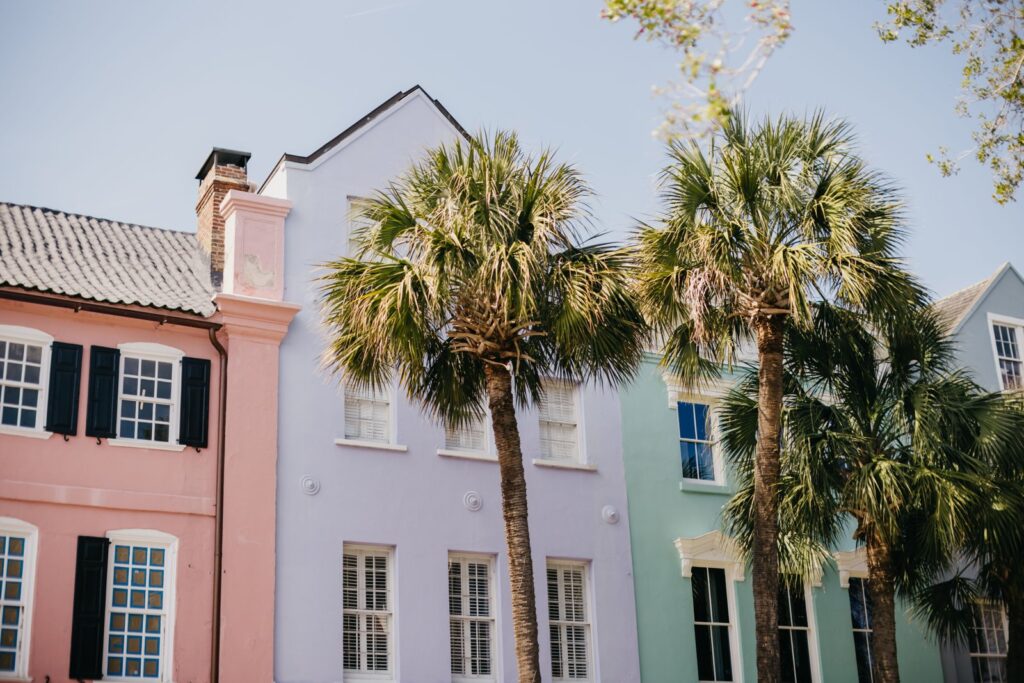
Whether you can rent your Charleston home on Airbnb or Vrbo depends on your address, how you use the property, and which permits you hold. You check zoning, permits and taxes with the city and county, and you arrange the physical work. If your address and rental plan qualify, BnBGenius answers guest messages on Airbnb and Vrbo 24/7 and creates cleaning and repair tasks after checkout.
What Is Banned or Limited
The primary-home rule comes first.
“Most importantly, to qualify for legal short term renting, the property must be the owner’s full time primary residence, as verified by receiving the County’s 4% Legal Residence tax exemption for owner- occupied property. This means that investment properties are not be eligible for short term renting, except for commercially zoned properties in the Short Term Rental overlay. However, portions of existing dwellings or accessory dwellings on a property are eligible.”
Source: City of Charleston STR FAQ
What this means for you: To rent short term in a residential area, the home must be your full-time home. The county checks this through its 4% property-tax class for homes the owner lives in. A home you own but do not live in is not eligible. The exception is for property zoned for commercial use. It must also sit inside the city’s rental overlay. Parts of an existing home may still qualify.
For residential rentals, the owner must stay overnight with the guests.
“The residential STR shall be operated by the record owner of the subject property who shall also be a resident of the subject property and who shall be residing overnight on the property while residential STR guests are present; and”
What this means for you: The record owner must run the rental, live on the property, and stay overnight whenever guests are present. You cannot give this overnight role to a cleaner, a co-host, or software.
Where Short-Term Rentals Are Allowed
Commercial zoning is one route that skips the primary-home rule.
“Commercial Short Term Rentals are allowed in commercial zoning districts (CT, LB, GB, UC, MU-1, MU-1/WH, MU-2, MU-2/WH) within the Short Term Rental Overlay Zone. Unlike the other permit categories, commercial Short Term Rentals units are not required to be 4% assessed properties or be the owners primary residence.”
What this means for you: Commercial short-term rentals are allowed in 8 named commercial zoning districts. But the property must also sit inside the overlay zone. Both conditions must be met. Not every commercial property qualifies. Commercial units do not need the 4% property-tax class.
Residential permission is conditional.
“A residential short term rental use may be permitted as a Category 1, Category 2, or Category 3 STR Permit, if the zoning administrator determines the STR to be an accessory use to the principal residential use on a property which satisfies the requirements of Section 54-208.1 , 54-208.2 , or 54-208.3 , as applicable, and issues a permit for such STR use.”
What this means for you: A home rental may be allowed under 1 of 3 permit types. The city must first decide the rental is secondary to the main home use. Your property must also meet the rules for your permit type. Only then may the city issue a permit.
Category 1 covers a peninsula area in the historic district.
“Residential Category 1 corresponds to the area of the peninsula in the Old and Historic District (PDF) (area in light purple). In addition to meeting the general requirements for a residential short term rental permit, units in Category 1 must meet the following requirements:”
Source: City of Charleston STR categories
“The Short Term Renal unit shall be located within an existing structure or accessory building that is individually listed on the National Register of Historic Places.”
What this means for you: Category 1 applies to the peninsula area named in the quote. The unit must sit in an existing structure or an outbuilding. The building must have its own spot on the named historic list.
Category 2 covers other peninsula areas with an age test.
“Residential Category 2 corresponds to areas of the peninsula outside of the Short Term Rental Overlay and the Old and Historic District. In addition to meeting the general requirements for a short term rental permit, units in Category 2 must meet the following requirements:”
Source: City of Charleston STR categories
“The Short Term Rental unit shall be located in a building constructed 50 or more years ago.”
What this means for you: Category 2 covers peninsula areas outside the overlay and the historic district. The unit must be in a building constructed 50 or more years ago. Newer buildings do not fit.
Category 3 covers off-peninsula areas.
“Residential Category 3 corresponds all areas of the city off of the peninsula including West Ashley, Johns Island, James Island, and Daniel Island. In addition to meeting the general requirements for a short term rental permit, units in Category 3 must meet the following requirements:”
What this means for you: Category 3 covers the areas named in the quote, which lie off the peninsula. It is not permission for every address there. You still need to meet the general rules and get a permit.
How to Check Your Address
The city’s Interactive Zoning Map is the official lookup.
“Enter an address or tax map number into the search input box and hit enter or click the search button If multiple properties are found that are similar to that address, select the correct address.”
What this means for you: Type your address or tax map number into the search box and press enter. If several similar addresses appear, pick the correct one. Then match your result to the 3 residential categories or the 8 commercial districts. If anything is unclear, ask the city to confirm before you spend money.
You can also look up existing permits.
“You can search for active permits using the permit search option on the Citizen Self Service ( CSS ) Portal. You can search by address or permit type. STR permits are categorized as operational permits.”
Source: City of Charleston STR FAQ page
What this means for you: The Citizen Self Service Portal lets you search active permits by address or permit type. Short-term rental permits are classed as operational permits. A permit record for an address does not approve your proposed use.

What the City Requires Where Rentals Are Allowed
Approvals come before any advertising.
“You must NOT advertise or operate an STR or B&B until all approvals and inspections are completed, all fees are paid, a valid Certificate of Operation has been issued for the STR or B&B Operational Permit, and a corresponding Business License has been issued.”
Permits renew every year.
“ALL STR AND B&B PERMITS ARE REQUIRED TO BE RENEWED ANNUALLLY BY THE ORIGINAL DATE OF ISSUANCE.”
What this means for you: Do not advertise or operate yet. First, finish all approvals and inspections. Pay all fees. Then get the certificate the quote names. Also get your business license. Renew your permit each year by its original issuance date.
The city lists several fees.
“Effective January 1, 2024 there is a $345 zoning and application review fee that is collected at the time of application submission.”
Source: City of Charleston Applicable Fees
“The Fire inspection and plan review includes a $40 application fee, a $32.61 plan review fee, and a $32.61 inspection fee. These fees will be collected when the permit is received.”
Source: City of Charleston Applicable Fees
“There is a $64 base fee for a City of Charleston business license, plus $3.90 per additional $1,000 of expected income. The business license fee will be collected when the permit is received.”
What this means for you: The zoning and application review fee is collected when you apply. The fire fees are collected when the permit is received. The business license has a base fee plus an extra amount based on expected income, also collected when the permit is received.
Residential listings must show the permit number.
“The resident owner and the owner’s agent shall list the Residential STR Permit number on all advertisements, listings with booking services, and marketing materials, including without limitation, Airbnb, VRBO/Homeaway, FlipKey, and any other online websites and listing or booking platforms or services.”
What this means for you: Put your permit number on all ads. That includes your listings and any marketing materials. It must appear on both Airbnb and Vrbo.
Parking rules differ by permit type.
“Property shall provide 1 off street parking space in addition to providing, on the subject property, required off street parking for existing uses on the property. The parking space may be situated in tandem with the required spaces for other uses on the property.”
Source: City of Charleston STR categories
“Existing parking spaces on the property, if any, that satisfy the off-street parking requirements of this Chapter for the dwelling units being converted to short term rental units shall be shown on the site plan submitted with the application and shall be retained and used for the short term rental units and no additional parking spaces shall be required.”
What this means for you: For homes, you need 1 extra off-street parking space on the property. You also need the parking already required for the existing use. The extra space may sit in tandem with the others. That means one car behind another. For commercial rentals, any existing spaces that qualify must be shown on the site plan. Those spaces are kept for the rental units. No extra spaces are required.
Unit counts and guest caps also differ.
“No more than nine short term rental units shall be permitted on one lot. Ten or more short term rental units on one lot shall require approval as an accommodations use pursuant to the requirements of the accommodations overlay zone.”
Source: City of Charleston STR categories
“Up to four adults, regardless of relationship, can stay overnight in an STR.”
Source: City of Charleston STR FAQ
What this means for you: Commercial lots are capped at 9 rental units. Ten or more requires approval as an accommodations use under the overlay. For homes, up to 4 adults can stay overnight, no matter their relationship.
Residential owners carry several ongoing duties.
“The resident owner shall provide a rental packet containing applicable city rules and restrictions specified in the Residential STR Permit application materials, as well as pertinent unit safety information and contact information to guests when they book the STR and shall prominently display the STR Permit, rules, safety and contact information within the STR; and”
Source: Charleston Zoning Code Section 54-208(b)(7)
“The record owner of the subject property must keep in full force and effect during all times the STR is operated a general liability policy with a company authorized to do business in the State of South Carolina insuring against personal injury (including death) and property damage with limits of no less than $1,000,000.00 per occurrence; and”
Source: Charleston Zoning Code Section 54-208(b)(4)
“The resident owner shall keep a current guest register including names, addresses, telephone numbers and dates of occupancy of all guests; and”
What this means for you: Give guests a packet when they book. It holds the city rules, safety facts, and contact details. Also post the permit, rules, safety and contact information inside the unit where guests can see them. Keep liability insurance in force the whole time you operate. It must come from an insurer allowed in South Carolina. It must cover injury, death and property damage. The quote sets the per-occurrence limit. Keep a current guest register with the fields the quote lists.
Fines and Enforcement
Violations are criminal matters under the zoning code.
“A violation of this Chapter is a misdemeanor punishable by a fine and/or incarceration. Each day the unlawful erection, construction, reconstruction, alteration, conversion, maintenance, use, or other violation under this Chapter continues is considered a separate offense. Any violation of this Chapter entitles the zoning administrator to revoke the STR or bed and breakfast permit.”
The city’s FAQ describes permit revocation.
“Three findings of guilt by the City of Charleston’s Livability Court will result in a revocation of the STR permit. Listing additional units, an ineligible property, or other violations as determined by the Zoning Administrator will lead to immediate revocation of the STR permit. A revoked STR permit cannot be reestablished for 24 months.”
Source: City of Charleston STR FAQ
What this means for you: A zoning violation is a misdemeanor. It can bring a fine, jail, or both. Each day a violation continues is a separate offense. Any violation lets the city take away your permit. The city FAQ adds that 3 guilty findings in its court lead to losing the permit. Some listed actions cause immediate loss instead. After a permit is lost this way, you cannot get one again for 24 months.
There is also a separate state provision about local tax.
“In addition to other penalties and interest imposed by the ordinance of an implementing jurisdiction for failure to comply with local accommodations tax requirements imposed pursuant to Article 5 of this chapter required of owners in the business of renting residential accommodations to tourists, the jurisdiction may impose, with respect to a single rental property, a one-time civil penalty for noncompliance for failure to collect and remit local accommodations tax of not less than five hundred dollars nor more than two thousand dollars for each seven days the property was rented. This additional penalty may not be imposed unless the owner has received the notice provided pursuant to subsection (B).”
What this means for you: This state law is about unpaid local lodging tax only. It is not the zoning offense. A local government may impose a one-time civil penalty. It applies to a single rental property. The penalty is counted for each 7 days the property was rented. First, the owner must receive the required notice. The penalty is not automatic.
Taxes
The state lodging tax applies to short stays.
“A sales tax equal to seven percent is imposed on the gross proceeds derived from the rental or charges for any rooms, campground spaces, lodgings, or sleeping accommodations furnished to transients by any hotel, inn, tourist court, tourist camp, motel, campground, residence, or any place in which rooms, lodgings, or sleeping accommodations are furnished to transients for a consideration.”
Source: South Carolina accommodations tax rate and taxable lodging
“Accommodations Tax applies to sleeping accommodations of any kind that are rented to guests for less than 90 consecutive days.”
Source: South Carolina accommodations tax applies to stays under 90 consecutive days
What this means for you: South Carolina charges a 7% tax on the money you take for covered rentals. It applies when a guest stays less than 90 days in a row. The state law also lists exemptions, covered in the next group.
The state law also lists exemptions.
“This tax does not apply: (1) where the facilities consist of less than six sleeping rooms, contained on the same premises, which is used as the individual’s place of abode; or (2) to gross proceeds from rental income wholly excluded from the gross income of the taxpayer pursuant to Internal Revenue Code Section 280A(g) as that code is defined in Section 12-6-40(A).”
Source: South Carolina Code Section 12-36-920(A)
“The gross proceeds derived from the lease or rental of sleeping accommodations supplied to the same person for a period of ninety continuous days are not considered proceeds from transients.”
What this means for you: The state tax does not apply where the facilities have fewer than 6 sleeping rooms on the same premises used as an individual’s home. It also does not apply to rental income wholly excluded under the federal tax code section named in the quote. Proceeds from accommodations supplied to the same person for 90 continuous days are not transient proceeds. These are state tax matters only. They do not waive city permits, county fees or local taxes.
Local fees add to the state tax.
“Charleston County Ordinance # 910, adopted by Charleston County Council on November 16, 1993, established an Accommodations Fee of 2 percent (2%) to be collected from renters of transient room accommodations (occupied less than thirty-day duration). These include hotels, motels and other lodging facilities that offer accommodations to tourists throughout the entire Charleston County area including the municipalities within Charleston County.”
Source: Charleston County Accommodations Fee Information
“CITY OF CHARLESTON 2%”
Source: Charleston County Accommodations Fee Information
“Properties located within the above listed cities or towns are subject to the Accommodations Fee Rate for the city or town plus the 2 percent (2%) fee rate for Charleston County.”
What this means for you: Charleston County charges a 2% fee on stays under 30 days. This applies across the county, including its cities. The listed rate for the City of Charleston is 2%. Properties inside the city pay the City of Charleston rate plus the Charleston County 2%. The City of Charleston also extends into Berkeley County. If your address is there, confirm your applicable taxes with the city and tax offices.
The city warns that responsibility stays with you.
“Short term rental operators must collect the following taxes. Even if you hire a property manager, you as the property owner are ultimately responsible for collecting these taxes from the renters and submitting them to the appropriate state and local agencies.”
Source: Charleston owner remains responsible for collecting and submitting taxes
“The rules for when you are required to collect sales and accommodation taxes are complicated and depend on whether your house is a primary (4%) or secondary (6%) residence and how many days of the year it is rented. Rules may differ between city, county and state taxes. See below for more information.”
Source: City of Charleston STR tax page
“If your short-term rental property is rented through an online marketplace, be aware that not all of these entities collect and remit the local accommodations tax on your behalf. Some only collect and remit the state imposed accommodations tax. It is your responsibility to determine if you need to collect and remit the local accommodations tax to Charleston County as shown on the above chart.”
Source: Charleston warns marketplaces may not collect local accommodations tax
What this means for you: Rental operators must collect the required taxes. Even if you hire a management company, you as the owner are ultimately responsible for collecting and submitting them. The city says the rules are complicated and depend on your residence status and how many days per year it is rented. Rules may differ between city, county and state. If you rent through an online marketplace, not all of them collect the local accommodations tax for you. Some only handle the state tax. You must determine whether you owe the local tax.
Here is what each platform says it collects:
| Platform | What its help page lists | What the owner checks |
|---|---|---|
| Airbnb | “South Carolina State Sales and Use Tax: 5% of the listing price including any cleaning fee and guest fee for reservations 89 nights and shorter.” (Source: Airbnb South Carolina state administered tax lines) “South Carolina State Accommodations Tax: 2% of the listing price including any cleaning fee and guest fee for reservations 89 nights and shorter.” (Source: Airbnb South Carolina state accommodations tax line) “Accommodations Fee: 2% of the listing price including any cleaning fees and guest fees, for reservations 29 nights and shorter.” (Source: Airbnb Charleston County accommodations fee line) “Local Accommodations Tax: 2% of the listing price including any cleaning fees and guest fees, for reservations 29 nights and shorter. The County local accommodations tax also applies.” (Source: Airbnb Charleston local accommodations tax line) | “Hosts may need to manually collect and remit other applicable taxes on their stay or experience price.” (Source: Airbnb Help) |
| Vrbo | “State Sales Tax, State Accommodations Tax, Local Option Tax, Capital Projects Tax, School District Tax, Transportation Tax, Education Capital Improvement Tax, Tourist Development Tax, Local Accommodations Tax The state of South Carolina under 90 nights. Local tax exemptions may vary by locality.” (Source: Vrbo Help South Carolina row) | “You’re also responsible for collecting and remitting lodging taxes when we’re not liable to do so.” (Source: Vrbo Help) |
What this means for you: Airbnb lists state taxes for reservations of 89 nights and shorter, and local fees for reservations of 29 nights and shorter. Vrbo lists South Carolina tax types for stays under 90 nights, and says local exemptions may vary by locality. No Charleston-specific percentage for Vrbo appears in its listed row. Both platforms say you may owe taxes they do not collect. So check what was collected on each booking and remit what you owe. BnBGenius is not an accounting tool, so keep your own tax records.

If Your Address Qualifies: What BnBGenius Does
BnBGenius does not check zoning, know local rules, file permits, or replace the residential owner’s overnight presence.
Answers Guest Messages on Airbnb and Vrbo 24/7
BnBGenius answers guest messages on Airbnb and Vrbo 24/7. For residential rentals, the 4-adult overnight cap can go into your house rules so guests see it in writing. See how it works for Airbnb automated messages and Vrbo automated messages.
Requests a Review from the Guest and Publishes the Host’s Review
BnBGenius requests a review from the guest and publishes the host’s review. Kent Morgan, BnBGenius co-founder, described the difference this made. His results are his own, not Charleston outcomes or guarantees.
“We went from reviewing 40% of stays to 100% overnight. The AI even thanked guests for things we fixed mid-stay. Our review-to-review rate jumped immediately.”
Kent Morgan, BnBGenius co-founder, on bnbgenius.ai/reviews
Creates Cleaning and Repair Tasks After Checkout
BnBGenius creates cleaning and repair tasks after checkout. The physical work is still done by people you arrange. Kent Morgan again:
“We used to find out about issues in post-stay reviews. Now BnBGenius flags them mid-stay, creates the task, and our cleaners respond in under 15 minutes.”
Kent Morgan, BnBGenius co-founder, on bnbgenius.ai/tasks
Answers Guest Calls with a Voice AI Agent (Voice Concierge, an Add-On)
Voice Concierge, an add-on, answers guest calls with a voice AI agent. Kent Morgan:
“The concierge answered 84% of our after-hours calls last month without waking anyone up. Guests thought it was our in-house team the whole time.”
Kent Morgan, BnBGenius co-founder, on bnbgenius.ai/voice
Sells Gap Nights, Early Check-in and Late Checkout
BnBGenius sells gap nights, early check-in and late checkout. See the upsells page. Kent Morgan:
“BnBGenius filled nine gap nights in the first month. $2.3k we would have lost. Guests got a friendly Airbnb message and we didn’t lift a finger.”
Kent Morgan, BnBGenius co-founder, on bnbgenius.ai/upsells
Is Run from Telegram
BnBGenius is run from Telegram. See the Telegram setup.
Airbnb and Vrbo
Here is how the guest-facing mechanics compare:
| Guest work | Airbnb | Vrbo |
|---|---|---|
| Messages | “Every reservation automatically creates a group thread where all bookers, co-travelers, hosts and co-hosts can connect.” (Source: Airbnb Help) | “You can send a message to a host through our secure messaging platform.” (Source: Vrbo Help) |
| Reviews | “On the day of checkout, both the guest and their host will be prompted to leave a review . Both parties will have 14 days after checkout to submit their review.” (Source: Airbnb Help) | “You and your guests have 180 days to provide your review. Once one party submits their review, the other party has 14 days to complete their review.” (Source: Vrbo Help) |
| Check-in | “Guests will see your check-in method (such as smart lock, keypad, or lock box) but they won’t see the detailed check-in instructions until 48 hours before check-in.” (Source: Airbnb Help) | “The welcome guide includes: Host or property manager contact information. Directions to the property. Parking instructions. Access instructions. Check-in and check-out instructions.” (Source: Vrbo Help) “The welcome guide information is emailed to your guests in the language you wrote it in, three days before check-in.” (Source: Vrbo Help) |
What this means for you: On Airbnb, both guest and host are prompted to review on checkout day, and each has 14 days after checkout to submit. On Vrbo, both parties have 180 days to review. Once one party submits, the other has 14 days. For check-in, Airbnb guests see your method but not the detailed instructions until 48 hours before check-in. Vrbo emails the welcome guide 3 days before check-in, in the language you wrote it in. Our Airbnb cleaning checklist and check-in and check-out message templates can help. For review mechanics, see Airbnb reviews explained and the Vrbo reviews guide.
How to Start
More City Guides
- Airbnb rules in Savannah, GA
- Airbnb rules in Fernandina Beach, FL
- Self-managing an Airbnb in Jacksonville Beach, FL
- Airbnb rules in St. Augustine, FL
Rules and rates last checked on 3 October 2026.