
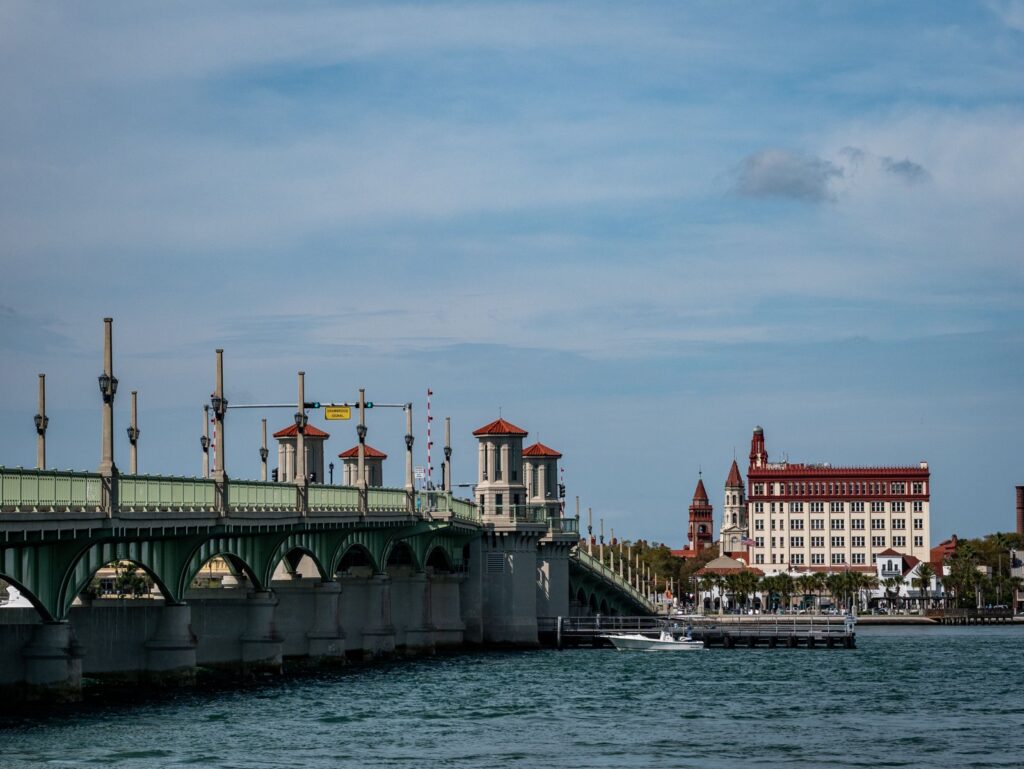
This page covers the City of St. Augustine, Florida. It does not cover unincorporated St. Johns County or the City of St. Augustine Beach. The quoted zoning and registration rules are the starting point, not sufficient proof of legality. You check the address, the registration and the taxes. People you arrange handle on-site visits and the physical cleaning and repairs. For a qualifying address and proposed use, BnBGenius answers guest messages on Airbnb and Vrbo 24/7.
What Is Banned or Limited
The city splits its rental rules by zoning district.
“Properties in RS-1 and RS-2 zoning districts may be rented for one week or longer with an approved registration. Nightly rentals are not allowed.”
Source: City page
What this means for you: In RS-1 or RS-2, you cannot rent night by night. The shortest stay is one week. It also needs an approved registration.
The HP-1 district has its own minimum.
“Properties in the HP-1 zoning district may be rented for one month or longer with an approved registration.”
Source: City page
What this means for you: In HP-1, the shortest rental period is one month or longer. That also needs an approved registration.
The code defines large gatherings, then bans them at rentals in the two weekly districts.
“Large gathering means a group of twenty (20) or more people at one location.”
Source: Municode Sec. 28-156
“Large gatherings are prohibited at short term rental units located in the RS-1 and RS-2 zoning districts.”
Source: Municode Sec. 28-158
What this means for you: A group of 20 or more people counts as a large gathering. If your unit is in RS-1 or RS-2, such gatherings are not allowed at your rental.
Where Short-Term Rentals Are Allowed
Nightly rentals are allowed in other districts, with one condition.
“Properties in all other zoning districts may be rented on a nightly basis with an approved registration.”
Source: City page
What this means for you: Outside RS-1, RS-2 and HP-1, nightly rentals can be legal. They still need an approved registration. Another district does not mean automatic approval.
Registration itself is not proof that a dwelling is legal for your use.
“Issuance of a Short-Term Rental Registration does not guarantee the land use, zoning, or final construction status of a property. It also does not confirm that the property complies with the City’s Comprehensive Plan or land development regulations.”
Source: City page
What this means for you: A registration is not a zoning approval. It does not confirm land use, zoning, or final construction status. It does not confirm compliance with the city plan or land development rules.
The duty to check compliance falls on you.
“The property owner is responsible for ensuring compliance with the City’s Comprehensive Plan, land development regulations, and all applicable City ordinances.”
Source: City page
What this means for you: You, the owner, must make sure the property complies with the city’s plan, land rules and ordinances.
How to Check Your Address
Start with the city’s own tool.
“Use the City’s zoning map to determine your property’s zoning district.”
Source: City page
What this means for you: Look up your property on the city zoning map. Find the district label for your parcel. It will read RS-1, RS-2, HP-1 or another district. That label decides which rental period applies.
The city also offers a GIS portal with featured maps. You can open it through the city’s official Maps page.
“The St. Augustine GIS Public Portal provides various other featured maps to utilize.”
Source: Zoning Map
What this means for you: The GIS portal gives you more maps to check your parcel. Keep your address and parcel number ready. If the label is unclear, ask the city first.

What the City Requires Where Rentals Are Allowed
Registration comes first, and it is annual.
“Every vacation rental shall register with the city on forms provided for this purpose and shall pay the required administrative fee, as set by resolution, at the time of registration and thereafter annually. The information provided on each listing of a vacation rental must accurately reflect the information submitted on the registration form.”
Source: Municode Sec. 28-146
What this means for you: You must register every year. You pay the fee each time. Your listing must match your registration form.
The registration year has a fixed cycle.
“You must register your Short-Term Rental each year. The registration period follows our fiscal year, October 1 – September 30. Renewals are to be submitted by October 1st each year, or a late renewal fee of $100 will be assessed. If a new registration is submitted outside of the October 1st deadline for renewals, registration fees will not be prorated.”
Source: City page
What this means for you: The registration year runs October 1 to September 30. Renew by October 1 or a late fee applies. New registrations submitted after that date are not prorated.
The registration needs contact details for the owner.
“Name, address, and contact information of the property owner.”
Source: Municode Sec. 28-146
What this means for you: Give the city your name, address and contact information.
“Name, address, and contact information of the property manager if different than the property owner.”
Source: Municode Sec. 28-146
What this means for you: If someone other than you manages the property, list that person or management company too. Give their name, address and contact details. The city does not require a company.
The current fee schedule is set by unit size.
“Studio $315.51 $315.51 One Bedroom $315.51 + $82.85 $398.36 Two Bedrooms $315.51 + $165.70 $481.21 Three Bedrooms $315.51 + $248.55 $564.06 Four Bedrooms $315.51 + $331.40 $646.91 Five or More Bedrooms $315.51 + $414.25 $729.76”
Source: City page
What this means for you: Fees rise with the number of bedrooms. Check the quoted table with the city before you pay.
Two extra fees can apply.
“Late renewal: $100”
Source: City page
“Reinspection: $50”
Source: City page
What this means for you: A late renewal and a reinspection each carry a fee.
The city inspects the property each year.
“At the time of registering a vacation rental, and thereafter annually, the applicant shall be required to allow reasonable access to the property by city officials for an inspection of the Florida Fire Prevention Code, Life-Safety Code, NFPA 101, as amended and adopted by the state fire marshal from time to time.”
Source: Municode Sec. 28-147
What this means for you: You must allow city officials reasonable access. This applies at registration and then each year. The check covers the quoted fire and life-safety code.
The code lists basic safety equipment.
“Each vacation rental will provide a smoke alarm, a carbon monoxide alarm, and a fire extinguisher for each rental unit.”
Source: Municode Sec. 28-150
What this means for you: Each unit needs the three listed items. That list does not cover every inspection item.
Certain information must be posted inside the unit.
“Maximum occupancy, guest visiting hours, trash collection schedule, emergency contact information, and emergency evacuation information must be visibly posted in each rental unit.”
Source: Municode Sec. 28-150
What this means for you: Post the listed items where guests can see them. Keep them current.
Occupancy has a formula and a cap.
“The maximum occupancy of a vacation rental is two (2) persons per bedroom per vacation rental, plus an additional two children under the age of 18 per vacation rental. The total maximum occupancy of a vacation rental is twelve (12) persons, inclusive of minor children.”
Source: Municode Sec. 28-148
What this means for you: Count two persons per bedroom. Add two more children under 18 for the whole unit. The total cap is 12 persons, counting children.
Guests not counted toward the occupancy limit have their own rule.
“Each vacation rental may host guests who are not counted towards the maximum occupancy of the rental unit. These guests must vacate the vacation rental premises between the hours of 10:00 p.m. and 8:00 a.m.”
Source: Municode Sec. 28-149
What this means for you: Guests not counted toward the occupancy limit must leave between 10 p.m. and 8 a.m. This rule covers only that group of guests.
Parking is tied to your bedroom count.
“Each vacation rental, except as provided in subparagraph (iii) below, will provide at least one (1) stabilized parking space per bedroom offered for rent.”
Source: Municode Sec. 28-151
What this means for you: You need at least one stabilized parking space per bedroom offered for rent.
If on-site parking does not work, there is a formal process.
“If on-site parking is not feasible, the owner may make an application to the planning and zoning board for a use by exception for offsite parking. The application to the planning and zoning board for a use by exception for offsite parking may include in the alternative, parking permits to the municipal parking garage, or, if on-street parking permits for vacation rentals are provided pursuant to city regulations, residential street parking permits. Issuance of the necessary permits will meet the required parking for the vacation rentals.”
Source: Municode Sec. 28-151
What this means for you: If on-site parking is not feasible, you can apply to the planning and zoning board. The application asks for a use by exception for offsite parking. It may instead propose municipal garage permits. It may propose residential street parking permits, but only if city rules provide them. Issued permits satisfy the parking requirement.
Noise complaints go to the police.
“Noise complaints are handled through the St. Augustine Police Department.”
Source: City page
What this means for you: Noise complaints are handled through the St. Augustine Police Department.
Fines and Enforcement
Complaints trigger a fast acknowledgment duty.
“If the city provides a system for telephonic or electronic processing of preliminary compliance complaints, these complaints will be directed to the property manager or property owner identified in the registration form. The property owner or property manager must respond by acknowledging that they have received the preliminary compliance complaint within thirty (30) minutes of notification by the city or its agent.”
Source: Municode Sec. 28-154
What this means for you: This applies if the city provides a phone or electronic complaint system. Complaints go to the contact on your registration. That person must acknowledge receipt within 30 minutes. Arrange for someone to handle this.
Violations carry real consequences.
“Violation of sections 28-145 through 28-156, as well as section 28-159 may be prosecuted pursuant to article VI, code enforcement, or pursuant to any other procedure and remedy available to the city, including but not limited to, revocation of the vacation rental registration.”
Source: Municode Sec. 28-154
What this means for you: If you break these code sections, the city may act against you. It may use its code process or other legal routes. The city can also cancel your registration. That is a possible outcome, not an automatic one. The quoted text gives no fixed fine amount. Ask the city about any notice you get.
There is a dedicated hotline.
“Call the Short-Term Rental Hotline: 904-569-7077”
Source: City page
What this means for you: The Short-Term Rental Hotline is 904-569-7077. Save the number.
Taxes
Florida taxes short stays at the state level.
“Florida’s 6% state sales tax, plus any applicable discretionary sales surtax, applies to rental charges or room rates paid for the right to use or occupy living quarters or sleeping or housekeeping accommodations for rental periods of six months or less, often called “transient accommodations” or “transient rentals.””
Source: Florida transient tax
What this means for you: Florida charges a 6% state sales tax on rental periods of six months or less. A surtax may also apply.
The county rates come from official state tables.
| Tax | Official quoted row | Owner check |
|---|---|---|
| St. Johns tourist tax | “St. Johns 5% County” (Source: St. Johns county tourist tax) | Confirm the current county rate with St. Johns County before listing. |
| St. Johns 2026 surtax | “St. Johns .5% Jan 1, 2016 Dec 31, 2035” (Source: St. Johns 2026 surtax) | Check the surtax end date against your booking dates. |
What this means for you: The St. Johns tourist tax row is marked County, so the county administers it. Do not combine the rates into one total. Check each tax line on the official tables.
Who you pay depends on the tax.
“The transient rental tax is reported and paid directly to the county; however, the 6% state sales tax and any discretionary sales surtax is reported and paid to the Florida Department of Revenue using Line D. (Transient Rentals) on the Sales and Use Tax Return (Form DR-15).”
Source: County-collected tax remittance
What this means for you: The transient rental tax goes to the county. The state sales tax and surtax go to the state revenue department. Keep the two remittances separate. BnBGenius is not an accounting tool.
Platforms collect some taxes, but not everything.
| Platform | What the help page lists | Owner responsibility |
|---|---|---|
| Airbnb | “Florida Transient Rental Tax: 6% of the listing price including any cleaning fee for reservations 182 nights and shorter.” (Source: Airbnb Florida state tax) | Check your booking tax breakdown. |
| Airbnb | “Florida Discretionary Sales Surtax: 0.5%-1.5% of the listing price including any cleaning fee for reservations 182 nights and shorter.” (Source: Airbnb Florida surtax) | Confirm the surtax rate for your area. |
| Airbnb | “Hosts may need to manually collect and remit other applicable taxes on their stay or experience price.” (Source: Airbnb other taxes) | You may need to collect and remit other taxes yourself. |
| Vrbo | “Florida State Transient Rentals Tax, Discretionary County Surtax Note: Discretionary County Surtax is state tax surcharges required by various counties that Vrbo will also be collecting and remitting. These rates vary between 0.5-2%. The state of Florida under 184 nights December 1, 2018” (Source: Vrbo Florida tax row) | Check whether your stay length falls under the listed range. |
| Vrbo | “You’re also responsible for collecting and remitting lodging taxes when we’re not liable to do so. For example, in some areas, tax authorities (city, county, state and/or country) may impose additional taxes that aren’t being collected and remitted by us.” (Source: Vrbo host tax responsibility) | You are responsible for taxes the platform does not collect. |
What this means for you: Airbnb lists Florida taxes for reservations of 182 nights and shorter. Vrbo lists Florida state taxes for stays under 184 nights. Neither help page shows a St. Johns tourist-tax row. Check the tax breakdown on each booking and the county requirements.

If Your Address Qualifies: What BnBGenius Does
BnBGenius does not check zoning, read permits or know local rules. It is not a PMS, channel manager, calendar sync, direct-booking, pricing or accounting tool.
Guest Messages
BnBGenius answers guest messages on Airbnb and Vrbo 24/7. For reading, see Airbnb automated messages and Vrbo automated messages.
Reviews
BnBGenius requests a review from the guest and publishes the host’s review. Learn more in the reviews guide.
Kent Morgan, co-founder, describes the review workflow this way:
“We went from reviewing 40% of stays to 100% overnight. The AI even thanked guests for things we fixed mid-stay. Our review-to-review rate jumped immediately.”
Source: Kent review testimonial
Tasks
BnBGenius creates cleaning and repair tasks after checkout. The physical work is done by the people you arrange. See the tasks overview.
Kent Morgan explains how tasks changed his operation:
“We used to find out about issues in post-stay reviews. Now BnBGenius flags them mid-stay, creates the task, and our cleaners respond in under 15 minutes.”
Source: Kent task testimonial
Voice
BnBGenius answers guest calls with a voice AI agent (Voice Concierge, an add-on). Read more about the voice agent.
Kent Morgan shares his experience with the voice agent:
“The concierge answered 84% of our after-hours calls last month without waking anyone up. Guests thought it was our in-house team the whole time.”
Source: Kent voice testimonial
Gap Nights, Early Check-in and Late Checkout
BnBGenius sells gap nights, early check-in and late checkout. See the upsells guide for how it works.
Kent Morgan describes the results he saw:
“BnBGenius filled nine gap nights in the first month. $2.3k we would have lost. Guests got a friendly Airbnb message and we didn’t lift a finger.”
Source: Kent upsell testimonial
Telegram
BnBGenius is run from Telegram. Learn about running it from Telegram.
Airbnb and Vrbo
Both platforms give you and your guests a window to leave reviews, but the windows differ.
| Topic | Airbnb | Vrbo |
|---|---|---|
| Review window | “On the day of checkout, both the guest and their host will be prompted to leave a review. Both parties will have 14 days after checkout to submit their review.” (Source: Airbnb review window) | “You and your guests have 180 days to provide your review. Once one party submits their review, the other party has 14 days to complete their review. The reviews are private during this 14-day period.” (Source: Vrbo review window) |
What this means for you: On Airbnb, both parties have 14 days after checkout to submit a review. On Vrbo, both parties have 180 days. Once one party submits, the other has 14 days to finish. For more, read Airbnb reviews explained and the Vrbo reviews guide.
How to Start
Check your parcel on the city zoning map first. Confirm the district label and ask the city about your exact parcel and intended use. Then sort out the registration, the fee and the taxes before choosing how to handle guest work.
More City Guides
- Self-managing an Airbnb in Jacksonville Beach, FL
- Airbnb rules in Fernandina Beach, FL
- Airbnb rules in New Smyrna Beach, FL
- Airbnb rules in Kissimmee, FL
- Florida short-term rental laws by city
Rules and rates last checked on 3 October 2026.