
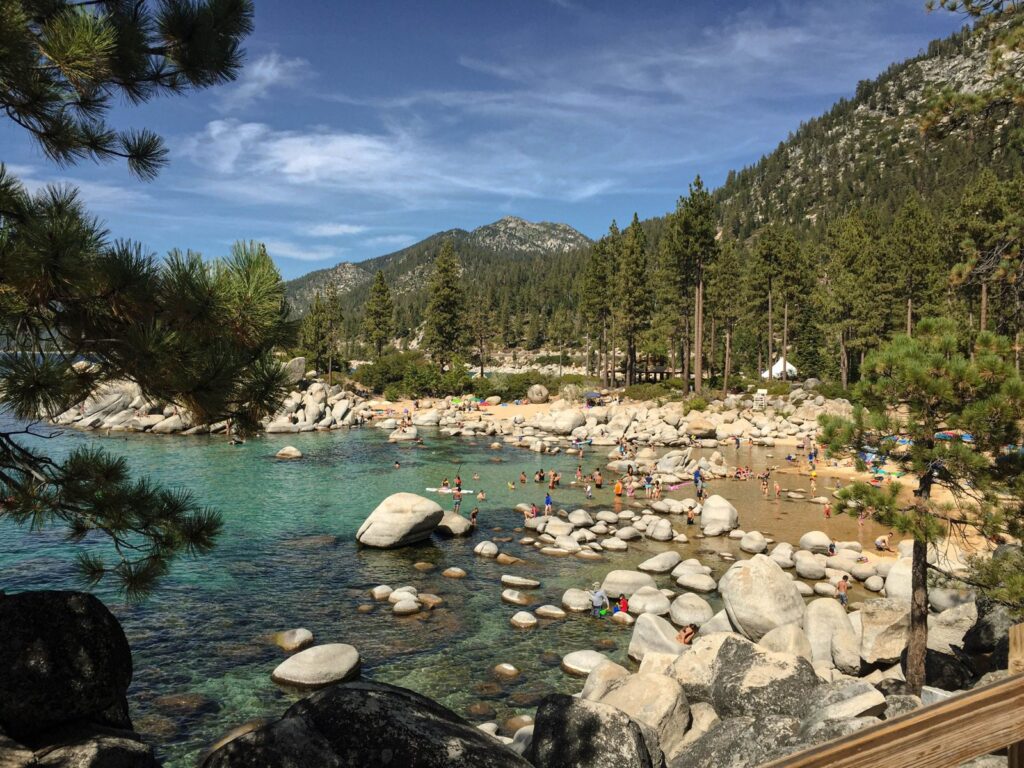
Airbnb management in South Lake Tahoe is something you can self-manage. You keep the permit, taxes, and local duties, while BnBGenius answers guest messages on Airbnb and Vrbo 24/7, and your person on site handles the physical work. Your first 500 messages are free, with all features and no card; after that it is $10 a month per unit (each listing you connect).
Airbnb Management in South Lake Tahoe: How You Self-Manage with BnBGenius
Self-managing lets you manage your own Airbnb without giving up your calendar or your pricing decisions. Here is how the work splits up:
| The work | Who does it |
|---|---|
| Guest messages on Airbnb and Vrbo | BnBGenius answers guest messages on Airbnb and Vrbo 24/7 |
| Cleaning and repairs after checkout | BnBGenius creates cleaning and repair tasks after checkout; your person on site does the work |
| Guest reviews | BnBGenius requests a review from the guest and publishes the host's review |
| Guest calls | Voice Concierge, an add-on, answers guest calls with a voice AI agent |
| Extra nights and flexible times | BnBGenius sells gap nights, early check-in and late checkout |
| Prices and calendar | You: BnBGenius is not a pricing tool or a channel manager |
| South Lake Tahoe permit, renewal, taxes and local contact | You: BnBGenius does not issue permits; permit and city duties remain yours |
BnBGenius installs as a Chrome extension in about 5 minutes, with no API keys and no passwords shared. BnBGenius is run from Telegram.
The city duties stay with you. Residential zones have a 900-permit cap, and new applications go on a waitlist as the cap approaches, starting August 21, 2026 (Residential cap and waitlist). Tourist Core and Commercial Zones are outside both the cap and the waitlist (Tourist Core and Commercial exception). In residential areas, owners must designate a person at all times, and the owner may serve as that person (Code definition)(Owner responsibility and residential designation). For properties in residential areas, that person must provide and maintain a local contact number available 24 hours a day, 7 days a week, for receiving reports of violations from the city and neighbors, and must be available to respond in person within 60 minutes to such complaints, 24 hours a day, 7 days a week (Residential local contact and physical complaint response).
A Week of Self-Managing Your Airbnb in South Lake Tahoe
This week is practical advice for organizing your work. It is not a legal schedule the city imposes. Use it to sequence your Airbnb management tasks.
1. Before you offer the property. All occupants must be told about the ban on commercial activities, such as weddings, receptions and large parties, before the reservation, rental or lease is made (Commercial events prohibited and advance occupant notice). Short-term renting means fewer than 30 consecutive calendar days, and it requires a permit (VHR permit and threshold). Check your zone first. Residential zones carry the 900-permit cap, and new applications go on a waitlist as the cap approaches, from August 21, 2026 (Residential cap and waitlist). Tourist Core and Commercial Zones are outside both the cap and the waitlist (Tourist Core and Commercial exception). Multifamily dwelling units cannot be used as vacation home rentals, though condominiums qualify unless their HOA prohibits short-term rentals (Multifamily exclusion and condominiums). A waitlist application is not a permit. It is unlawful to rent, maintain, facilitate, advertise or list the unit without a valid permit, so the permit comes before any listing or operation (Permit required before renting or listing).
2. Before the first guest. If your property is in a residential area, designate your person under the code now. The owner may serve as that person (Code definition)(Owner responsibility and residential designation). The city inspects residential units before issuing a permit. Applicants may need changes, including defensible-space work. This provision does not require inspections for renewal applications (Residential inspection and renewal exception).
3. A booking comes in. In residential areas, your designated person must meet the occupants in person or virtually at the start of each rental. The person verifies the identities of all responsible parties entering into the rental contract and confirms those parties are 25 or older. The person and the responsible parties sign the good-neighbor contract, certifying that the person has reviewed the conditions of operation with them. That contract is kept for three years and provided to the city within 15 business days of a written request (Residential check-in, age verification and signed contract).
4. Before arrival. Post a copy of the permit and a copy of the operating conditions in a conspicuous place inside the rental (Display permit and operating conditions). All marketing, advertising, contracts, rental agreements and websites depicting the property must carry the permit number (Advertising number). If you are in a residential area, your marketing must also state that the property is in a residential area and is subject to enhanced regulations and enforcement to prevent disturbances and preserve neighborhood character (Permit in ads and enhanced residential statement).
5. During the stay. For properties in residential areas, your designated person must keep a local contact number available for receiving reports of violations from the city and neighbors 24 hours a day, 7 days a week, and must be available to respond in person within 60 minutes to such complaints, around the clock (Residential local contact and physical complaint response). Residential owners must install indoor noise and outdoor video monitoring devices that immediately alert the designated person 24 hours a day, 7 days a week, of potential violations of the conditions of operation, including noise, trash and parking (Residential indoor noise and outdoor video monitoring). Outdoor spas and hot tubs cannot be used between 10 p.m. and 8 a.m. (Outdoor spas and hot tubs hours). Noise-generating equipment and outdoor amplified music, speakers or other amplified equipment are prohibited during those same hours, in addition to city and TRPA noise standards (Noise equipment and outdoor amplified sound hours).
6. Checkout. Your person on site does the physical cleaning and repairs, using the tasks created after checkout as shown in the table above. Exterior solid waste and recyclables must not be left or stored outside except in a container within a bear box or an animal-resistant cart or container approved by the city or its franchisee. Owners must arrange enough trash pick-up, drop-off or other removal so no trash is left on the street, the exterior of the dwelling or the right-of-way (Animal-resistant waste and bear box conditions).
7. Review your records and dates. Keep records for every rented night: the contracting tenant's name and contact, the rental rate, the number of occupants per night, and the number of vehicles. Hold them at least three years, and give the city access within 15 business days of a written request (Nightly records and city access). You remit the transient occupancy tax and report room nights rented when you remit each payment (Owner tax remittance and room-night reporting). Owners receive quarterly reporting forms in March, June, September and December, and taxes are due by the 15th day of the month following the reporting period (Owner tax reporting periods and deadline). Permits expire one year after issuance and must be renewed annually within 30 days before expiration, and that renewal is your responsibility (Permit expiry after one year)(Annual renewal). A monthly records review of your own is a useful habit for vacation rental management in South Lake Tahoe.

South Lake Tahoe Short-Term Rental Permit and Rules: Your Checklist
Before you apply for a South Lake Tahoe short-term rental permit, work through this list to check your eligibility and permit duties. The full city code is online at ecode360 if you want to read any section in full.
- Check your zone and the cap: Residential zones are capped at 900 permits. New applications go on a waitlist as the cap nears, effective August 21, 2026 (Residential cap and waitlist). Tourist Core and Commercial Zones are outside both the cap and the waitlist (Tourist Core and Commercial exception). Multifamily units cannot be vacation home rentals, but condominiums can unless their HOA bans short-term rentals (Multifamily exclusion and condominiums).
- Get a valid permit first: You need a valid permit before you rent or operate. You also need it before you advertise or list (No operation or advertising before permit)(Permit required before renting or listing).
- Pay the current application and inspection charges: The application fee is $565 (Current application fees and annual fee bands). The inspection fee is $570. A reinspection, if needed, is $330 (September inspection fees effective on approval).
- Plan your annual renewal: Permits expire one year after issuance (Permit expiry after one year). Renew each year within 30 days before expiration. That renewal is your job as owner (Annual renewal).
- Add the permit number to ads: Marketing that depicts the rental must show its permit number. Advertising that depicts the rental must show its permit number. Contracts that depict the rental must show its permit number. Rental agreements that depict the rental must show its permit number. Websites that depict the rental must show its permit number (Advertising number). In residential areas, all marketing and advertising must include a statement. The statement must say the property is in a residential area. It must say the property is subject to enhanced regulations and enforcement. The statement must say the enhanced regulations and enforcement aim to prevent disturbances. It must say they aim to preserve neighborhood character (Permit in ads and enhanced residential statement).
- Post the paperwork inside: Put a copy of the permit inside the rental. Put a copy of the operating conditions there too. Both go in a conspicuous place (Display permit and operating conditions).
- Set up local response: In residential areas, owners must designate and maintain a person at all times. The owner may serve (Code definition)(Owner responsibility and residential designation). This person must provide and maintain a local contact number. It must be available 24/7 for reports of violations from the city and neighbors. The person must be available to respond in person within 60 minutes to those complaints, 24/7 (Residential local contact and physical complaint response).
- Do the residential check-in: For properties in residential areas, the designated person must meet the occupants at each rental. This must happen at the start. The meeting must be in person or virtual (Residential check-in, age verification and signed contract).
- Know the hot tub and equipment hours: Outdoor spas and hot tubs cannot be used from 10 p.m. to 8 a.m. (Outdoor spas and hot tubs hours). In those same hours, noise-making equipment is banned. So is outdoor amplified music, speakers or other amplified equipment. This adds to city and TRPA noise standards (Noise equipment and outdoor amplified sound hours).
- Keep nightly records and file room-night reports: For each rented night, record the tenant who arranged the rental: name, contact information, and rental rate. Also record the number of occupants that night and the number of vehicles. Keep the records at least three years. Give the city access within 15 business days of a written request (Nightly records and city access). Report room nights rented when you remit the transient occupancy tax (Owner tax remittance and room-night reporting).
"A valid VHR permit is required to operate and/or advertise a short-term rental."
What this means for you: A valid permit must be in place before you advertise or operate.
"Post a copy of the permit and a copy of the City Code conditions of operations in a conspicuous place within the VHR."
What this means for you: Keep a copy of the permit inside the rental. Keep a copy of the City Code conditions inside too. Place both copies in a visible spot inside the rental.
South Lake Tahoe Airbnb Taxes
The city's transient occupancy tax applies to accommodations rented or occupied for 30 consecutive days or less (City tax threshold). That tax scope differs from the permit rule for stays under 30 consecutive calendar days (VHR permit and threshold).
- Rates by category: Establishments, including VHRs, that previously collected 10% moved to 12%. Those previously collecting 12% moved to 14%. Both changes took effect January 1, 2017 (City TOT rates history and current levels). Confirm your category with the city rather than assuming one rate.
- Tourism Improvement District fee: The fee is $5.50 per night for timeshares and agent-managed vacation home rentals. The guest pays it, the lodging provider collects and remits it to the City, and the City pays the TID monthly (City TID fee and scope).
- Your filings: You remit the tax and report room nights rented when you remit each payment (Owner tax remittance and room-night reporting). Owners receive quarterly reporting forms in March, June, September and December. Taxes and fees are due by the 15th day of the month following the reporting period (Owner tax reporting periods and deadline).
What Airbnb Management in South Lake Tahoe Costs When You Self-Manage
Your city costs come from the fee schedule. Here are the main charges:
- Application fee: $565 (Current application fees and annual fee bands).
- Inspection fee: $570, adopted effective upon approval of the resolution (September inspection fees effective on approval). An initial inspection before issuance applies to dwelling units in residential areas (Residential inspection and renewal exception).
- Reinspection fee: $330, if one is needed (September inspection fees effective on approval).
- Annual fee, outside residential areas: $200 for 4 or fewer occupants, $350 for 5 to 8, $650 for 9 to 12, and $850 for 13 or more (Annual fees by residential scope and occupancy).
- Annual fee, inside residential areas: $670 for 4 or fewer occupants, $1,340 for 5 to 8, $2,680 for 9 to 12, and $3,485 for 13 or more (Annual fees by residential scope and occupancy).
You cannot voluntarily reduce your occupancy just to drop into a cheaper fee band (Occupancy). Taxes are separate from these fees: the transient occupancy tax and any applicable TID fee depend on your category and nightly stays (City TOT rates history and current levels)(City TID fee and scope)(Owner tax remittance and room-night reporting). Cleaning and repair work is done by your person on site, so that cost depends on your own arrangements. If you ever compare self-managing with hiring out, ask the company about its fee.
Your first 500 messages are free, with all features and no card; after that it is $10 a month per unit (each listing you connect). Voice Concierge is $30/month. It includes 20 resolved calls each month, then $0.35 per resolved call. Current pricing is on the Pricing page.
South Lake Tahoe Airbnb FAQ for Self-Managing Owners
Can I manage my own Airbnb? Yes. In residential areas you must still designate a person at all times, and the owner may serve as that person (Code definition)(Owner responsibility and residential designation). You stay responsible for compliance even if you retain an agent (Owner responsibility and residential designation). You still need a valid permit to rent for fewer than 30 consecutive calendar days (VHR permit and threshold), and residential zones carry the 900-permit cap and waitlist (Residential cap and waitlist).
Do I need a South Lake Tahoe short-term rental permit? Yes, if you rent for fewer than 30 consecutive calendar days (VHR permit and threshold). The permit must be in place before you operate or advertise (No operation or advertising before permit). The tax threshold of 30 days or less is a separate matter (City tax threshold).
Is there a waitlist, and are all zones capped? Residential zones have a 900-permit cap, and new applications go on a waitlist as the cap approaches, effective August 21, 2026 (Residential cap and waitlist). Tourist Core and Commercial Zones are outside both the cap and the waitlist (Tourist Core and Commercial exception). Those zones still follow the rest of the permit rules.
What does a permit cost? The application fee is $565 (Current application fees and annual fee bands). The inspection fee is $570, and a reinspection is $330 if needed (September inspection fees effective on approval). The annual fee then depends on occupancy and whether the property is inside or outside residential areas, from $200 up to $3,485 (Annual fees by residential scope and occupancy). The application fee and the annual fee are separate charges.
When do I renew? Permits expire one year after issuance (Permit expiry after one year). Renew within 30 days before expiration, and it is your responsibility as owner (Annual renewal). A timely renewal keeps the permit valid until the city approves or denies it; without one, the permit expires and is null and void (Timely renewal and lapse).
Must someone live nearby? In residential areas, owners must designate a person at all times, and the owner may serve (Code definition)(Owner responsibility and residential designation). That person provides a local contact number for receiving reports of violations from the city and neighbors, 24/7. They must also be available to respond in person within 60 minutes to such complaints, 24 hours a day, 7 days a week (Residential local contact and physical complaint response). Plan for someone who can meet that response time.
What must residential check-in cover? In residential areas, your designated person meets occupants in person or virtually at the start of each rental. They verify the identities of all responsible parties entering into the rental contract and confirm those parties are 25 or older. The person and those parties sign the good-neighbor contract, certifying the person reviewed the conditions of operation with them, and it is kept three years (Residential check-in, age verification and signed contract).
What goes into ads and inside the rental? All marketing, advertising, contracts, rental agreements and websites depicting the rental must show the permit number (Advertising number). In residential areas, ads must also state the property is in a residential area and is subject to enhanced regulations and enforcement to prevent disturbances and preserve neighborhood character (Permit in ads and enhanced residential statement). Inside, post the permit and the operating conditions in a conspicuous place (Display permit and operating conditions).
Which taxes do I plan for? The transient occupancy tax covers stays of 30 consecutive days or less (City tax threshold). Rates vary by category: formerly 10% became 12%, and formerly 12% became 14% (City TOT rates history and current levels). The TID fee of $5.50 per night applies to timeshares and agent-managed VHRs, paid by the guest and remitted by the provider (City TID fee and scope). You report room nights when remitting tax, on the quarterly reporting forms owners receive, with payment due by the 15th of the month following the reporting period (Owner tax remittance and room-night reporting)(Owner tax reporting periods and deadline).
What hours govern noise and hot tubs? Outdoor spas and hot tubs cannot be used from 10 p.m. to 8 a.m. (Outdoor spas and hot tubs hours). Noise-generating equipment and outdoor amplified music, speakers or other amplified equipment are banned during those same hours, in addition to city and TRPA standards (Noise equipment and outdoor amplified sound hours). Plan guest house rules around these hours.
Airbnb Property Management in South Lake Tahoe: Self-Manage or Hire a Company
Airbnb property management in South Lake Tahoe comes down to whether you keep the work yourself or hand it to a management company.
More City Guides
- Airbnb rules in Truckee, CA
- Airbnb rules in Mammoth Lakes, CA
- Airbnb rules in Napa, CA
- Airbnb rules in San Francisco, CA
Rules and rates last checked on 12 November 2026.