
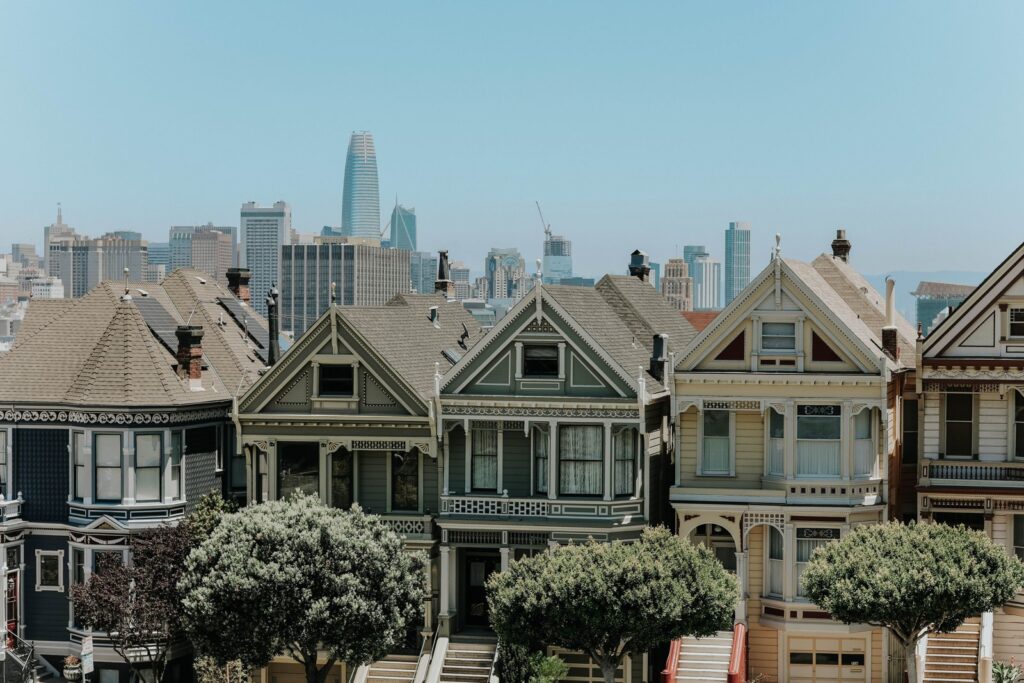
San Francisco restricts short-term rentals through permanent-residence, unit, and unhosted-night rules. This page gives the city’s wording, application fee, taxes, and platform responsibilities. BnBGenius answers guest messages on Airbnb and VRBO 24/7. You check the city rules and registration before you list anything.
San Francisco ties short-term rentals to where you actually live.
“To be considered the Permanent Resident, you must spend at least 275 nights in a calendar year in the Residential Unit where you host short-term rentals.”
Source: SF permanent residence and 275 nights
“Additionally, to maintain your Permanent Residency, you can only rent your Residential Unit for up to 90 un-hosted nights within a calendar year.”
Source: SF 90 un-hosted nights
What this means for you: You must spend at least 275 nights in the unit. The 275 nights are counted within a single calendar year. You may rent the unit for up to 90 un-hosted nights. Those 90 nights fall within the same calendar year.
What Is Restricted in San Francisco
San Francisco defines hosted and un-hosted stays, and limits units in multi-unit buildings.
“A hosted guest stay occurs when you are in the Residential Unit overnight with the guest that you are hosting.”
Source: SF hosted definition
“An un-hosted rental occurs when you are not present in your Residential Unit during your guests’ stay.”
Source: SF un-hosted definition
What this means for you: A hosted stay means you stay overnight with the guest. An un-hosted stay means you are not present during the stay. The 90-night limit applies only to un-hosted rental nights. You must still spend 275 nights in the unit each calendar year.
For owners of multi-unit buildings, the city limits registration and the units offered.
“Please note that if you own/rent a multi-unit building, you may only register the specific Residential Unit in which you reside.”
Source: SF multi-unit registration
“If you own a multi-unit building, you may only offer for short-term rental one Residential Unit in the multi-unit building. That Residential Unit offered for short-term rental must be your Primary Residence. You must live in that one Residential Unit offered for short-term rental for at least 275 nights per calendar year.”
Source: SF one-unit rule
What this means for you: In a multi-unit building, you may register only the unit you live in. You may offer only one residential unit in that building. That one residential unit must be your primary residence. You must live in it for at least 275 nights per calendar year.
How to Check Your Address and Registration Path
Check the San Francisco Planning short-term-rental materials for the exact dwelling and the current registration path. The city lists what must be in place before you may offer a unit.
“You may only offer your Residential Unit for short-term rentals once you have obtained (1) a Business Registration Certificate for your property from the San Francisco Office of the Treasurer & Tax Collector; and either (2) then received a certificate from the Office of Short-Term Rentals, and posted the certificate number on all listings advertising a short-term rental; or (3) You have a complete application pending review with the Office of Short-Term Rentals, currently reside in the Residential Unit as a Permanent Resident, and there are no City complaints or enforcement actions pending against the entire property.”
Source: SF registration alternatives
What this means for you: You first need a Business Registration Certificate for the property. It comes from the San Francisco Treasurer and Tax Collector. After that, you follow one of two other paths. One path is a certificate from the Office of Short-Term Rentals. With that certificate, you post its number on all short-term rental listings. The other path is a complete application still pending review with that office. For that path, you must currently live in the unit as a Permanent Resident. There must be no city complaints or enforcement actions pending against the entire property.
The city also quotes an application fee.
“The application fee is $925.”
Source: SF application fee
What this means for you: The quote gives the application fee amount only. Check current city instructions for any other costs.

What the City Requires Where Rentals Are Allowed
Where short-term rentals are allowed, the city sets conditions on location, registration, and operation.
“Short-term rentals may only be hosted in areas that are permitted for residential use. For example, short-term rentals may not be held in an institutional, commercial, or industrial building, unless a specific portion of the building is authorized (per the Department of Building Inspection) as a residential dwelling unit.”
Source: SF residential-use location
What this means for you: Rentals may only happen in areas permitted for residential use. Institutional, commercial, or industrial buildings may not host them. A portion of such a building may be allowed instead. The Department of Building Inspection must authorize that portion as a residential dwelling unit. You must also meet the registration path described above. In a multi-unit building, only one residential unit may be offered. The unit you offer must also be your primary residence. You must live in it at least 275 nights each calendar year.
Taxes
San Francisco quotes a transient occupancy tax on short stays.
“San Francisco imposes a 14% transient occupancy tax on the rental of accommodations for stays of less than 30 days.”
Source: SF TOT rate and collection
What this means for you: The city charges a 14% transient occupancy tax. It applies to stays of less than 30 days.
Platforms describe their own tax handling for California. The table below shows the verified platform quotes.
| Platform | Verified tax quote |
|---|---|
| Airbnb | “San Francisco Transient Occupancy Tax: 14% of the listing price including any cleaning fee and guest fee for reservations 29 nights and shorter.” (Source: Airbnb San Francisco TOT) |
| Airbnb | “San Francisco TBID: 2% – 2.25% of the listing price including any cleaning fees and guest fee, for reservations 29 nights and shorter.” (Source: Airbnb San Francisco TBID) |
| Airbnb | “Hosts may need to manually collect and remit other applicable taxes on their stay or experience price.” (Source: Airbnb owner tax responsibility) |
| Vrbo | “You’re also responsible for collecting and remitting lodging taxes when we’re not liable to do so.” (Source: Vrbo owner tax responsibility) |
What this means for you: Airbnb quotes a 14% San Francisco tax on the listing price. That price includes any cleaning fee and guest fee. It applies to reservations of 29 nights and shorter. Airbnb also quotes a separate San Francisco TBID of 2% to 2.25%. Its base also includes any cleaning fees and guest fee. It applies to reservations of 29 nights and shorter. Airbnb says hosts may need to collect and remit other applicable taxes. The taxes apply to the stay or experience price. Collect and remit means collecting them and sending them in. Vrbo says you must collect and send in lodging taxes yourself. That duty applies when Vrbo is not liable to do so. Platform displays and your own duties can differ. Keep your own records and check current city instructions.
If Your Address Qualifies: What BnBGenius Does
This section is for an owner who has checked the address and current registration rules with San Francisco. BnBGenius does not know local rules and does not issue licenses or permits. The local license, permit, and registration duties remain the owner’s responsibility.
Answers Guest Messages on Airbnb and VRBO 24/7
BnBGenius answers guest messages on Airbnb and VRBO 24/7.
Requests a Review from the Guest and Publishes the Host’s Review
BnBGenius requests a review from the guest and publishes the host’s review.
Kent Morgan shared this experience with guest reviews.
“We went from reviewing 40% of stays to 100% overnight. The AI even thanked guests for things we fixed mid-stay. Our review-to-review rate jumped immediately.”
Source: Kent reviews
Creates Cleaning and Repair Tasks After Checkout
BnBGenius creates cleaning and repair tasks after checkout.
Kent Morgan shared this experience with task handling.
“We used to find out about issues in post-stay reviews. Now BnBGenius flags them mid-stay, creates the task, and our cleaners respond in under 15 minutes.”
Source: Kent tasks
Answers Guest Calls with a Voice AI Agent
BnBGenius answers guest calls with a voice AI agent.
Kent Morgan shared this experience with after-hours calls.
“The concierge answered 84% of our after-hours calls last month without waking anyone up. Guests thought it was our in-house team the whole time.”
Source: Kent voice
Sells Gap Nights, Early Check-in and Late Checkout
BnBGenius sells gap nights, early check-in and late checkout.
Is Run from Telegram
BnBGenius is run from Telegram.
Airbnb and Vrbo
| Topic | Airbnb | Vrbo |
|---|---|---|
| Messages | BnBGenius answers guest messages on Airbnb and VRBO 24/7. | BnBGenius answers guest messages on Airbnb and VRBO 24/7. |
| Reviews | BnBGenius requests a review from the guest and publishes the host’s review. | BnBGenius requests a review from the guest and publishes the host’s review. |
| Check-in details | BnBGenius sells gap nights, early check-in and late checkout. | BnBGenius sells gap nights, early check-in and late checkout. |
| Listing details | San Francisco requires a Business Registration Certificate before a unit may be offered for short-term rental. | San Francisco requires a Business Registration Certificate before a unit may be offered for short-term rental. |
Current pricing is on the Pricing page.
You can visit the reviews page.
You can visit the tasks page.
You can visit the voice page.
You can read a guide on whether you need an Airbnb PMS.
You can read a guide on Airbnb accounting and tax software.
You can read a guide on Airbnb automated messages.
You can read a guide on Vrbo automated messages.
You can read a guide on stopping late-night messages as an Airbnb host.
You can visit the Telegram page.
How to Start
Rules and rates last checked on 23 October 2026.