
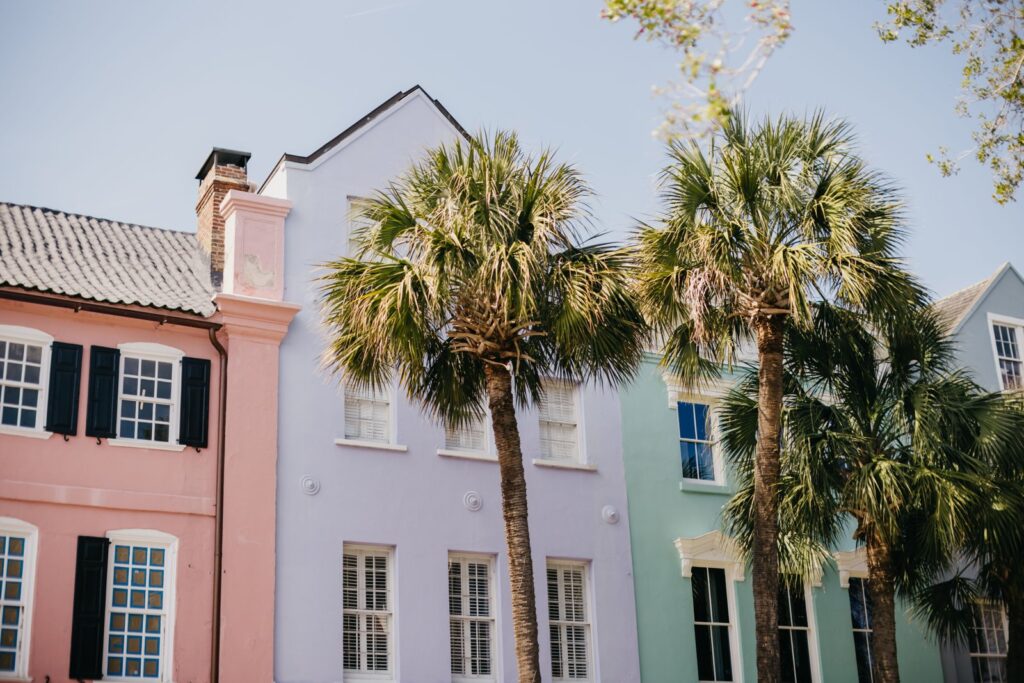
Airbnb management in Charleston is something you can self-manage. You handle the city permissions, taxes and paperwork, BnBGenius answers guest messages on Airbnb and Vrbo 24/7, and your person on site does the physical cleaning and repairs. Your first 500 messages are free, with all features and no card; after that it is $10 a month no matter how many listings you have.

Airbnb Management in Charleston: How You Self-Manage with BnBGenius
You can manage your own Airbnb in Charleston without handing it to a company. Here is how the work splits between you, the product and your person on site.
| The work | Who does it |
|---|---|
| Guest messages on Airbnb and Vrbo | BnBGenius answers guest messages on Airbnb and Vrbo 24/7 |
| Cleaning and repairs after checkout | BnBGenius creates cleaning and repair tasks after checkout; your person on site does the work |
| Guest reviews | BnBGenius requests a review from the guest and publishes the host’s review |
| Guest calls | Voice Concierge, an add-on, answers guest calls with a voice AI agent |
| Extra nights and flexible times | BnBGenius sells gap nights, early check-in and late checkout |
| Prices and calendar | You: BnBGenius is not a pricing tool or a channel manager |
| Charleston permit, renewal, taxes and local contact | You: BnBGenius does not issue permits; permit and city duties remain yours |
BnBGenius installs as a Chrome extension in about 5 minutes, with no API keys and no passwords shared. BnBGenius is run from Telegram.
The city duties stay with you. A residential short-term rental must be run by the record owner, who is also a resident staying overnight on the property while residential guests are present (Charleston Zoning Code Section 54-208(b)(1)). Before you advertise or operate, all approvals and inspections must be done, all fees paid, a valid Certificate of Operation issued for the STR Operational Permit, and a matching Business License issued (City of Charleston Application Materials). The resident owner must also give guests a rental packet with the applicable city rules and restrictions specified in the Residential STR Permit application materials, plus pertinent unit safety and contact information, when they book (Charleston Zoning Code Section 54-208(b)(7)).
A Week of Self-Managing Your Airbnb in Charleston
Good Airbnb management in Charleston follows a rhythm. Work through these steps in order and nothing piles up.
1. Before spending on a listing. Check eligibility first. For a residential rental, the property must be your full-time primary home, verified by the County’s 4% Legal Residence tax exemption for owner-occupied property (City of Charleston STR FAQ). The 4% figure is a property assessment, not a lodging tax. Investment properties are not eligible, except for commercially zoned properties in the Short Term Rental overlay (City of Charleston STR FAQ). A residential rental may be permitted only if the zoning administrator decides it is an accessory use to the principal residential use, meeting the applicable category rules, and issues a permit (Charleston Zoning Code Section 54-208(a)). Commercial rentals are different: they are allowed in the listed commercial zoning districts within the Short Term Rental Overlay Zone, and they skip the primary-home and 4%-assessment conditions (City of Charleston STR categories). Being in one of those districts alone does not permit operation; the overlay and the permit process still apply. Check your address on the official zoning map, and if the category is unclear, ask the city to confirm your address before you spend money.
2. Before the first advertisement. Do not list anything yet. You must not advertise or operate until all approvals and inspections are completed, all fees are paid, a valid Certificate of Operation has been issued for the STR Operational Permit, and a matching Business License has been issued (City of Charleston Application Materials). Submitting an application does not authorize listing. The zoning and application review fee is $345, effective January 1, 2024, collected at submission (City of Charleston Applicable Fees).
3. A booking comes in. The resident owner must give guests a rental packet when they book (Charleston Zoning Code Section 54-208(b)(7)). It carries the applicable city rules and restrictions specified in the Residential STR Permit application materials, plus pertinent unit safety and contact information (Charleston Zoning Code Section 54-208(b)(7)). The resident owner must also keep a current guest register with the names, addresses, telephone numbers and occupancy dates of all guests (Charleston Zoning Code Section 54-208(b)(5)).
4. Before arrival. For a residential rental, the property must provide one extra off-street space on the subject property, on top of the off-street parking required there for existing uses; the extra space may sit in tandem with those required spaces (City of Charleston STR categories). Up to four adults, regardless of relationship, can stay overnight in a residential STR (City of Charleston STR FAQ). For a commercial unit, the parking rule is separate: existing spaces on the property, if any, that satisfy the chapter’s off-street requirements for the dwelling units being converted must be shown on the submitted site plan and retained and used for the rental units, with no additional spaces required (City of Charleston STR categories). Display the permit, rules, safety and contact information prominently inside the unit (Charleston Zoning Code Section 54-208(b)(7)).
5. During the stay. The record owner, who is also a resident, must be staying overnight on the property while residential guests are present (Charleston Zoning Code Section 54-208(b)(1)). Your person on site can handle physical cleaning and repairs, but that does not replace your own overnight presence. The record owner must keep a general liability policy in force whenever the residential STR operates (Charleston Zoning Code Section 54-208(b)(4)). The insurer must be authorized to do business in South Carolina, the policy must cover personal injury including death and property damage, and the limit must be at least $1,000,000 per occurrence (Charleston Zoning Code Section 54-208(b)(4)).
6. After checkout. This is where vacation rental management in Charleston gets physical. Arrange the turnover with your person on site; the cleaning and repair tasks come from the table above, and the guest-review step does too. Update the guest register with the stay that just ended.
7. Each month and each year. Reporting and paying accommodations fees are completed monthly, with exceptions (Charleston County ATAX PDF). If your monthly gross fee averages less than $50 but more than $24.99, you may elect to report and pay quarterly, and accounts averaging below $25 per month may choose annual; you must notify the County at the beginning of each calendar year to report and pay other than monthly (Charleston County ATAX PDF). Separately, all STR permits must be renewed annually by the original date of issuance (City of Charleston Application Materials).

Charleston Short-Term Rental Permit and Rules: Your Checklist
A Charleston short-term rental permit depends on two separate things: whether the property is eligible, and whether the approvals have actually been issued. Work down this list.
- Residential eligibility: The property must be your full-time primary home, verified by the County’s 4% Legal Residence exemption for owner-occupied property (City of Charleston STR FAQ). Investment properties are not eligible, except for commercially zoned properties in the overlay (City of Charleston STR FAQ). The zoning administrator must decide the rental is an accessory use to the principal residential use, meeting the applicable category rules, and issue a permit (Charleston Zoning Code Section 54-208(a)).
- Categories and the commercial option: Category 1 covers the peninsula area in the Old and Historic District (City of Charleston STR categories). The unit must be in an existing structure or accessory building individually listed on the National Register of Historic Places (City of Charleston STR categories). Category 2 covers peninsula areas outside both the Short Term Rental Overlay and the Old and Historic District (City of Charleston STR categories), in a building at least 50 years old (City of Charleston STR categories). Category 3 covers city areas off the peninsula, and units there must meet the general requirements plus the Category 3 requirements (City of Charleston STR categories). Commercial rentals are allowed in the listed commercial districts within the overlay and skip the primary-home and 4%-assessment conditions (City of Charleston STR categories); see the category criteria source for the full district list.
- Approvals before ads and operation: All approvals and inspections must be completed, all fees paid, a valid Certificate of Operation issued for the STR Operational Permit, and a matching Business License issued, before you advertise or operate (City of Charleston Application Materials). The $345 zoning and application review fee, effective January 1, 2024, is collected at application submission (City of Charleston Applicable Fees).
- Renewal: All STR permits must be renewed annually by the original date of issuance (City of Charleston Application Materials).
- Owner presence: The residential rental must be run by the record owner (Charleston Zoning Code Section 54-208(b)(1)). That owner must also be a resident of the property and stay overnight on the property while residential guests are present (Charleston Zoning Code Section 54-208(b)(1)).
- Listings and guest materials: The resident owner and the owner’s agent must list the Residential STR Permit number on all advertisements, booking listings and marketing materials (Charleston Zoning Code Section 54-208(b)(9)). The resident owner must give guests a rental packet when they book (Charleston Zoning Code Section 54-208(b)(7)). The packet carries the applicable city rules and restrictions specified in the Residential STR Permit application materials, plus pertinent unit safety and contact information (Charleston Zoning Code Section 54-208(b)(7)). The resident owner must also display the permit, rules, safety and contact information prominently inside the unit (Charleston Zoning Code Section 54-208(b)(7)).
- Guests and parking: Up to four adults can stay overnight in a residential STR (City of Charleston STR FAQ). A residential property must provide one extra off-street space on the subject property, on top of the off-street parking required there for existing uses, tandem allowed (City of Charleston STR categories). Commercial units follow a separate parking rule in the category criteria (City of Charleston STR categories).
- Insurance and register: The record owner must keep a general liability policy in force whenever the residential STR operates (Charleston Zoning Code Section 54-208(b)(4)). The insurer must be authorized to do business in South Carolina (Charleston Zoning Code Section 54-208(b)(4)). The policy must cover personal injury including death and property damage (Charleston Zoning Code Section 54-208(b)(4)). The limit must be at least $1,000,000 per occurrence (Charleston Zoning Code Section 54-208(b)(4)). The resident owner must keep a current guest register with all guests’ names, addresses, telephone numbers and occupancy dates (Charleston Zoning Code Section 54-208(b)(5)).
- Enforcement: Violating the zoning chapter is a misdemeanor punishable by a fine and/or incarceration (Charleston Zoning Code Section 54-208(e)(2)). Each day a violation continues is a separate offense (Charleston Zoning Code Section 54-208(e)(2)). The zoning administrator may revoke the permit for any violation of the chapter (Charleston Zoning Code Section 54-208(e)(2)). Three findings of guilt by Charleston Livability Court result in revocation (City of Charleston STR FAQ). Listing additional units, an ineligible property, or other violations determined by the Zoning Administrator lead to immediate revocation (City of Charleston STR FAQ). A revoked permit cannot be reestablished for 24 months (City of Charleston STR FAQ).
- Local tax route: Charleston County charges a 2% accommodations fee on transient room stays under thirty days (Charleston County Accommodations Fee Information). City of Charleston properties in Charleston County also pay a 2% city fee (Charleston County Accommodations Fee Information)(Charleston County Accommodations Fee Information). Both are remitted to Charleston County (Charleston city tax page), and whether you must collect depends on your residence status and rental days (City of Charleston STR tax page).
Owner presence is the rule to read in full.
“The residential STR shall be operated by the record owner of the subject property who shall also be a resident of the subject property and who shall be residing overnight on the property while residential STR guests are present; and”
What this means for you: The residential STR must be operated by its record owner. That owner must also be a resident of the property. You must reside overnight on the property while residential guests are present.
Renewal is the other date worth marking.
“ALL STR AND B&B PERMITS ARE REQUIRED TO BE RENEWED ANNUALLLY BY THE ORIGINAL DATE OF ISSUANCE.”
What this means for you: Every STR permit must be renewed each year. The renewal date is the original date of issuance.
The full rules are in the Charleston Zoning Code, Section 54-208.
Charleston Airbnb Taxes
- Charleston County fee: The county imposes a 2% accommodations fee on transient room stays under thirty days (Charleston County Accommodations Fee Information).
- City of Charleston fee: Properties in the City of Charleston, within Charleston County, pay a 2% city fee plus the 2% county fee (Charleston County Accommodations Fee Information)(Charleston County Accommodations Fee Information). Both are remitted to Charleston County (Charleston city tax page).
- Applicability: Whether you must collect depends on whether the house is a primary or secondary residence and how many days of the year it is rented, and rules may differ between city, county and state taxes (City of Charleston STR tax page).
- Owner responsibility: Even if you hire help, you as the property owner are ultimately responsible for collecting these taxes from the renters and submitting them to the appropriate agencies (Charleston owner remains responsible for collecting and submitting taxes).
The state tax is separate and comes on top when applicable, and state law includes exemptions (South Carolina accommodations tax rate and taxable lodging)(South Carolina Code Section 12-36-920(A))(SCDOR accommodations).
What Airbnb Management in Charleston Costs When You Self-Manage
Here are the city charges you can plan for, each tied to its source.
- Zoning and application review: The fee is $345, effective January 1, 2024, collected at the time of application submission (City of Charleston Applicable Fees).
- Fire application, plan review and inspection: The fire side includes a $40 application fee, a $32.61 plan review fee and a $32.61 inspection fee (City of Charleston Applicable Fees). These are collected when the permit is received (City of Charleston Applicable Fees).
- Business license: The City of Charleston business license carries a $64 base fee plus $3.90 per additional $1,000 of expected income (City of Charleston Applicable Fees). It is collected when the permit is received (City of Charleston Applicable Fees).
- Insurance: The record owner must keep a general liability policy in force whenever the residential STR operates (Charleston Zoning Code Section 54-208(b)(4)). The insurer must be authorized to do business in South Carolina (Charleston Zoning Code Section 54-208(b)(4)). The policy must cover personal injury including death and property damage (Charleston Zoning Code Section 54-208(b)(4)). The limit must be at least $1,000,000 per occurrence (Charleston Zoning Code Section 54-208(b)(4)). That is the coverage minimum, not a premium. Your actual premium and on-site labor costs depend on your own arrangements.
- Local tax: The 2% county fee applies to transient stays under thirty days (Charleston County Accommodations Fee Information). The 2% city fee applies to City of Charleston properties in Charleston County on top of the county fee (Charleston County Accommodations Fee Information)(Charleston County Accommodations Fee Information). Both are remitted to Charleston County (Charleston city tax page). Whether you must collect depends on your residence status and rental days (City of Charleston STR tax page).
- Permit renewal: STR permits renew annually by the original issuance date (City of Charleston Application Materials). Check renewal charges directly with the city.
Your first 500 messages are free, with all features and no card; after that it is $10 a month no matter how many listings you have. Voice Concierge is $30/month. It includes 20 resolved calls each month, then $0.35 per resolved call.
If you would rather have a management company handle the operation, ask them directly for a quote.
Charleston Airbnb FAQ for Self-Managing Owners
Can I run my own rental? Yes, if the property qualifies and the approvals are issued. A residential rental must be your full-time primary home, verified by the 4% Legal Residence exemption (City of Charleston STR FAQ). As record owner and resident, you must stay overnight on the property while residential guests are present (Charleston Zoning Code Section 54-208(b)(1)). The permit checklist above covers the approvals you need before advertising or operating.
Do I need a Charleston short-term rental permit? Yes, and the permit alone is not the whole condition. The city requires all approvals and inspections completed, all fees paid, a valid Certificate of Operation issued for the STR Operational Permit, and a matching Business License issued before you advertise or operate (City of Charleston Application Materials).
How much does the application cost? The zoning and application review fee is $345, effective January 1, 2024, collected at submission (City of Charleston Applicable Fees). The fire side adds a $40 application fee, a $32.61 plan review fee and a $32.61 inspection fee, collected when the permit is received (City of Charleston Applicable Fees). The business license adds a $64 base plus $3.90 per additional $1,000 of expected income, also collected at permit receipt (City of Charleston Applicable Fees).
Is an investment property eligible? Not as a residential rental. Investment properties are not eligible for short-term renting unless they are commercially zoned properties in the Short Term Rental overlay (City of Charleston STR FAQ). Commercial rentals are allowed in the listed commercial zoning districts within the overlay and are not required to be 4% assessed or the owner’s primary residence (City of Charleston STR categories). Check your address against the category criteria before assuming eligibility.
Which residential category fits my address? Category 1 is the peninsula area in the Old and Historic District, and the unit must be in an existing structure or accessory building individually listed on the National Register of Historic Places (City of Charleston STR categories)(City of Charleston STR categories) — individual listing, not just location in the district. Category 2 is peninsula area outside both the overlay and the Old and Historic District, in a building at least 50 years old (City of Charleston STR categories)(City of Charleston STR categories). Category 3 covers city areas off the peninsula, such as West Ashley, Johns Island, James Island and Daniel Island, and units there must meet the general requirements plus the Category 3 requirements (City of Charleston STR categories).
Must the owner stay overnight? For a residential rental, yes. The record owner, who must also be a resident of the property, must be staying overnight on the property while residential guests are present (Charleston Zoning Code Section 54-208(b)(1)).
How many adults can stay, and where do they park? Up to four adults, regardless of relationship, can stay overnight in a residential STR (City of Charleston STR FAQ). A residential property must provide one extra off-street space on the subject property, in addition to the off-street parking required there for existing uses, tandem allowed (City of Charleston STR categories). A commercial unit instead follows a separate parking rule in the category criteria (City of Charleston STR categories).
What goes in the listing and the guest packet? The resident owner and the owner’s agent must list the Residential STR Permit number on all advertisements, booking listings and marketing materials (Charleston Zoning Code Section 54-208(b)(9)). The resident owner must give guests a rental packet when they book, carrying the applicable city rules and restrictions specified in the Residential STR Permit application materials, plus pertinent unit safety and contact information (Charleston Zoning Code Section 54-208(b)(7)). The resident owner must also display the permit, rules, safety and contact information prominently inside the unit (Charleston Zoning Code Section 54-208(b)(7)).
Which local taxes apply, and what is the filing schedule? Charleston County charges a 2% fee on transient room stays under thirty days, and City of Charleston properties in the county pay a 2% city fee plus the county fee (Charleston County Accommodations Fee Information)(Charleston County Accommodations Fee Information)(Charleston County Accommodations Fee Information). Both are remitted to Charleston County (Charleston city tax page). Whether you must collect depends on primary versus secondary residence status and rental days (City of Charleston STR tax page). See the monthly filing step above for the reporting and payment schedule and its exceptions (Charleston County ATAX PDF).
When do permits renew, and what can violations cause? STR permits renew annually by the original date of issuance (City of Charleston Application Materials). Violating the zoning chapter is a misdemeanor with a fine and/or incarceration, each day a violation continues is a separate offense, and the zoning administrator may revoke the permit (Charleston Zoning Code Section 54-208(e)(2)). A revoked STR permit cannot be reestablished for 24 months (City of Charleston STR FAQ).
Airbnb Property Management in Charleston: Self-Manage or Hire a Company
Airbnb property management in Charleston comes down to one choice: run the operation yourself, or hand the whole job to a management company.
More City Guides
- Airbnb rules in Savannah, GA
- Airbnb rules in Fernandina Beach, FL
- Self-managing an Airbnb in Jacksonville Beach, FL
- Airbnb rules in St. Augustine, FL
Rules and rates last checked on 1 November 2026.