
Airbnb management in Baltimore is something you can self-manage. In Baltimore City, you handle City licensing, notices, records, and tax duties; a person on site does physical cleaning and repairs. BnBGenius answers guest messages on Airbnb and Vrbo 24/7. The City is issuing no new licenses for unhosted rentals; only people with an existing unhosted license may renew. A new hosted license has its own conditions. Do not assume a second home, company-owned property, or absent-owner setup can qualify. (No new unhosted licenses) (Hosted daytime and working-hours exception) (Hosted requirements and state tax number)
Your first 500 messages are free, with all features and no card; after that it is $10 a month per unit (each listing you connect).
Airbnb Management in Baltimore: How You Self-Manage with BnBGenius
When you manage your own Airbnb, keep City duties, physical work, and guest messages distinct. You handle City requirements, and your person on site does cleaning and repairs.
The City’s principal-residence, individual-deed, code-violation, and State Comptroller Sales and Use Tax number requirements apply to hosted licensing. The property must be the applicant’s principal residence and deeded in the applicant’s name. A person with an existing unhosted license may renew it. For a hosted rental, the owner remains on site during the rental except during daytime and/or working hours. Hosts must also display emergency contact information for a representative who lives within 15 miles of the dwelling unit and is accessible for the entire rental. (Current eligibility) (No new unhosted licenses) (Hosted daytime and working-hours exception) (Hosted requirements and state tax number) (Emergency representative and 15-mile rule)
| The work | Who does it |
|---|---|
| Guest messages on Airbnb and Vrbo | BnBGenius answers guest messages on Airbnb and Vrbo 24/7 |
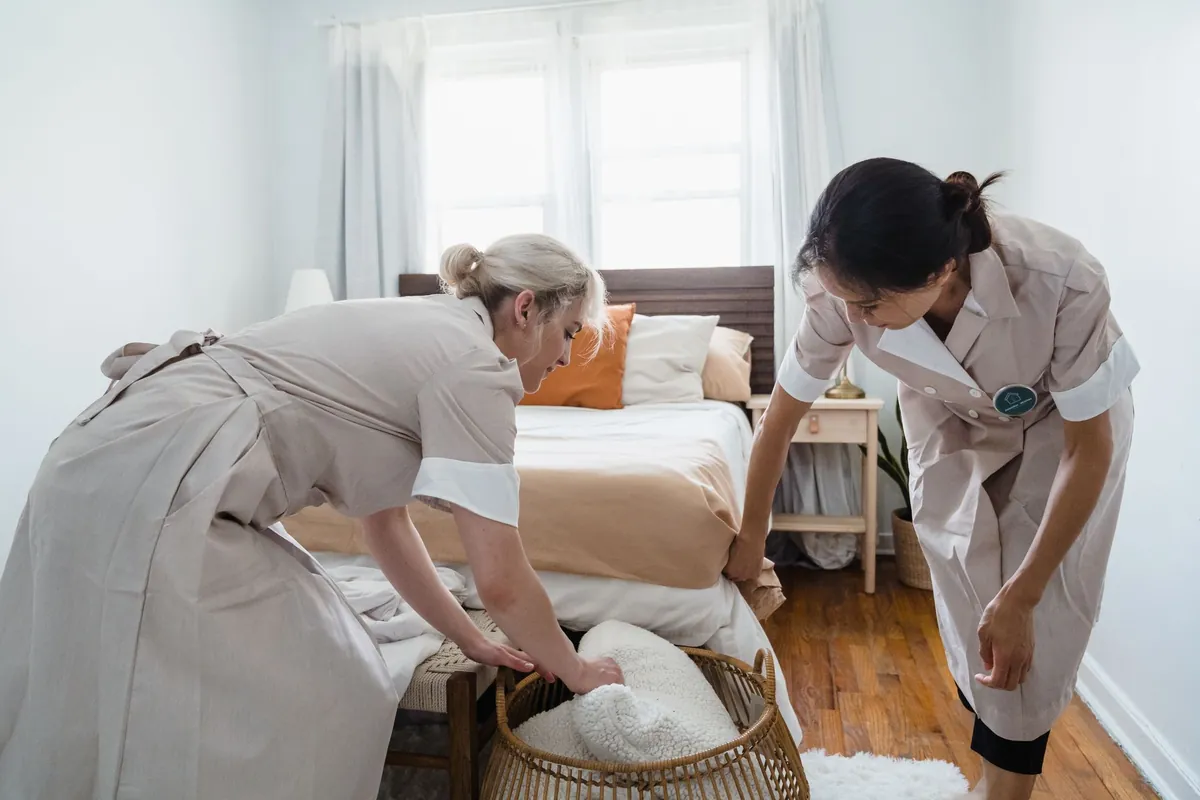
| Cleaning and repairs after checkout | BnBGenius creates cleaning and repair tasks after checkout; your person on site does the work |
| Guest reviews | BnBGenius requests a review from the guest and publishes the host's review |
| Guest calls | Voice Concierge, an add-on, answers guest calls with a voice AI agent |
| Extra nights and flexible times | BnBGenius sells gap nights, early check-in and late checkout |
| Prices and calendar | You: BnBGenius is not a pricing tool or a channel manager |
| Baltimore permit, renewal, taxes and local contact | You: BnBGenius does not issue permits; permit and city duties remain yours |
BnBGenius installs as a Chrome extension in about 5 minutes, with no API keys and no passwords shared. BnBGenius is run from Telegram.
A Week of Self-Managing Your Airbnb in Baltimore
This sample week is a voluntary planning aid, not a list of statutory days. Use it to organize short-term rental management in Baltimore around your bookings. The sequence can help you plan Airbnb management in Baltimore while keeping your own calendar flexible. City requirements still apply even when the related task does not fall on the day shown.
1. Before planning a listing. Baltimore City defines a short-term rental as renting all or part of a home for fewer than 90 nights. That is a stay-length definition, not a limit on how many nights you may host in a year. The City accepts no new unhosted-license applications; the deadline to obtain one was March 31, 2020. For a hosted rental, the owner must remain on site except during daytime and/or working hours. (City scope and stay length) (No new unhosted licenses) (Hosted daytime and working-hours exception) (Unhosted cutoff)
2. Check the residence and deed. For a hosted license, the applicant’s principal residence must be deeded in that same applicant’s name. The property must be free of code violations, and the owner must have a State Comptroller Sales and Use Tax number. The permanent-residence test also requires the owner to live there for an aggregate of at least 180 days annually, have it as the usual place of return for housing, and show at least one listed form of proof. A host may have only one permanent residence and may not have two hosted units. These hosted conditions do not remove the renewal route for an existing unhosted license. (Current eligibility) (No new unhosted licenses) (Hosted requirements and state tax number) (Unit count cap) (Permanent residence definition)
3. Prepare an application or renewal. Use the City’s current online portal. A new application or renewal requires a new online account and a new short-term rental registration. For a renewal, the Claim Code goes to the email address linked to the original registration account. A hosted unit does not need an inspection, but that exception does not remove the account or Claim Code steps. An unhosted unit also needs separate Rental Unit registration and a Rental Unit license. (Current account and claim code) (Renewal claim code) (Hosted inspection and compliance; unhosted rental licensing)
4. Get ready before arrival. During the rental, prominently display emergency contact information in an area readily accessible to guests. The representative must live within 15 miles of the dwelling and be accessible for the entire rental. Also display the required licensure sign prominently throughout the rental, in the form and manner set by City rules. Include the license number in any hosting-platform advertisement or listing. (Emergency representative and 15-mile rule) (License notice during stays) (License number in every hosting-platform advertisement or listing)
5. Check the home during a stay. For a hosted rental, the owner must stay on site except during daytime and/or working hours. The dwelling must comply with the City Building, Fire, and Related Codes Article, the City Health Article, and the Zoning Code of Baltimore City. (Hosted daytime and working-hours exception) (Code health fire and zoning compliance)
6. Handle checkout and records. A person on site does the cleaning and repair work after checkout; see the table above. For all short-term rentals, keep a record in the form and with the information required by City rules. Retain it for at least the period those rules require, and make it available to the Housing Commissioner on request. (Host rental record duty)
7. Set monthly tax and renewal reminders. People subject to the City tax must collect it, pay the Director of Finance by the 25th of each month, and file the required statement at the same time. A short-term rental license lasts two years and expires on the anniversary of issuance; submit a renewal application with the applicable fee at least 30 days before expiry. A holder of an existing unhosted license must also renew Property Registration every January 1. (Collection payment statement and due date) (Renewal timing) (Term and unhosted annual property registration)

Baltimore Short-Term Rental Permit and Rules: Your Checklist
People often search for a Baltimore short-term rental permit. The City calls it a short-term rental license. Use this checklist for the main requirements; the week above gives more detail on planning steps. (City scope and stay length)
-
Check which license path applies: A hosted unit may apply for or renew a license. No new unhosted license is issued. An unhosted unit needs an existing license to renew. For a hosted stay, the owner must stay on site, except during daytime and/or working hours. (Hosted route) (No new unhosted licenses) (Hosted daytime and working-hours exception)
-
For a hosted home, check the home and deed: The home must be the applicant’s principal residence. The deed must name that same person as an individual, not a company. The home must have no code violations. The owner must have a State Comptroller Sales and Use Tax number. See the week and FAQ for the full permanent-residence test. (Current eligibility) (Hosted requirements and state tax number) (Permanent residence definition)
-
Stay within the unit cap and check ownership changes: You may have one hosted unit. A person renewing an existing unhosted license may have one hosted unit in addition to that unhosted unit. No one may have two hosted units or two unhosted units. A license does not transfer on sale or any other ownership transfer. (Unit count cap) (Ownership transfer)
-
Budget the license fee: The fee is $200 per dwelling unit at first licensing and every renewal. The code calls it a biennial fee per unit. The City Fee Policy may adjust it. (Initial and renewal fee) (Code biennial fee subject to City Fee Policy)
-
Track renewal dates: A license lasts two years and ends on the same month and day it was issued. Send the renewal form to the Housing Commissioner with the annual fee due. Submit both at least 30 days before the current license ends. If you hold an unhosted license, renew Property Registration every January 1. (Renewal timing) (Term and unhosted annual property registration)
-
Check inspection and rental rules: A hosted unit need not be inspected. It must have no violations and comply with the City Building, Fire, and Related Code. An unhosted unit must also be registered and licensed as a Rental Unit. (Hosted inspection and compliance; unhosted rental licensing)
-
Post the notice and list the number: Put the license number in any ad or listing on a hosting platform. During the full rental, prominently display a sign that says the home is licensed for short-term rentals. The sign must use the form and manner set by City rules. (License number in every hosting-platform advertisement or listing) (License notice during stays)
-
Post emergency details: The host must prominently display emergency contact details. Do this during each rental. These details must be for the host’s representative. Place them inside the home. Guests must be able to readily access them. The representative must live within 15 miles of it. That person must be accessible for the entire rental. (Emergency representative and 15-mile rule)
-
Keep rental records: For all short-term rentals, make a record in the form and with the details set by City rules. Keep it for at least the number of years those rules require. On request, show the record to the Housing Commissioner for inspection. (Host rental record duty)
-
Know the penalty: A person who violates this subtitle or its rules is guilty of a misdemeanor. On conviction, the person is subject to a fine of not more than $500 for each offense. Each day a violation continues is a separate offense. (Misdemeanor fine and daily offenses)
"Unhosted units – Unhosted units must already have an existing Short-Term rental license and can renew their license using this site. There are no new licenses being issued for unhosted units."
Source: No new unhosted licenses
What this means for you: If you already hold an unhosted license, you may renew it. If you do not, the City does not offer a new unhosted license.
"The biennial license fee for a short-term residential rental license is $200 per dwelling unit, subject to adjustment in accordance with the City Fee Policy."
What this means for you: The stated $200 fee is per dwelling unit for a two-year license term. The City Fee Policy may adjust that fee, so a renewal is not guaranteed to cost exactly $200.
For current program information, use the City’s short-term rental program page and the official City code.
Baltimore Airbnb Taxes
Baltimore City’s tax rate is 9.5%. The tax applies to gross amounts paid to hosts for providing short-term rentals and to hosting platforms for booking or otherwise facilitating short-term rentals. Gross amounts include total payments of any kind, including cash, credit, property, or services. The definition does not allow a deduction for charges for services needed to complete the transaction. (City hotel tax rate and base) (Gross payment tax base)
People subject to the tax must collect it and pay the Director of Finance by the 25th day of each month. At the same time, they must file the required statement, showing taxes collected during the preceding period and any other required information. (Collection payment statement and due date)
As a simple hypothetical, if the taxable gross amount were $1,000, 9.5% would equal $95. That arithmetic is not a universal bill; the taxable amount depends on the transaction and the City’s gross-payment definition. The owner must also be registered with the State Comptroller to collect the State’s sales and use tax as part of the license requirements. For background reading, see this short-term rental accounting and tax resource. (City hotel tax rate and base) (Gross payment tax base) (License state tax registration)
What Airbnb Management in Baltimore Costs When You Self-Manage
The City lists an initial fee of $200 per dwelling unit and that amount upon every renewal. The license term is two years, with a renewal application due at least 30 days before expiry. The code calls the fee biennial and says it is subject to adjustment under the City Fee Policy. It also refers to the applicable annual fee when setting the renewal deadline; that wording does not change the two-year license term. A holder of an existing unhosted license must also renew Property Registration every January 1. (Initial and renewal fee) (Renewal timing) (Code biennial fee subject to City Fee Policy) (Term and unhosted annual property registration)
The 9.5% City tax uses the gross amounts named in the code, not a host’s profit or take-home payout. Its definition includes total payments of any kind and does not allow a deduction for services needed to complete the transaction. The monthly collection, payment, and statement duties apply to persons subject to the tax. The license fee, tax, and any optional spending have different bases and conditions, so they do not form one universal total. (City hotel tax rate and base) (Collection payment statement and due date) (Gross payment tax base)
For your own budget, you may choose to set aside amounts for cleaning, repairs, or insurance. These are voluntary planning categories. If you compare your workload with a management company, compare the services and written price for your property rather than assuming a standard percentage. For general background, see this guide to Airbnb automation tools.
Your first 500 messages are free, with all features and no card; after that it is $10 a month per unit (each listing you connect). See current Pricing. Voice Concierge is $30/month. It includes 20 resolved calls each month, then $0.35 per resolved call.
Baltimore Airbnb FAQ for Self-Managing Owners
1. Do I need a license for a short stay?
The City defines a short-term rental as renting all or part of a home for fewer than 90 nights, and says a person may not operate one without a currently effective license from the Housing Commissioner. Both hosted and unhosted units must be registered and licensed. The fewer-than-90-nights definition is about rental duration, not a yearly cap on hosting. (City scope and stay length) (License required)
2. Can I get a new license for an unhosted rental?
No new unhosted licenses are being issued, and the City says the deadline to obtain one was March 31, 2020. A person with an existing unhosted license may renew it. Do not treat the renewal option as a way to obtain a new license. (No new unhosted licenses) (Unhosted cutoff)
3. What counts as my permanent residence?
The dwelling must be where the owner resides for an aggregate of at least 180 days annually and the owner’s usual place of return for housing. At least one of these must document that usual-return condition: a driver’s license, voter registration, or official designation of the dwelling as the owner’s principal residence under the criteria governing the State Homestead Tax Credit. A host may have only one permanent residence; hosted rentals also have an on-site rule, except during daytime and/or working hours. (Permanent residence definition) (Hosted daytime and working-hours exception)
4. Can a company own the property for a hosted license?
No. The property must be the applicant’s principal residence and deeded in that same applicant’s name as an individual, not a company. The hosted requirements also include no code violations and a State Comptroller Sales and Use Tax number. (No company deed ownership) (Hosted requirements and state tax number)
5. How many units can I license, and does a license transfer on sale?
You may have one hosted unit. A person renewing an existing unhosted license may also have one hosted unit, but no one may have two hosted units or two unhosted units. A license does not transfer to a buyer on sale or on any other ownership transfer. (Unit count cap) (Ownership transfer)
6. How much is the license, and when must I renew?
The stated fee is $200 per dwelling unit at initial licensing and each renewal, and the code describes the biennial fee as subject to City Fee Policy adjustment. The license expires every two years on its issuance anniversary. Submit the renewal application with the applicable fee at least 30 days before expiry. (Initial and renewal fee) (Renewal timing) (Code biennial fee subject to City Fee Policy)
7. Does the City inspect a hosted unit?
A hosted unit does not need an inspection, but it must be free of violations and meet City requirements. An unhosted unit must also be registered and licensed as a Rental Unit, in addition to its short-term rental license. (Hosted inspection and compliance; unhosted rental licensing) (Term and unhosted annual property registration)
8. What must I display or put in an advertisement?
During the rental, display the emergency representative’s contact details prominently where guests can readily access them. That person must live within 15 miles of the dwelling unit and be accessible for the whole rental. Also display the required licensure sign prominently for the full rental term, in the form and manner set by City rules, and include the license number in any hosting-platform advertisement or listing. (Emergency representative and 15-mile rule) (License notice during stays) (License number in every hosting-platform advertisement or listing)
9. How does the City tax work?
The City rate is 9.5% on the gross amounts the code identifies, including amounts paid to hosts and hosting platforms for providing, booking, or facilitating rentals. Gross amounts include noncash payments and do not deduct charges for services needed to complete a transaction. People subject to the tax must collect and pay it by the 25th of each month and file the required statement at the same time. (City hotel tax rate and base) (Collection payment statement and due date) (Gross payment tax base)
10. What is the stated license penalty?
A person who violates the subtitle or its rules is guilty of a misdemeanor and, on conviction, is subject to a fine of not more than $500 for each offense. Each day a violation continues is a separate offense. (Misdemeanor fine and daily offenses)
Airbnb Property Management in Baltimore: Self-Manage or Hire a Company
Airbnb property management in Baltimore can mean handling the work yourself or hiring a management company. Self-management leaves you responsible for the City duties described here, while you arrange any physical work your property needs. A company may suit an owner who wants another party to take on more of the rental work.
Rules and rates last checked on 15 November 2026.