
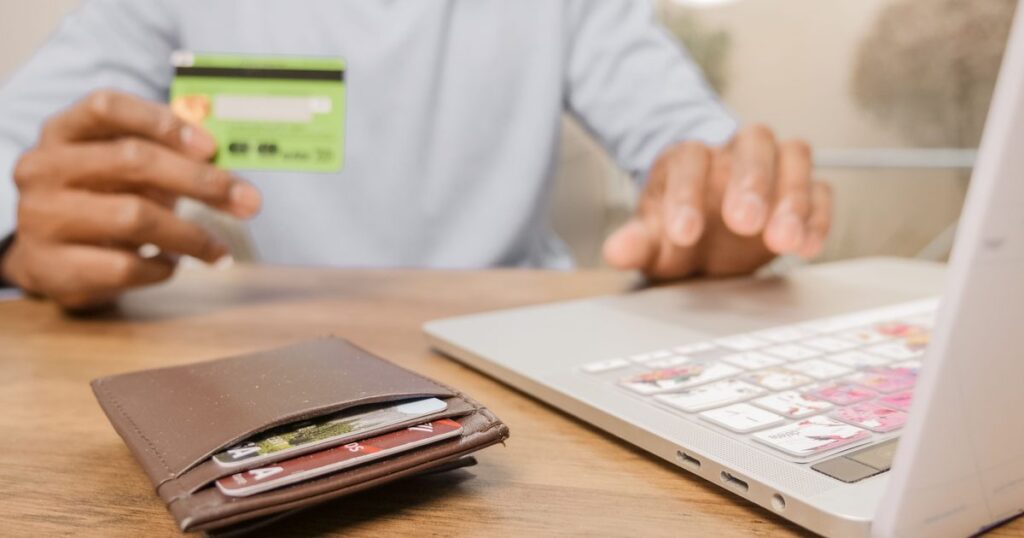
Airbnb defines a chargeback as “a formal payment dispute initiated by a consumer with their bank”. As the host, you cannot decide what the bank does. My recommendation is to follow the deadline in your notice, submit records that address the stated reason, and make sure a separate refund does not duplicate disputed funds. For example, a $1,200 stay may have paid out six weeks before a new bank-dispute notice arrives. That timing is illustrative, not an Airbnb deadline.
What is an Airbnb chargeback?
Airbnb’s “I disputed a charge from Airbnb with my bank, what happens next?” page defines it plainly: “A chargeback is a formal payment dispute initiated by a consumer with their bank.” The page tells a guest who has filed one to contact the bank for details on that bank’s process.
The cited page is guest-facing and does not describe a host workflow. It also says the bank may temporarily deposit the disputed amount while the process is ongoing and may take those funds back if it finds the dispute invalid, so a temporary credit from the bank is not a final decision.
Airbnb says, “Once a chargeback has been filed, it can take up to 90 days for the bank to resolve it,” on Airbnb’s “I disputed a charge from Airbnb with my bank, what happens next?” page. This is a bank resolution period; the page does not state a host evidence deadline.
Worked example: a $1,200 booking has already reached the host’s payout account. A chargeback notice for that booking could lead to a request for information, an adjustment, or another status shown in the notice. Do not assume the whole $1,200 moves immediately; identify the amount and status actually shown.

Chargeback vs. Resolution Center: why the first decision is not final
The Resolution Center is an Airbnb process for refund or payment requests. Airbnb’s “How the Resolution Center helps you” page also describes how a host or guest can ask Airbnb to mediate when they cannot agree. A chargeback instead begins with the consumer’s bank and follows that bank’s process.
| Question | Resolution Center | Chargeback |
|---|---|---|
| Who starts it? | Host or guest | Guest with a bank or card issuer |
| Where does it run? | Inside Airbnb | In the bank or card-dispute process |
| Who applies the decision process? | Airbnb, if asked to mediate | The bank or card system |
| Where does the host respond? | Resolution Center or Airbnb case channel | Follow the channel named in your chargeback notice |
| What can the host control? | The request, response, and supporting records | The speed, accuracy, and relevance of the records supplied |
Airbnb now tells a guest: “When a chargeback is filed, Airbnb is no longer able to resolve the dispute with you directly, and any refund you receive will come from your bank, not from Airbnb.” That wording appears on Airbnb’s “I disputed a charge from Airbnb with my bank, what happens next?” page.
Worked example: Airbnb may have approved or denied a $300 damage request, while a later notice identifies a $1,200 booking charge. Keep the earlier decision, but do not assume the bank dispute is for $300 or $1,200 until the notice states its amount.
The same separation matters across the four Airbnb guest refund paths hosts must keep separate and an Airbnb guest damage or theft AirCover claim.
Is Airbnb the merchant of record? Use Airbnb’s own words
Airbnb’s current wording is narrower than the shorthand used in many host guides. The Airbnb Payments Terms of Service say each host “appoints Airbnb Payments as the Host’s payment collection agent solely for the limited purpose of accepting and processing funds.” I would not turn that phrase into an official “merchant of record” label that the checked Airbnb source does not use.
The same Airbnb Payments Terms of Service say: “Airbnb Payments’ obligation to pay the Host is subject to and conditional upon successful receipt of the associated payments from Guest.” Elsewhere on that page, the terms describe Airbnb Payments collecting the total price and initiating payouts. In an ordinary Airbnb booking, the host is therefore not directly charging the guest’s card, but that fact alone does not answer every later payout question.
The contracting entity and applicable terms can vary by country, so use the version presented for your account and region. The surrounding money flow is easier to follow alongside Airbnb service fees for hosts and guests and the fees Airbnb hosts may charge and why not to collect them off-platform.
Worked example: take two otherwise identical $1,000 reservations, one under a US host account and one under a UK host account. The arithmetic is identical, but each host should read the payment terms and contracting entity shown for that account rather than copying a clause from the other region.
What happens after a chargeback notice reaches the host?
Start with the notice, not a generic internet timeline. Save it in its original form and record the reservation ID, disputed amount, stated reason, status, response channel, and exact deadline. Then compare those fields with the reservation, payout line, dates, and any earlier refund or Airbnb case.
- Preserve the notice and the deadline exactly as displayed.
- Match the reservation ID, amount, stay dates, and payout entry.
- Check whether the notice covers the full booking or only part of it.
- Respond through the channel and instructions named in the notice.
- Send a compact file that answers the stated allegation.
- Save the submission confirmation, support case IDs, and any payout adjustment.
- Describe facts without promising that the records will produce a particular outcome.
Do not import a deadline from a Stripe article, another host’s screenshot, or a different platform. The cited Airbnb guest page gives a bank resolution period, not a host evidence deadline. Use the notice for this reservation as your operating instruction.
Worked example: the booking total was $1,200, an earlier refund was $200, and the notice disputes $1,000. Start with those three ledger lines: $1,200 minus $200 equals $1,000. Then verify each number against your own notice and earnings record.
If an amount arose from a guest-count change, keep the accepted reservation change with your file and review how Airbnb extra guest fees and guest-count changes work.
What records should an Airbnb host save? Match proof to the claim
My practical recommendation is to save the notice, full platform message thread, reservation details, payout history, listing and house rules as booked, cancellation policy shown for the reservation, earlier Airbnb decisions, refund confirmations, and lawful access or condition records. Then select the items that answer the allegation. Volume is not relevance.
| Claim in the notice | Relevant host record | What I would not treat it as proving by itself |
|---|---|---|
| Unauthorized charge | Reservation record and platform booking messages available to the host | Who physically controlled the payment card |
| Service not received or access problem | Sent check-in instructions, platform messages, and lawful access log | That every advertised feature worked |
| Not as described | Listing snapshot as booked, amenity records, maintenance notes, and dated photos | That the guest accepted every condition |
| Refund not processed | Refund confirmation, Resolution Center record, and matching accounting line | When the guest’s bank posted the credit |
| Cancellation disagreement | Policy shown for that reservation and the cancellation timeline | That no separate exception applied |
| Guest stayed | On-platform messages, lawful access log, and turnover note | Whether the payment use was authorized |
Worked example: organize an 8-message thread, 1 access log, and 1 dated turnover report into a one-page timeline with numbered exhibits. That packet is easier to review than a mixed folder of screenshots, but it does not guarantee a win.
I would not collect card numbers or extra identity documents for chargeback defense. Identity questions are policy-sensitive; use Airbnb’s host ID-request rules and the limits covered in guest screening technology for Airbnb hosts. If the underlying disagreement involves an animal fee, preserve the messages and booked terms, then check Airbnb’s service-animal, emotional-support-animal, and pet rules. For an alleged party or disturbance, contemporaneous platform messages and lawful incident records matter more than labels; the adjacent process is covered in Airbnb parties and noise complaints.
What can the host control—and what stays outside the host’s hands?
| You can control | You cannot control |
|---|---|
| An accurate listing and disclosed fees | Whether a guest files |
| On-platform, factual communication | The issuer’s reason code |
| A prompt response through the stated channel | The bank or card company’s decision |
| A complete file matched to the claim | The exact review duration |
| Reconciliation of refunds and disputed funds | What the platform submits beyond what it tells you |
| A cash buffer and clear accounting note | The outcome |
Airbnb says the bank’s resolution can take up to 90 days on Airbnb’s “I disputed a charge from Airbnb with my bank, what happens next?” page. Vrbo likewise says the card company makes the final decision on its “Prevent chargebacks” page. I could not load that Vrbo page during this draft’s live check because the permitted verification remained rate-limited, so I am paraphrasing the researched rule rather than quoting it.
Worked example: suppose your notice shows a 72-hour response period. Treat that as the deadline for that notice and calendar it immediately; do not publish or repeat “72 hours” as a universal Airbnb rule. If the dispute followed a cancellation, keep the specific reservation record separate from the general rules in Airbnb host cancellation fees, penalties, and valid reasons.
How do you avoid a double refund while a chargeback is open?
Do not issue a second goodwill refund automatically while the same money may already be disputed. First ask Airbnb or Vrbo in writing whether the pending chargeback covers the same amount and how any refund should be documented. Keep guest communication factual and on-platform; do not move the conversation to the guest’s bank or arrange a replacement payment off-platform.
Worked example: an $800 chargeback plus a separate $800 refund creates a possible $1,600 gross outflow before reconciliation. That is arithmetic, not a prediction that either platform will settle the case that way. The point is to identify whether both transactions cover the same $800 before initiating another one.
A short message should name the reservation, amount, and action you are checking, without accusing the guest. The same discipline used in Airbnb guest messages from booking through review helps preserve a readable record, but messaging does not manage or decide a chargeback.
How do Vrbo chargebacks differ? First identify who processes payment
Vrbo has two materially different routes. For payments processed through Vrbo, its “Prevent chargebacks” page says its team gathers the needed information and disputes chargebacks for the host, while the card company has the final decision. Those statements are paraphrased here because the live page remained rate-limited during the permitted verification.
For an Integrated Property Manager that processes traveler payments, Vrbo’s “Integrated Property Managers – Handle payment issues for integrated accounts” page says: “Because you are the Merchant of Record, Vrbo does not mediate chargeback disputes or reimburse losses related to chargebacks.” That rule belongs to the integrated-account model, not every Vrbo host.
Worked example: two $1,000 Vrbo reservations can require different response routes even though the amounts match. If Vrbo processed the first payment, follow the Vrbo notice. If an integrated manager processed the second as merchant of record, that manager follows its payment processor’s notice. Check the payment setup before applying either route.
For the surrounding fee model, use VRBO fees for hosts and payment processing.
Can Airbnb take back a payout after a chargeback? The honest answer
The checked public Airbnb pages do not say that every guest chargeback is automatically recovered from the host. The Airbnb Payments Terms of Service make the payment obligation conditional on successful receipt from the guest; they do not give one host-facing sentence that resolves every chargeback scenario.
Use the concrete record in your account: the notice, the reservation, the earnings line, and the payment terms that apply to your region. Ask support for the case ID, amount, reservation, stated reason, current status, evidence deadline, exact payout entry, and confirmation that any earlier refund was included. Keep the answers in the platform case.
Worked example: a future payout is $600 lower than expected. Do not label the $600 a chargeback merely because a dispute exists. First find an earnings entry or written notice tying that adjustment to the reservation. If none does, ask Airbnb to identify the line before recording the cause in your books.
Airbnb chargeback checklist for hosts
Today
- Save the original notice, deadline, reason, reservation ID, and disputed amount.
- Capture the relevant earnings entry and preserve the full platform thread.
- Reconcile any prior refund or Resolution Center decision.
Before submitting
- Build a one-page timeline and number each exhibit.
- Answer the exact allegation rather than every disagreement with the guest.
- Remove irrelevant personal data and do not add card or unnecessary ID information.
- Use only the response channel named in the notice.
After submitting
- Save the confirmation and case ID.
- Watch the payout status without assuming every change is the chargeback.
- Do not duplicate a refund, and schedule follow-up from the notice rather than an invented service deadline.
- After the result, reconcile the final amount and improve one process that would make the next record clearer.
Worked example: a compact packet can contain 1 timeline, 1 reservation confirmation, the relevant message thread, 1 access or condition record, and 1 earlier case or refund record. Five organized parts are useful because each has a job, not because a five-part packet guarantees success.
Use this checklist to control your response and records.
About this article: I’m Kent Morgan, and I have used official platform sources first to separate verified rules from host-side operating advice. This is operational information, not legal advice. Payment terms vary by region and can change; for legal options, consult a licensed attorney in your jurisdiction, and for the card process, follow the instructions in the platform or payment-processor notice.