
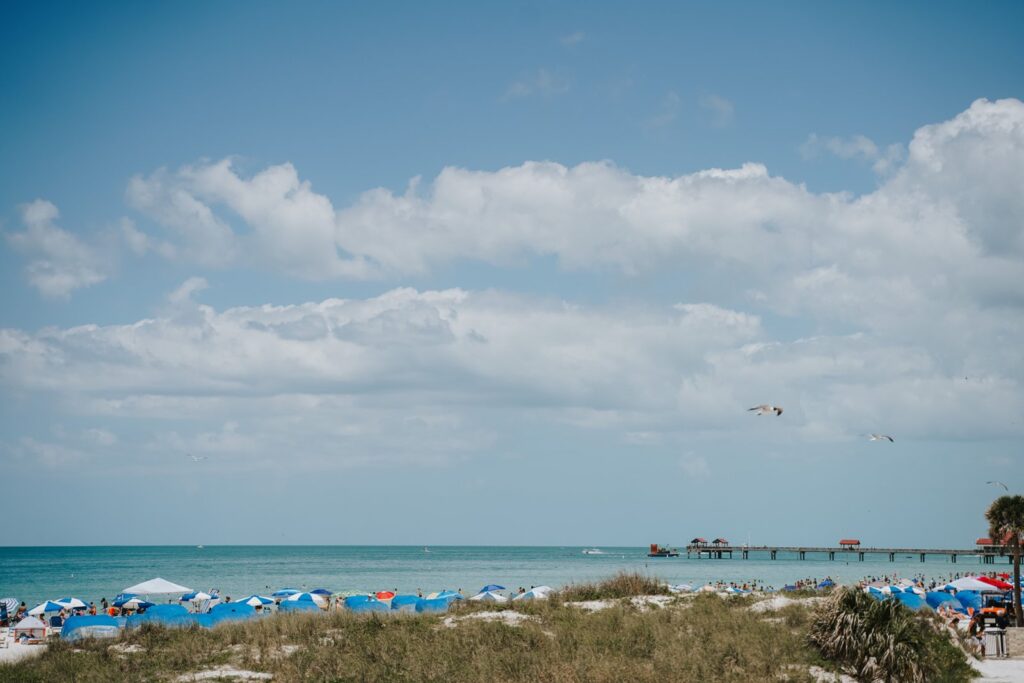
Airbnb management in Clearwater is something you can self-manage. You handle the city side — checking your address, confirming your proposed use, obtaining your city receipt and handling taxes — while BnBGenius answers guest messages on Airbnb and Vrbo 24/7 and your person on site does physical cleaning and repairs. Your first 500 messages are free, with all features and no card; after that it is $10 a month no matter how many listings you have.

Airbnb Management in Clearwater: How You Self-Manage with BnBGenius
Self-managing means splitting the work between you, your software and your person on site. Here is how the division looks:
| The work | Who does it |
|---|---|
| Guest messages on Airbnb and Vrbo | BnBGenius answers guest messages on Airbnb and Vrbo 24/7 |
| Cleaning and repairs after checkout | BnBGenius creates cleaning and repair tasks after checkout; your person on site does the work |
| Guest reviews | BnBGenius requests a review from the guest and publishes the host’s review |
| Guest calls | Voice Concierge, an add-on, answers guest calls with a voice AI agent |
| Extra nights and flexible times | BnBGenius sells gap nights, early check-in and late checkout |
| Prices and calendar | You: BnBGenius is not a pricing tool or a channel manager |
| Clearwater permit, renewal, taxes and local contact | You: BnBGenius does not issue permits; permit and city duties remain yours |
BnBGenius installs as a Chrome extension in about 5 minutes, with no API keys and no passwords shared. BnBGenius is run from Telegram. You manage your own Airbnb: the city paperwork, the pricing decisions and the calendar stay in your hands, and you decide how your person on site handles the physical work.
The city side stays with you. Your address and proposed use must comply with your zoning district and the applicable development standards in Article 3 (Clearwater Community Development Code Section 2-100). Businesses located within the city limits need a Business Tax Receipt before opening (City of Clearwater Business Tax Receipts), and some classifications may require internal and external approvals, with the BTR valid only after approval and final payment (City of Clearwater Business Tax Receipts). The business tax year runs Oct. 1 to Sept. 30 and renews annually regardless of when the BTR is obtained (City of Clearwater Business Tax Receipts), and Pinellas County expects tax handling for living quarters rented six months or less (Pinellas Tax Collector).
A Week of Self-Managing Your Airbnb in Clearwater
A week gives you a realistic rhythm for short-term rental management in Clearwater. These are work suggestions in a practical order, not legal deadlines.
-
Before any offer, confirm where you stand. Check that your business address sits within the city limits of Clearwater through the Pinellas County Property Appraiser’s office (City of Clearwater BTR). Then look up your property’s zoning district and future land use category (City of Clearwater Development Review Planning). This lookup is information, not a city ruling; you can also call Zoning at (727) 562-4604 to check that your business type is permitted at the location (City of Clearwater Business Tax Receipts). No use is permitted unless it complies with the zoning district and the applicable Article 3 standards (Clearwater Community Development Code Section 2-100). Save your address and proposed-use questions for the city.
-
Before listing, check the residential-use limit. On residentially zoned property, residential use excludes rentals for periods of less than 31 days or one calendar month, whichever is less, including anything advertised or held out to the public as rented for such periods (Clearwater Community Development Code Article 8). A dwelling unit on residentially zoned property is used only for a residential use, unless otherwise specified (Clearwater Community Development Code Article 8). Overnight accommodations are the category covering occupancy offered or advertised for a term of less than 31 days or one calendar month, whichever is less (Clearwater Community Development Code Article 8). In the Tourist (T) district, the standards table lists overnight accommodations (Clearwater Community Development Code Table 2-802), and they are a Level One permitted use subject to that section’s standards and criteria and other applicable Article 3 provisions (Clearwater Community Development Code Section 2-802); the chart’s “X” only indicates permission, not the nature of approval, and district plus Article 3 compliance is still required (Clearwater Community Development Code Section 2-100). Verify your own district rather than assuming Tourist zoning.
-
Before opening, apply for the Business Tax Receipt. Businesses within the city limits need it prior to opening (City of Clearwater Business Tax Receipts), and residential rental requires additional information as part of the application (City of Clearwater Business Tax Receipts). The city requires different supporting documentation, approvals and fees depending on business type and location (City of Clearwater Business Tax Receipts), and some classifications may require internal and external department approvals; the BTR is not valid until approved and final payment is collected (City of Clearwater Business Tax Receipts). The application asks for a local representative with a street address, not a P.O. box or private mail service, in Pinellas, Hillsborough, Pasco, Manatee or Sarasota County (Clearwater residential rental BTR application), and every residential unit must meet the city’s development code and the Standard Housing Code (Clearwater residential rental BTR application). Keep your ownership documents, address confirmation and proposed-use answers in one folder.
-
Before arrival, compare your dates to the rule. Match your proposed stay dates and your advertisement against the shorter-of-two threshold for residentially zoned property (Clearwater Community Development Code Article 8) and the overnight-accommodations definition (Clearwater Community Development Code Article 8).
-
During the stay and at checkout, your person does the physical work. Coordinate cleaning and repairs through the task flow in the table above. Keep county tax records as their own duty: anyone collecting rental charges for short-term accommodations must keep adequate records, including copies of all leases and rental agreements (Pinellas Tax Collector).
-
After the stay, file the paperwork. Those records must be maintained for three years and be available for audit in Pinellas County at the time of the audit (Pinellas Tax Collector). A monthly folder for receipts makes this easy.
-
Monthly, review your city standing. The business tax year runs Oct. 1 to Sept. 30 and renews annually regardless of when the BTR is obtained (City of Clearwater Business Tax Receipts). Notify the BTR division of changes such as address, name, ownership, moving out of city limits or closing (City of Clearwater BTR).

Clearwater Short-Term Rental Permit and Rules: Your Checklist
Do I need a Clearwater short-term rental permit? The city’s key document in these rules is the Business Tax Receipt, required for all businesses located within the city limits prior to opening (City of Clearwater Business Tax Receipts). Here is a checklist of the rules that shape your rental.
- City address and zoning: First confirm your address is inside the Clearwater city limits. Use the Pinellas County Property Appraiser’s office (City of Clearwater BTR). Then find your zoning district and future land use category (City of Clearwater Development Review Planning). You can also call Zoning at (727) 562-4604 (City of Clearwater Business Tax Receipts). An address alone is not a city ruling.
- Residential-use limit: On residentially zoned property, rentals for less than 31 days or one calendar month, whichever is less, do not count as residential use. This also covers ads that offer a place for such short periods (Clearwater Community Development Code Article 8).
- Tourist T route: Overnight accommodations appear in the T District standards table (Clearwater Community Development Code Table 2-802). They are a Level One permitted use in the T District, but only if they meet the standards and criteria in that section and the other applicable Article 3 provisions (Clearwater Community Development Code Section 2-802). The chart’s “X” only shows a use is permitted, not the approval type. No use is allowed unless it meets its district and Article 3 rules (Clearwater Community Development Code Section 2-100).
- BTR before opening: Every business inside the Clearwater city limits needs a Business Tax Receipt before it opens (City of Clearwater Business Tax Receipts). A residential rental must provide extra information with the application (City of Clearwater Business Tax Receipts). The application asks for a local representative with a street address in Pinellas, Hillsborough, Pasco, Manatee or Sarasota County (Clearwater residential rental BTR application).
- Fees and validity: Your documents, approvals and fees depend on your business type and location (City of Clearwater Business Tax Receipts). Some classifications may need both internal and external approvals. The BTR is not valid until it is approved and final payment is collected (City of Clearwater Business Tax Receipts).
- Annual renewal: The business tax year runs from Oct. 1 to Sept. 30 and renews annually regardless of when the BTR is obtained (City of Clearwater Business Tax Receipts).
- Business changes: Tell the BTR division about any change. This includes your business or mailing address, name, or ownership. It also covers moving out of city limits or closing (City of Clearwater BTR).
- Notice and correction: When a code inspector finds a violation, the officer tells the violator about it. The officer then sets a reasonable time to fix it (Clearwater Community Development Code Article 7).
- Civil citations: Each violation of the City Code is a separate civil infraction. Each day it continues is also a separate infraction (Clearwater Community Development Code Article 7). Under this section, the maximum penalty is $500.00 or such amount as may hereafter be prescribed by law (Clearwater Community Development Code Article 7).
- County tax records: If you collect rent on living quarters for six months or less, register a TD account, collect the tax and remit it (Pinellas Tax Collector). Keep adequate records, including leases and rental agreements (Pinellas Tax Collector). Hold them for three years and make them available for audit in Pinellas County at audit time (Pinellas Tax Collector).
“Residential use means a permanent place of residence for a family. A residential use located on residentially zoned property shall not include rentals for periods of less than 31 days or one calendar month, whichever is less, or which is advertised or held out to the public as a place rented for periods of less than 31 days or one calendar month, whichever is less.”
What this means for you: On land zoned residential, stays shorter than 31 days or one calendar month, whichever is less, are not a residential use. Advertising a home for such short stays is treated the same way.
“The business tax year is from Oct. 1 to Sept. 30 and renews annually regardless of when the BTR is obtained.”
What this means for you: The business tax year runs Oct. 1 to Sept. 30. You renew every year no matter when your receipt was issued.
You can read the city’s full Community Development Code online at Article 2, Section 2-100.
Clearwater Airbnb Taxes
- Pinellas County charges a 6% tourist development tax (Florida Department of Revenue), which for counties like Pinellas is reported and remitted directly to the county (Florida Department of Revenue).
- Pinellas also has a 1% discretionary sales surtax, effective Feb. 1, 1990 through Dec. 31, 2029 (Florida Department of Revenue).
- If you collect rent on any living quarters for a period of six months or less, you must register a tourist development account, collect the tax from guests and remit it to the county office (Pinellas Tax Collector).
The local tax is in addition to the state sales tax and any applicable discretionary sales surtax (Florida DOR DR-15TDT).
What Airbnb Management in Clearwater Costs When You Self-Manage
Airbnb management in Clearwater does not come with one flat city price. Your city costs depend on your business, not a single number:
- Clearwater requires different supporting documentation, approvals and fees depending on the type of business and its location (City of Clearwater Business Tax Receipts), and the city publishes its fee schedule as Appendix A – Schedule of Fees, Rates and Charges (City of Clearwater BTR).
- Some classifications may require internal and external approvals, and the BTR is not valid until approved and final payment is collected (City of Clearwater Business Tax Receipts).
- Renewal follows the Oct. 1 to Sept. 30 business tax year, which renews annually regardless of when the BTR is obtained (City of Clearwater Business Tax Receipts) — a timing rule, not a fee amount.
- County taxes are separate from city fees: the 6% tourist development tax (Florida Department of Revenue) applies to living quarters rented six months or less (Pinellas Tax Collector) and is remitted to the county (Florida Department of Revenue), plus the 1% discretionary surtax (Florida Department of Revenue).
Ask the city for the current applicable fee for your classification. Cleaning and repairs are owner-arranged costs with your own person on site, so set those rates yourself. A management company will quote its own fees; ask any company directly for a current quote.
Your software costs are simple. Your first 500 messages are free, with all features and no card; after that it is $10 a month no matter how many listings you have.
Voice Concierge is $30/month. It includes 20 resolved calls each month, then $0.35 per resolved call.
Clearwater Airbnb FAQ for Self-Managing Owners
Can I manage my own rental? Yes, if your address and proposed use qualify under the zoning rules. No use is permitted unless it complies with the district and Article 3 standards (Clearwater Community Development Code Section 2-100), and Tourist-district permission carries its own conditions (Clearwater Community Development Code Section 2-802). You still handle the Business Tax Receipt yourself (City of Clearwater Business Tax Receipts). Software never grants city permission.
Do I need a Clearwater short-term rental permit? The city requires a Business Tax Receipt for businesses within the city limits prior to opening (City of Clearwater Business Tax Receipts). Your use must also be permitted at your location (Clearwater Community Development Code Section 2-100), and residential rental requires additional application information (City of Clearwater Business Tax Receipts). The application also asks for a local representative with a street address in Pinellas, Hillsborough, Pasco, Manatee or Sarasota County (Clearwater residential rental BTR application).
How short can a residential stay be? On residentially zoned property, the excluded period is less than 31 days or one calendar month, whichever is less, and advertising for such periods counts the same way (Clearwater Community Development Code Article 8). A dwelling unit there is used only for a residential use, unless otherwise specified (Clearwater Community Development Code Article 8). Your district and Article 3 compliance still govern what you may do (Clearwater Community Development Code Section 2-100).
Does Tourist zoning approve every rental? No. Overnight accommodations appear in the T District standards table (Clearwater Community Development Code Table 2-802) and are a Level One permitted use in the T District subject to that section’s standards and criteria and other applicable Article 3 provisions (Clearwater Community Development Code Section 2-802). The chart’s “X” only indicates permission, not the approval type (Clearwater Community Development Code Section 2-100). Check your own parcel before relying on it.
How can I check my address? First confirm the address is within the city limits through the Pinellas County Property Appraiser’s office (City of Clearwater BTR). Then enter the address in the search box and click the magnifying glass (City of Clearwater Zoning and Planning FAQ), check the Zoning or Future Land Use boxes in the Layer List (City of Clearwater Zoning and Planning FAQ), and click the blue outlined dot to scroll through the designations (City of Clearwater Zoning and Planning FAQ). The result is information, not a city ruling on your rental.
How much does the BTR cost? Fees vary by business type and location (City of Clearwater Business Tax Receipts), and the city lists them in Appendix A – Schedule of Fees, Rates and Charges (City of Clearwater BTR). The receipt is not valid until approved and final payment is collected (City of Clearwater Business Tax Receipts). Ask the city for the current amount that applies to your classification.
When do I renew or report changes? Plan your renewal around the city’s tax year, which runs Oct. 1 to Sept. 30 and renews annually no matter when your BTR was obtained (City of Clearwater Business Tax Receipts). If your business details change, tell the BTR division about address, name, ownership, moving out of city limits or closing (City of Clearwater BTR). A yearly reminder on your own calendar keeps both duties visible.
Which local taxes apply? Pinellas County charges a 6% tourist development tax (Florida Department of Revenue) plus a 1% discretionary surtax effective Feb. 1, 1990 through Dec. 31, 2029 (Florida Department of Revenue). For living quarters rented six months or less, register a TD account, collect and remit the tax (Pinellas Tax Collector) to the county (Florida Department of Revenue). Sales tax and surtax on transient rentals are reported and remitted to the Florida Department of Revenue (Florida Department of Revenue).
What records should I keep? Decide up front where you will store leases and rental agreements, since anyone collecting rental charges for short-term accommodations must keep adequate records including copies of them (Pinellas Tax Collector). Hold those records for three years and keep them available for audit in Pinellas County at the time of the audit (Pinellas Tax Collector). A simple folder per listing per year works well.
What happens without a BTR or after code violations? Operating without a Business Tax Receipt can mean a citation from a city inspector, a Notice to Appear before the County Court, or a Notice of Violation leading to the Municipal Code Enforcement Board (City of Clearwater Business Tax Receipts). Failure to comply can result in fines or liens (City of Clearwater Business Tax Receipts). For code violations, the officer prescribes a reasonable time to correct (Clearwater Community Development Code Article 7). Each violation and each continuing day is a separate civil infraction (Clearwater Community Development Code Article 7), with a maximum penalty of $500.00 or such amount as may hereafter be prescribed by law for violations enforced under that section (Clearwater Community Development Code Article 7).
Airbnb Property Management in Clearwater: Self-Manage or Hire a Company
Airbnb property management in Clearwater comes down to whether you want to run the city paperwork and guest operations yourself or hand the whole job to a management company.
More City Guides
- Self-managing an Airbnb in Dunedin, FL
- Self-managing an Airbnb in Tarpon Springs, FL
- Self-managing an Airbnb in Gulfport, FL
- Self-managing an Airbnb in Holmes Beach, FL
Rules and rates last checked on 1 November 2026.