

How do I fill Airbnb gap nights?
Fill Airbnb gap nights by first offering them to adjacent guests, then lowering only the gap dates’ minimum stay and rate if neither guest extends.
For a one-night opening, I use a three-step decision tree:
- Ask the departing guest. Offer the open night as an extension of the existing reservation.
- Ask the arriving guest. If the departing guest declines, offer the arriving guest the option to begin the stay one night earlier.
- Open the night to the market. If neither guest accepts, make that specific date bookable as a one-night stay and set a rate that still covers its variable costs.
Suppose a guest checks out Thursday, the next guest checks in Friday, and the open Thursday night normally sells for $180 in my example. I would offer it to the departing guest first, then the arriving guest, and only then expose it as a standalone one-night booking. That sequence gives the easiest extensions priority before creating another reservation and turnover.
The important distinction is between changing one stranded date and cutting the rules for the entire calendar. A one-night gap does not justify turning every future date into a one-night stay. It calls for a date-specific response.
This strategy should sit beside broader occupancy work, not replace it. The calculations in maximizing Airbnb occupancy without sacrificing revenue explain why filling nights is useful only when the additional revenue exceeds the additional cost. For a more automation-focused treatment, see how vacation-rental gap-night automation works.

What are gap nights on Airbnb?
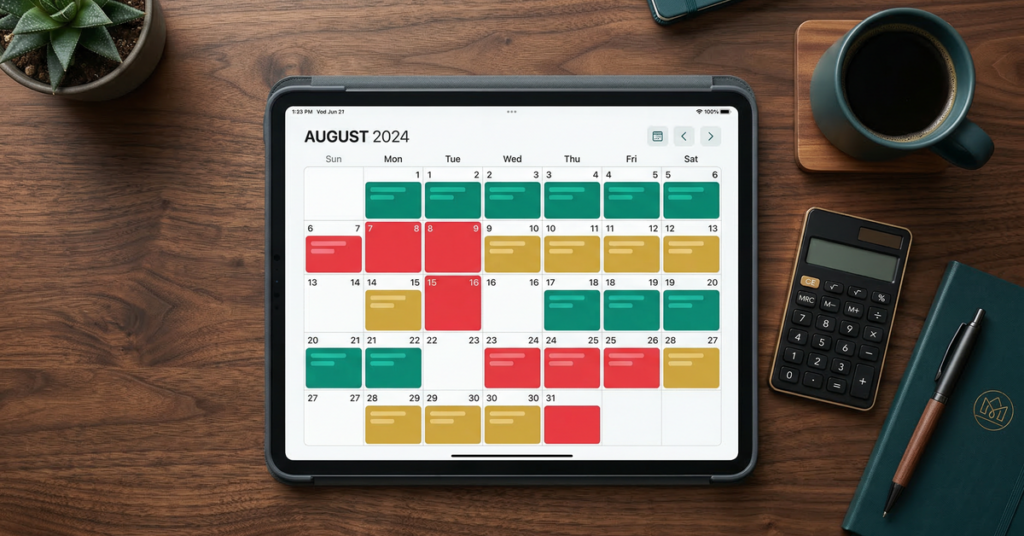
A gap night, orphan night, or orphan day is an unbooked night trapped between confirmed stays. For example, a Thursday checkout and Friday check-in leave Thursday night open and unbookable under a 2-night minimum.
The calendar can therefore look nearly full while still containing dates that ordinary searches cannot return. A traveller searching for 2 nights cannot reserve a 1-night opening, even though that opening is technically available. The problem is not necessarily weak demand. It can be a mismatch between the length of the opening and the listing’s minimum-stay rule.
I separate gap nights from larger open periods:
- Gap night: 1 open night between 2 confirmed stays.
- Short orphan gap: 2 open nights that conflict with a 3-night minimum.
- Ordinary availability: a longer open run that already satisfies the normal minimum.
Consider a calendar with a 3-night minimum. A 2-night opening between reservations is stranded, while a 4-night opening remains bookable under the ordinary rule. Both periods are vacant, but only the shorter 1 needs a minimum-stay override.
That difference matters when diagnosing occupancy. A low occupancy ratio may reflect pricing, demand, listing quality, or unavailable dates. A small collection of orphan nights is more specific: confirmed bookings have divided the calendar into pieces that are too short to sell under the current rules. The formula in what counts as a good Airbnb occupancy rate helps distinguish calendar utilization from actual revenue performance.
How much revenue can Airbnb gap nights cost?
Three empty nights per month at a $180 average daily rate represent $6,480 in annual gross revenue exposure: 3 × $180 × 12. That is exposure rather than guaranteed lost profit because not every open night would have sold, and a filled night can create variable expenses.
I start with a simple exposure calculation:
Gap-night exposure = open gap nights × expected nightly rate.
Here is an annual comparison using my assumptions:
| Assumption | Monthly calculation | Annual gross exposure |
|---|---|---|
| One gap at $180 | 1 × $180 = $180 | $180 × 12 = $2,160 |
| Three gaps at $180 | 3 × $180 = $540 | $540 × 12 = $6,480 |
| Five gaps at $180 | 5 × $180 = $900 | $900 × 12 = $10,800 |
These figures do not mean every gap should be sold at any price. They show the upper edge of what is exposed if the assumed $180 rate could have been collected. The recoverable amount depends on acceptance, discounting, platform fees, consumables, cleaning, and any other cost caused by the extra reservation.
I also avoid treating the full nightly rate as profit. If a $180 night is offered for $144 and incurs $15 of incremental cost, its contribution is $129, not $180. If it requires a separate turnover costing much more, the contribution falls further.
For a wider view of demand and utilization, compare this calculation with occupancy rates by city and ZIP code and how to find reliable occupancy data. Market occupancy can provide context, but the property’s own gap inventory and costs determine the decision.
Why does my Airbnb minimum stay create unbookable nights?
A fixed 3-night minimum blocks 1-night and 2-night gaps. A 1-night gap needs a 1-night override for that date only, not a listing-wide minimum-stay reduction.
Suppose 1 reservation ends Monday morning and the next begins Wednesday afternoon. Monday night and Tuesday night form a 2-night opening. If the listing requires 3 nights for every arrival date, no traveller can select those 2 nights as a valid stay. The availability exists, but the booking rule prevents it from becoming a reservation.
The same logic applies to a 1-night opening:
| Open period | Fixed minimum | Result |
|---|---|---|
| 1 night | 3 nights | Unbookable without an override |
| 2 nights | 3 nights | Unbookable without an override |
| 3 nights | 3 nights | Meets the minimum |
I would not respond by reducing every date to a 1-night minimum. That could admit short reservations on weekends or high-demand periods where the original 3-night rule remains economically useful. The narrower response is to match the override to the stranded opening.
Calendar management also needs clear boundaries. BnBGenius is not a channel manager, does not synchronize calendars, and does not change open-market pricing. Hosts who need those functions should evaluate the appropriate category through the channel-manager comparison and the pricing-tools comparison. The calendar-sync guide also explains syncing Airbnb and VRBO; BnBGenius does not perform that synchronization.
Which guest should get the gap-night extension offer first?
Compare the guests on both sides of the gap and prioritize the one with the easier extension. Extending an adjacent reservation adds no separate turnover, although the normal post-stay cleaning is delayed rather than eliminated.
For a one-night Thursday gap, the departing guest may stay through Friday morning, or the arriving guest may begin on Thursday. I compare practical friction rather than automatically choosing one side every time.
| Candidate | Question to ask | Example signal |
|---|---|---|
| Departing guest | Can the guest postpone departure? | A Friday flight makes one more night practical |
| Arriving guest | Can the guest begin the trip earlier? | The guest already planned to reach the area Thursday |
| Open market | Will a standalone booking contribute enough? | A $150 booking with $120 of variable cost contributes $30 |
An extension does not create another cleaning between the original reservation and the additional night. It also does not make cleaning disappear. The regular post-stay turnover moves to the revised checkout date. That is why I do not record a fictitious cleaning saving in the revenue calculation.
If both adjacent guests appear equally flexible, I start with the departing guest because the person is already committed to the property. If that guest declines, I send the offer to the arriving guest. I set a reply deadline so there is still time to try the other side.
Extensions can also be considered alongside other paid conveniences. The operational distinctions in Airbnb early check-in and late checkout help separate an additional paid night from a short arrival or departure adjustment.
What message should I send for an extra-night offer?
A useful extra-night message identifies the date, regular price, discounted price, absence of an additional cleaning fee, and reply deadline. Send it 24–48 hours before checkout and use an Airbnb trip-change request for a confirmed reservation rather than a Special Offer.
Here is the short template I would use:
Hi [guest name], Thursday, June 18 is available after your current stay. The regular price is $180, but I can offer that extra night for $144 with no additional cleaning fee. If you would like to extend, please reply by 6:00 p.m. tomorrow and I will send a trip-change request.
The arithmetic is visible: $180 minus $36 equals $144. The message does not make the guest calculate the saving, guess which date is available, or ask whether another cleaning charge will appear.
I keep the message to one compact paragraph. A deadline such as 6:00 p.m. gives the departing guest a clear decision point and gives the host time to approach the arriving guest if the answer is no. A vague “let me know soon” does not reserve enough time for the second attempt.
The 24–48-hour timing is a practical test range rather than a universal promise. Sending too early can reach a guest before plans are settled; sending on checkout morning can leave little time to change travel arrangements.
For other stages of the stay, the booking-to-review message templates provide examples that can be adapted without burying the main action. BnBGenius can answer guest messages on Airbnb and VRBO around the clock and sell empty nights through guest offers.
How should I price gap nights without lowering my base rate?
Use a targeted 10–25% extension discount as a starting test. A 20% discount turns a $180 night into $144 without changing the listing’s public base rate, though the booked gap-night rate is still discounted.
The wording matters. I would not say the host preserved the full rate: the guest paid $36 less than the $180 regular price. The narrower benefit is that the discount applies to the targeted extension rather than forcing a reduction across unrelated dates.
| Discount in my example | Calculation from $180 | Offer price |
|---|---|---|
| 10% | $180 − $18 | $162 |
| 20% | $180 − $36 | $144 |
| 25% | $180 − $45 | $135 |
I treat those figures as tests, not rules. The right floor depends on the probability that the night otherwise remains empty and the costs created by filling it. An adjacent extension with $15 of incremental consumables has different economics from a standalone reservation that creates a $100 turnover expense.
Price also affects more than occupancy. Airbnb publishes that price is among the factors influencing search results, alongside quality, popularity, location, availability, and personalization. It does not publish a weighting, so I would not claim that a particular percentage produces a particular ranking result.
The broader principles in what Airbnb publishes about search ranking and the Airbnb upsell-tools comparison can help place a private extension offer within the rest of the pricing and merchandising plan.
When is a one-night gap booking worth accepting?
Calculate contribution rather than occupancy alone. If a one-night booking earns $130 but adds $115 in cleaning, platform fees, consumables, and other variable costs, it contributes only $15 and should not be priced lower.
The basic calculation is:
Contribution = gap-night revenue − additional variable costs.
| One-night scenario | Revenue | Variable cost | Contribution |
|---|---|---|---|
| Standalone booking | $130 | $115 | $15 |
| Standalone booking priced lower | $110 | $115 | −$5 |
| Adjacent extension | $144 | $15 | $129 |
These are my illustrative assumptions, not universal cost figures. They show why the same open night can support different prices depending on how it is filled. The adjacent extension in the example does not require a separate turnover between stays, while the standalone booking does.
A positive $15 contribution may still be unattractive if it adds operational risk, blocks a better extension opportunity, or consumes substantial management time. Conversely, it remains $15 more contribution than leaving the date empty, provided all genuinely incremental costs are included.
I would establish a price floor before opening the date. If the estimated variable cost is $115 and the required minimum contribution is $25, the booking needs at least $140 in revenue. A rate below $140 fails that host-defined threshold.
Cleaning is often the decisive expense in a one-night reservation. The workflows compared in Airbnb cleaning apps and the room sequence in the turnover checklist help identify which labor and supply costs genuinely increase.
Can Airbnb gap-night offers be automated?
A manual approach is to spend 15–30 minutes each week checking the calendar, identifying short openings, messaging adjacent guests, and reviewing the dates that remain unsold. Across four units, that becomes 60–120 minutes per week under the same assumption.
BnBGenius supports the offer portion of this workflow by selling empty nights through automated guest messaging. It responds to guest messages on Airbnb and VRBO around the clock. I do not describe it as a property management system: we do not have a channel manager, calendar synchronization, direct bookings, or a pricing tool. Minimum-stay overrides and open-market rate changes remain in Airbnb, a PMS, or a dynamic-pricing tool.
That boundary produces a practical division of labor:
| Gap-night task | Where it happens |
|---|---|
| Review the calendar and confirm the open date | Host’s calendar workflow |
| Send guest-facing offers and answer messages | BnBGenius can handle guest messaging and sell empty nights |
| Change a minimum stay | Airbnb, PMS, or another applicable calendar tool |
| Change the public nightly rate | Airbnb, PMS, or dynamic-pricing tool |
BnBGenius Pro costs $10 per month per unit. One rented home is one unit, and the same home on Airbnb and VRBO remains one unit. The free tier includes the first 500 messages, all functions, and does not require a card. Installation uses a Chrome extension, takes about five minutes, and does not require API keys or password sharing.
Hosts comparing broader automation categories can start with Airbnb automation software, AI property-management apps and agents, and Chrome extensions for Airbnb hosts. Those categories should not be treated as interchangeable.
How do I measure whether filling gap nights increases revenue?
RevPAN means room revenue divided by available nights. If a property earns $4,500 across 30 available nights in my example, RevPAN is $150: $4,500 ÷ 30.
RevPAN prevents occupancy from becoming the only success measure. Filling an extra date raises occupancy, but it can still weaken the result if the rate is too low or the additional cost is too high. I track gross gap revenue and contribution alongside RevPAN.
Here is the corrected annual example. Filling 25 nights at $144 produces $3,600 in gross revenue. Subtracting $15 of variable cost per night leaves $3,225 in contribution, without adding fictitious cleaning savings:
| Annual item | Calculation | Result |
|---|---|---|
| Filled gap nights | 25 nights | 25 |
| Gross gap revenue | 25 × $144 | $3,600 |
| Variable cost | 25 × $15 | $375 |
| Contribution | $3,600 − $375 | $3,225 |
The $15 assumption must represent costs that actually increase because the night was occupied. The normal post-stay cleaning is delayed when an existing guest extends; it is not eliminated. I therefore do not add an invented cleaning saving to the $3,225 contribution.
I would monitor at least four internally calculated figures: available gap nights, filled gap nights, gross revenue from those nights, and contribution after variable costs. For example, filling 25 of 36 identified gaps gives a fill ratio of 69.4% in this model, but that ratio is useful only beside the $3,225 contribution.
Finally, compare the strategy against the property’s wider economics. the full rental-arbitrage arithmetic demonstrates the same principle: gross revenue is not the same as profit. For ongoing occupancy measurement, use the occupancy-rate formula and context. Gap nights are worth pursuing when the calculations show more contribution per available night, not merely more occupied squares on the calendar.